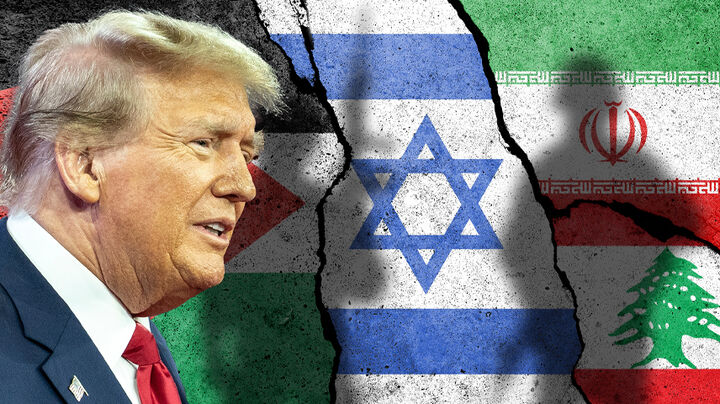
The rise of Donald Trump in the United States has led to significant changes in the US foreign policy. It is clear that the economy is the primary focus of Trump’s administration’s policies. People around the world are eager to understand how such a policy adopted by the U.S. government will impact their lives. For many people, this may not make a difference, but the approaches of Trump in the Middle East have significant effects on the lives of the people in the region. This sensitivity stems from the conflicting situation between two worlds—the traditional and the modern—that exists in this area. The antagonism between traditional forces and modern forces in the Middle East has reached its peak. It is evident that any change in international relations that strengthens one side of the conflict will have a significant impact on the lives of the people.
The Middle East is still trapped in pre-modern relations. These relations, which for centuries ensured the social life of the people in this part of the world, have become increasingly inadequate to adapt to new conditions due to modern developments. Although traditional relations are weakening day by day, the modern structures capable of organizing the lives of the people in this region and providing them with a life of dignity have not yet been institutionalized. Many analysts view the colonial division of Ottoman Empire lands and the creation of artificial borders for new countries without considering the ethnic and religious diversity of the region as the main cause of the increasing imbalances and problems. However, when we look at a country like Iran, whose borders and divisions have not undergone significant changes, yet the people of this land face numerous problems and imbalances, relying on this factor alone is not convincing.
In the modern era, the guarantee of securing human rights is the construction of a political system based on the nation-state, where the primary responsibility of governance is to secure these matters. Therefore, the failure to achieve a life of welfare and dignity is the result of the failure to construct such a political system. Various factors prevent the success of the people in this region, and in this article, I will focus on one of them. The issue is based on the interplay between political relations and economic relations, leading to a confrontation between public power and private power. Ultimately, I will answer the question: Which side of the conflict benefits from the approach of Trump in the Middle East?
The Meaning of “Rights” in the Old and New Systems
In the previous lines, a life of welfare and dignity was linked to the securing of human rights by the political system. To understand this concept, we must first clarify the difference in the meaning of “rights” in the traditional and modern systems (the two sides of the conflict).
“Rights” in the Traditional System: Throughout human civil history, “rights” have been a central concept in the formation of governance and the sustainability of collective and civil life. Historically, before the establishment of modern relations, the dominance of any government was contingent upon its military victory over its rivals. Bloody wars were the battlegrounds where different groups determined who would control the government. Although obtaining the throne depended on military supremacy over rivals, the stability of governance required a mechanism that could establish lasting norms both among the people and between the people and the government. These mechanisms were always centered around the concept of “rights.” In this context, the meaning of rights was “rightness” (as opposed to falsehood) or (truth/ false), and belief in and adherence to it was considered the duty of all subjects under the government. In such governments, the concept of “rights” was synonymous with the law, and all subjects were obligated to comply with it. Generally (though not always), since this “rightness” was often rooted in religion in pre-modern times, “rights” were considered the divine word of God and an unquestionable religious belief, and living under the banner of such a government required the unquestioning acceptance of these rights. In this state, the government presented itself as the executor of divine commands.
In the Middle East, the most prominent institution of this legitimacy was the caliphate, which viewed itself as the successor to the Prophet of God. When an independent government arose in any part of the region, it felt obligated to replace the caliphate with its own system of legitimacy. In Iran, for instance, after the independence of the Safavid government from the caliphate, the promotion of Shia Islam and the establishment of the Shia clerical system replaced the caliphate. Similarly, the independence of the Saudi government in Arabia from the Ottoman caliphate was made possible through the propagation and institutionalization of the teachings of Muhammad ibn Abd al-Wahhab.
Rights in the Modern System: In contrast to previous eras, the concept of rights in the contemporary era is not based on the duties of subjects to comply with the government’s directives. After the Renaissance, modern humans sought to establish a government that was responsible for securing and guaranteeing “rights”—that is, the rights that all people should be entitled to simply by being human. In this system, the meaning of rights changed. “Rights” came to mean entitlement (as opposed to deprivation), which includes all individuals.
The revolution in the modern era is essentially this inversion and transformation of the meaning of rights. Unfortunately, in the Middle East, the rise of “Islamism” has obscured and complicated this struggle, delaying transformation for many years. Moreover, traditional forces (monarchy and autocratic governance) in opposition to modern actors have attempted to promote and expand the first meaning of “rights” to monopolize political power. This has been one of the main factors preventing the people of this region from achieving their human rights and living under a democratic government. To demonstrate this conflict and how the mechanism of reproduction of this barrier works, it is necessary to discuss the foundations of power for each of the two forces involved.
Private Power and Public Power in the Political Sphere
Private Power Based on Economic Relations: Private power arises from an exclusive relationship between an individual and other people regarding a specific subject, such as land and other forms of property. Private power is a form of dominance or control. This power is exercised through ownership and control over material resources. Wealthy individuals have always held the power to influence and make decisions for others in personal relations. The extent of private power could also lead to the formation of a master-servant relationship. Therefore, it can be said that private power is based on economic relations. Property owners perceive themselves as having complete autonomy. Consequently, the relationship resulting from private power is always one of absolute dominance. It is evident that when private power—meaning the power derived from economic capability—takes control of the political sphere or, in other words, claims political power as its own, we will witness the formation of authoritarian governance. It is precisely from this perspective that Marx viewed freedom and the securing of human rights as contingent upon the abolition of private property (although history has shown that extending this idea to economic relations and ownership has had unpleasant consequences).
Public Power Based on Collective Action: In contrast, public power is the product of relationships between individuals who are, at least formally, considered equal. This power, which arises from humanity’s capacity to create a new world, is established when individuals gather for collective action. What Hannah Arendt calls “action” is a product of human beings coming together, and this power dissipates when individuals disperse. In other words, public power can be seen as stemming from civil participation, arising from human connections between individuals with different identities, but with equal legitimacy, leading to the establishment of institutions with specific goals. What can transform public power into political power is the creation of institutions and mechanisms that ultimately lead to forming a nation-state.
Sovereignty; the Bridge Between Political Power and “Rights”
The seizure of political power and its sustained presence depends on the establishment of sovereignty. However, sovereignty can have different natures depending on the source from which political power is derived. Two sources of power have been outlined above. Private power, emanating from economic relations, results in political power that leads to dominance and authoritarian governance. In other words, if the ruler considers himself the owner of the material resources of a land, the people are considered his servants and subjects. In a government based on private power, “rights” or laws are the ruler’s words, perceived as unquestionable truths that subjects must obey. This definition of “rights” is essential for the continuation of autocratic rule.
On the other hand, public power serves as the source of political power and is built to secure human rights for equal individuals. This is the aspiration that people in a region seek when establishing a modern state. When Thomas Hobbes discusses the social contract, through which individuals grant absolute authority to the Leviathan, he states that the purpose of this contract is to secure one of the most important human rights: the right to life, or personal security. It is clear that the number of rights has increased since then, but the goal of establishing sovereignty remains the same: securing “rights” in the sense of the inalienable entitlements of equal human beings.
The history of humankind is full of conflicts between these two forces. On one side, there is the force that, based on economic relations, seeks ownership and, consequently, domination over others. For this force, “rights” are seen as the “truth” that individuals must obey. On the other side, there is a force that arises from the will of the people and considers it the government’s duty to secure the human rights of all citizens. On one side of this conflict are dictatorial regimes that view the people as their subjects, and on the other side are democratic governments. In democratic societies, thinkers and political activists in recent centuries have worked to define a framework called “public rights” to prevent the dominance of authoritarian forces over society. Mechanisms like the checks and balances between the three branches of government are designed for this purpose. However, the situation in the Middle East is different. The region is still in the early stages of political modernization. Civil participation is very weak in this part of the world, and it is difficult to identify a democratic government. Traditional forces, with the aid of a new interpretation of religion under the banner of Islamism, have worked in the past century to destroy the freedoms that the people of this land had sought. It is in such a context that Donald Trump once again assumes the presidency of the United States.
Trump in the Middle East with an Economic Relations-Based Policy
Donald Trump is a businessman who believes that by adjusting economic relations, one can steer the political arena in the desired direction. Trump in the Middle East, introduces his primary goal as avoiding war, thus ascribing a kind of sanctity to his approach. It is not difficult to predict the consequences of reducing politics to economic relations. With the prioritization of economic relations, we will witness the growth and strengthening of private powers, which will increasingly dominate the political landscape of the Middle East. The one-dimensional economic approach of Trump in the Middle East has a direct impact on the conflict between public and private power. Civil participation will be under increasing pressure from its enemies, and the horizon of democracy in this region will appear more obscure and unattainable.
Recently, Donald Trump advised Jordan and Egypt to welcome the displaced people of Gaza. Although, given the dire situation of these people, priority should be given to their housing, healthcare, and food, Trump in the Middle East seems to be pursuing longer-term plans. His tone of speech indicates that he sees no independent identity for these people[1]. The Abraham Accords, for Trump in the Middle East, are a matter of prestige. One might guess that the agreement between the wealthy Arab rulers and the Israeli government is Trump’s final solution for the region, with no regard for the identity or independence of the people living in those lands. It is evident that in this process, economic incentives could play a significant role in enhancing the private power of the Arabian kings.
Looking at Iran on the approach of Trump in the Middle East is also completely economic. Should the Iranian regime cooperate with Trump, economic incentives will follow, but if it refuses to comply, the maximum economic pressure will be applied to Iran’s religious government. It is predictable how the experienced decision-makers of the Islamic regime in Iran will manage this situation[2]. In this context, the future of Iranian civil actors and democracy advocates will be more confused and ambiguous than ever before.
Criticizing the approach of Trump in the Middle East does not equate to endorsing the actions of the Democrats during the presidencies of Barack Obama and Joe Biden. Unfortunately, it must be said that the emergence of a phenomenon like Donald Trump is a consequence of Barack Obama’s disappointing policies, which have unclear ramifications for how long they will continue to affect the world, especially the Middle East[3].
PS:
1- In this article, I have discussed the dire situation of the people of Gaza and proposed ways to overcome it:
Humanity in the slaughterhouse of ideas
2- This article discusses Iran’s nuclear negotiations and the successful strategy of its religious government:
Is Iran Pursuing a Nuclear Bomb?
3- These articles reflect on U.S. foreign policy in recent decades, which can shed light on the reasons for today’s situation:
The decline of human dignity and the urgent need for “categorical imperative”
Human catastrophe raised by the “diplomacy at any price” approach and forgetting morals
The West likes to separate Islamist groups while they all follow the same discourse.