October 7, 2023, is a day that humanity will never forget. It marks the beginning of one of the most painful human tragedies in history, characterized by a collapse of morality. The 21st century, which began with great hopes and the expectation that, based on human experiences in the 20th century, it could provide a foundation for a better life, has unfortunately descended into a tragic state due to the rise and actions of Islamism.
In this context, to prevent the repetition of such tragedies, every individual must think critically and understand the roots of such conditions. It is impossible to contemplate human tragedies in the Middle East without acknowledging the role of Islamism in this situation.
Islamism represents the last-ditch effort of the traditional world to preserve its existence somehow. This endeavor solely aims at the destruction of modern civilization and modernism, and unfortunately, this struggle has taken on entirely inhumane and immoral forms.
While killing humans in any form is a sign of barbarism and the poverty of civilization, nothing is more savage than the creation of human shields. The use of human shields is one of the primary tactics of Islamists in the 21st century. Such an act is not only considered immoral by modern standards but is also rejected by traditional frameworks. A prominent example of this use of human shields can be seen in the situation that arose in Gaza and southern Lebanon, leading to the deaths of thousands of civilians in the conflict between Israel and Islamist groups. Understanding how such conditions can be created is solely contingent upon awareness of the process that has accompanied the collapse of morality.
In this note, I will attempt to illustrate the process leading to the collapse of morality in the realms of knowledge, concepts, and beliefs. Therefore, I believe that the stubbornness of Islamic advocates in the political sphere was not merely about closing the doors to modern thought and culture in Islamic lands. The main catastrophe arose when efforts were made to explain modern transformations using a framework of traditional concepts.
I will focus on three subjects that have played a significant role in the collapse of morality: first, totalitarianism; second, religious enlightenment; and third, interactive approaches in international relations.
It should also be noted that examining the moral collapse among Islamists does not imply a bias toward Israeli positions. The Zionist regime has also played a role in undermining moral foundations, which should be addressed in another writing.
Totalitarianism and the Collapse of Morality
The most important agents in the emergence of a totalitarian force are intellectual chaos and disorder. The arrival of modernism in Islamic lands posed a challenge to all the teachings that had long provided order to the lives of Muslims. Although the introduction of a new knowledge system initially confuses, humanity can gradually overcome it through experience and intellectual effort. Modern countries have gone through this experience, but in the Middle East, enduring hardship of disorder and responsibility during this transition has faced numerous difficulties.
In the duality of the knowledge system (traditional and modern), it was inevitable that confusion would arise among individuals. Confused individuals, who still cannot grasp social responsibility, resort to the first and easiest choice for relief from their disorientation. The social appeal of totalitarianism stems from this inclination toward the easiest option.
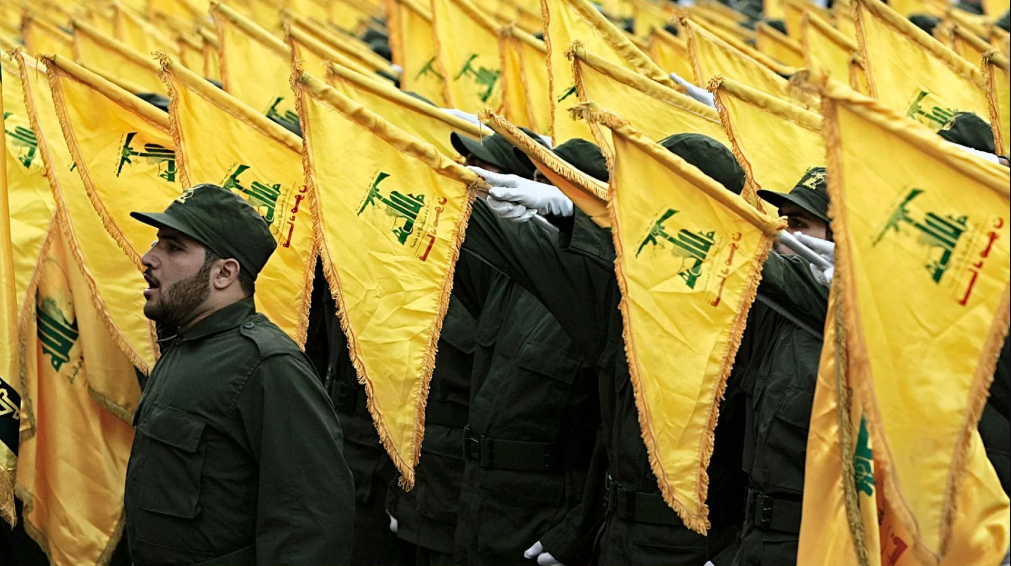
Totalitarian movements seek identity, power, and domination as a means to escape confusion. The modus operandi of totalitarianism is based on a unique approach to using concepts and literature concerning life. These movements strive to elevate concepts from the traditional knowledge system to a status that new functions in the modern world.
Concepts that had a daily function in traditional life and were solely valid within the traditional context, interacting with other concepts in that knowledge system, are transformed into prestigious and identity-forming markers by the intellectual advocates of totalitarian movements. This transformation creates a standard for establishing the dichotomy of “us and the other.” The aim is to create groups with unique ideological bonds that can compete politically in the modern era.
Through this mechanism, the connection between these selectively chosen concepts and the traditional knowledge system is severed, disrupting not only the Traditional moral standards but also preventing related concepts in the modern world from establishing moral guidelines within the new context.
Concepts in ethical propositions lead to the formation of standards that preserve the sanctity of various domains. It is through these ethical standards that the boundaries of private spheres, the obligations of relationships in the public realm, the preservation of individual and group rights, and ultimately the security and necessities of social life are maintained. It is clear that when concepts related to these standards are separated from their context, the functioning of those standards faces challenges.
For example, the concept of hijab, which in the traditional knowledge system pertained to the preservation of privacy, becomes a means of suppressing women and a large segment of society in a totalitarian context. Is the collapse of privacy a consequence of entering the modern age? Certainly not. On the contrary, privacy has gained even greater significance in the Modern era. However, the reactions of traditional advocates to the Modern age effectively destroy the boundaries that are not an unavoidable consequence of the Modern world. This situation applies to other aspects of life as well.
The knowledge system, norms, and prevalent beliefs serve as a means to achieve civic life but, totalitarian movements, such as Islamism, seek to present their own knowledge systems, norms, and beliefs as the purpose of life, thereby undermining civic life. Every totalitarian movement speaks of a great ideal and considers human life a means to achieve that ideal. Such a depiction of life leaves no room for moral standards. Unfortunately, when totalitarianism merges with religious teachings, the destruction of moral standards increases.
The intellectual thinkers of the totalitarian movement, aiming to form specific ideological groups to achieve their utopian illusions, led to the destruction of traditional and modern moral standards, and consequently, the collapse of civic life. Who are the intellectual advocates of the totalitarian movement?
Religious Intellectualism and the Collapse of Morality
Contrary to popular belief, totalitarianism should not be seen merely as a populist movement in the political sphere. Upon closer inspection, one finds traces of intellectual thinkers’ influence in the formation of such movements.
As stated, the function of concepts depends on their connection to other elements of intellectual systems and their historical context. However, when certain concepts are selected and transferred from one framework to another, they inevitably lose their original function and, at the same time, obstruct the effectiveness of new intellectual systems suited to the new context.
Those identified as religious intellectuals have long attempted to understand and define the modern world through traditional concepts. These thinkers believed that previous intellectual systems could uniquely interpret modern life, enabling people to live in the new era while preserving traditional values.
They assumed that by combining the selective old and new concepts, they could achieve this goal.
The Concepts, that were previously used to organize the logic and mechanism of divine – servitude were now applied by these thinkers to interpret the modern condition—one that is fundamentally distant from the framework of God and servant. How could traditional concepts, not designed to explain and understand the Modern world, account for the new individual and social relationships and the necessary rules of life in this new era?
It was evident that the formation of new sciences and knowledge in the Modern era arose from the inability of previous knowledge systems to address the new situation. Unfortunately, religious intellectuals failed to recognize this critical point and, knowingly or unknowingly, committed a grave betrayal against humanity. The attempt to understand the new condition through outdated intellectual frameworks had a clear consequence: not only were the old concepts that could not interpret the new condition rendered meaningless and obsolete, but the new concepts created and made accessible to the modern world also lost their credibility. It is foreseeable that the discrediting of intellectual and existential concepts would, above all, impact morality.
International Relations Theories and Moral Collapse
After extensive back-and-forth among opposing approaches in international relations, we are witnessing the dominance of a perspective centered on “Interaction.” This approach seeks to bridge two main perspectives: one that views international relations as an observable reality, drawing an anomic scenario where powerful states are seen as the main actors, and another that considers norms, regulatory rules, and ideas imposed by these major players as the foundational essence of international relations.
The interaction approach (constructivism) theorists aim to establish a bridge between these two perspectives.
The interaction theorists place a particular emphasis on human awareness and its role in international relations, while not denying the independent existence of the world outside the mind. They accept the material, observable conditions of the world but resist reducing the world to these observable objects independently of discourses. It appeared that interaction between these two one-dimensional perspectives could promise a better future in international relations through a multidimensional approach. Unfortunately, the result was contrary to these expectations.
The interaction theorists reduced objective factors to economics, financial interests, and state revenues, while subjective factors were reduced to the public opinion of voters. The glaring absence in this approach was morals, human rights, and the preservation of human dignity.
The interaction approach (constructivism) practically created a theoretical framework allowing statesmen, as the main actors in international relations, to focus on two things: first, material interests and the internal economic situation, and second, the dominant discourse among the public opinion of election participants.
The outcome of such a dominant approach was a situation in which moral principles played no role. Instead of interacting over humanitarian practices, the pursuit of peace and international cooperation, and the preservation of human rights, states now strive to influence each other’s financial interests and shape dominant discourses in public opinion to pressure other countries and extract concessions.

A clear example of this approach is evident in U.S. foreign policy. In the upcoming presidential election, we see significant involvement from Islamist groups. They are attempting to align U.S. foreign policy with their interests by shaping American voters’ public opinion through discourse articulation. Additionally, by threatening to create economic instability, especially in the energy market, they have managed to exert influence on the United States. In such conditions, concepts like human rights and moral standards hold little place in international relations. In the absence of human rights priorities and moral standards, the kind of catastrophes we witness in the Middle East are not far from expectation.
The events after October 7, 2023, are not the result of a single day’s actions by Hamas or Netanyahu’s spontaneous decisions. These events are the outcome of conditions shaped over decades, where human life, human rights, and ethical values are given little importance. These conditions are the result of activities that affect the knowledge of human life.
The religious thinkers have paved the way for moral collapse by stripping traditional discursive structures of their ethical meaning and preventing the formation of ethical standards grounded in modern human knowledge. This moral collapse provided Islamists the opportunity to legitimize the use of human shields as a means to influence public opinion, especially among Western voters. Islamists were aware that the death of children and civilians could have a significant impact on public opinion, so over the years, they sought to impose their demands on international forces by creating human shields.
However, on October 7, 2023, a miscalculation undermined the effectiveness of this human shield, enabling the opposing side, Israel, to bypass it by killing children and civilians, ultimately defeating regional Islamist forces, including Hezbollah and Hamas.