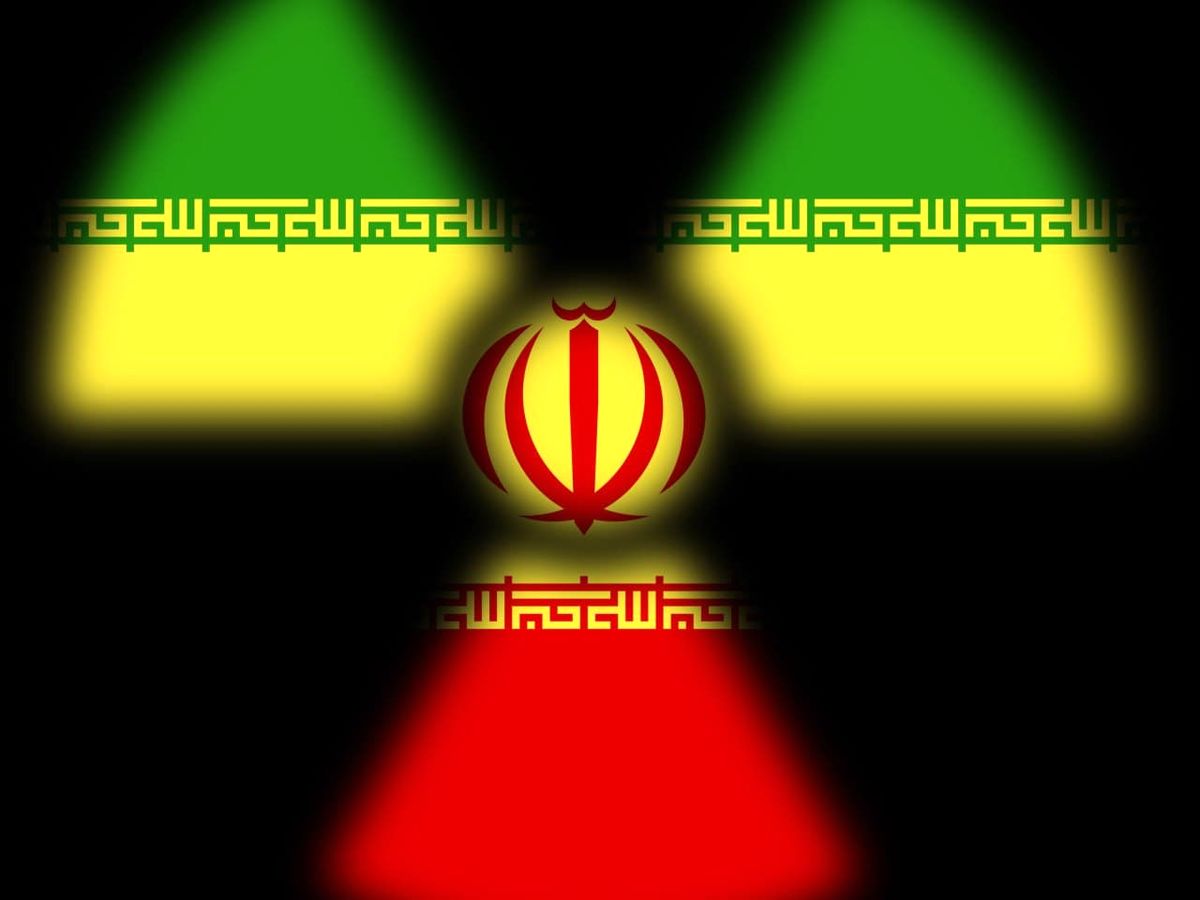
Is Iran pursuing a nuclear bomb? This question is being heard more than ever.
The developments in the Middle East following October 7, 2023, have led to widespread discussions about the emergence of a “New Middle East.” In this context, much attention has been directed toward Iran’s religious regime. There is a consensus that the Islamic Republic is the biggest loser of the past year’s events. Previously, many considered the Iranian regime the most significant regional power in the Middle East, but today, that perception has faded.
It is natural to expect that the regime, as the loser in these recent developments, will take measures to rebuild its lost capabilities. Among all its strategies, the spotlight is on its nuclear enrichment activities. There is a prevailing assumption that the religious regime’s acquisition of a nuclear bomb could compensate for all the losses incurred over the past year. The erosion of the Islamic Republic’s deterrent power has made it more vulnerable and fragile than ever. Therefore, re-establishing a major deterrent force, such as a nuclear bomb, could be seen as a significant achievement for Iran.
But is Iran actively pursuing the construction of a nuclear Bomb? It is evident that the regime’s nuclear activities aim to achieve deterrence. However, does deterrence necessarily equate to the pursuit of a nuclear bomb? Not necessarily.
I aim to demonstrate, through the relationship between strategic objectives and tactical approaches, how Iran seeks to achieve deterrence through nuclear enrichment without necessarily constructing a nuclear bomb. Nuclear activities serve as a strategic tool to secure and maintain deterrent power, but the tactics employed to achieve this strategy can vary across different periods.
One Strategy, Multiple Tactics
In the realm of international relations, issues with clear strategic significance are not necessarily pursued with the same tactics across all periods. Certain strategic objectives may evolve and be pursued through varying approaches depending on the circumstances. Uranium enrichment and nuclear weapon production are prime examples of this.
The nuclear bomb, during its early development, was introduced as a deterrent force due to its demonstrated capacity for mass destruction. In World War II, the power with the most devastating display of force could claim superiority and reduce the willingness of others to confront it. In wartime, the dominant discourse is articulated around the extent of damage and casualties caused by military actions. At that time, a weapon could serve as an effective deterrent only if its potential for massive destruction was evident.
However, showcasing destruction has not always been the preferred tactic to achieve deterrence. The use of nuclear bombs on Hiroshima and Nagasaki was both the first and, to date, the last time such weapons were deployed. Despite this, nuclear capability has remained the cornerstone of deterrence for decades. Instead of demonstrating its destructive power repeatedly, simply showcasing the ability to produce and stockpile nuclear weapons became sufficient to maintain its deterrent value.
During the Cold War, the primary factor in maintaining the balance of power was the sheer number of nuclear bombs and missiles each bloc could demonstrate to the other. In other words, the display of nuclear weapon production capabilities replaced the need for actual destruction as a means of deterrence. The exhaustion caused by long and large-scale wars during World War II led global powers to seek non-destructive methods to establish deterrence and balance power. Thus, stockpiling and demonstrating nuclear weapons became the defining tactic of the Cold War for achieving deterrence. Nations with the ability to showcase their production and storage capacities could benefit from the deterrent effect of nuclear weapons without intending to use them.
With the end of the bipolar world order, the tactics surrounding strategic issues also evolved. The post-9/11 era marked a significant shift toward the discourse of “diplomacy first.” It is worth noting that Barack Obama’s campaign slogan “Change” largely revolved around replacing previous methods of conflict resolution with diplomatic negotiations. Negotiation and diplomacy, which were once seen as tools to achieve greater values, began to be regarded as values in and of themselves. Media and think tanks transformed, shifting from emphasizing human rights, peace, and freedom as core values to elevating negotiation and diplomacy above all else.
This shift in discourse was accompanied by a change in the tactics surrounding nuclear weapons as a means of achieving deterrence. It seemed that the need for large-scale destruction or the stockpiling of nuclear arms to achieve deterrence had diminished. Instead, deterrence could be achieved through negotiation and diplomacy, which had become the highest values promoted by global media. The commitment of major global powers to the virtue of negotiation created an opportunity for others to leverage the nuclear issue as a deterrent through the mere act of initiating diplomatic talks. With this tactic, there was no need for a nuclear bomb to explode somewhere in the world—or even for the complete production and stockpiling of such weapons. Nuclear activities, as long as they could bring major international powers to the negotiating table, could serve as an effective deterrent.
Over the past two decades, Iran’s religious regime has successfully used negotiations with global powers to not only ensure its survival but also secure substantial economic and political concessions. The Islamic Republic has conclusively realized that as long as negotiation and diplomacy are upheld as cardinal values in the international arena, it can use them to achieve significant deterrence.
Before delving into the Islamic Republic’s efforts to initiate new nuclear negotiations, it is crucial to examine the current state of the regime and the Western powers involved.
Collapse of Missile Deterrence and Proxy Forces
The Islamic Republic had presented two additional pillars as part of its deterrence strategy:
- Mass production of long-range and medium-range missiles and military drones.
- Proxy forces in the region were capable of inflicting significant harm on adversaries based on Tehran’s directives.
However, both pillars were effectively dismantled following the events of October 7, 2023. Israel, leveraging long-term planning and addressing deficiencies identified during the 33-Day War of 2006 against Hezbollah, succeeded in nearly neutralizing the Islamic Republic’s primary proxies, Hamas and Hezbollah.
Furthermore, the destruction of over 90% of launched missiles and drones before they reached their targets revealed that the perceived deterrence capability of these weapons was little more than an illusion. With the inefficacy of its missile power now exposed, the Islamic Republic quickly recognized that nuclear negotiations remained its sole viable option for ensuring survival and security.
The Return of Trump and the Revival of Maximum Pressure
The Islamic Republic’s experience during Donald Trump’s first presidency was profoundly negative. The era was marked by:
- Maximum economic pressure through sanctions.
- The elimination of Qasem Soleimani, the regime’s most pivotal figure in the Middle East.
Had it not been for Europe’s resistance to Trump’s policies, the consequences for the regime might have been even more severe. However, this divergence between European approaches and Trump’s strategies provided the Islamic Republic with some breathing room.
This experience has left a significant imprint on the clerical regime, fostering hope that Europe’s resistance to Trump will persist if he returns for a second term.
Europe’s Persistent Love for Diplomacy
On the other side lies the influential force of the European Union (EU) and its member states. Post-Cold War Europe, following the fall of the Berlin Wall, has strongly embraced and promoted the discourse of “negotiation and diplomacy as the highest values.” Several factors contribute to this:
- The formation of the EU as a political-economic organization committed to stability.
- A preference for multilateralism over unilateral approaches.
- A desire to replace the unipolar world order with a multipolar framework in international relations.
In prior periods, Europe consistently exhibited a strong inclination toward engaging in negotiations with the Islamic Republic. While today’s circumstances differ significantly, it is still perceived that negotiation and diplomacy remain Europe’s primary tools for addressing Tehran’s nuclear enrichment activities.
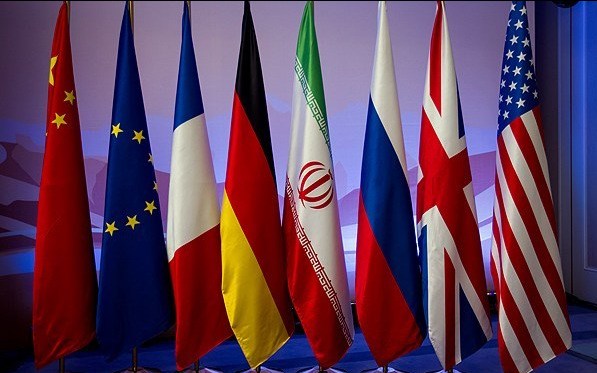
The Clerics’ Hopes in the Discourse of Negotiation and Diplomacy
Faced with the erosion of its previous assets, the Islamic Republic appears eager to initiate a new round of negotiations reminiscent of those observed in past years—lengthy, exhausting, and ultimately inconclusive. As long as Iran’s nuclear enrichment program remains unresolved, the potential for ongoing negotiations and securing lucrative concessions persists. Predictably, the regime is unlikely to seek a resolution to the conflict.
The clerical establishment in Iran has learned that, without requiring a nuclear explosion or even fully producing and parading the Nuclear Bomb, it can still leverage the security and economic benefits of the nuclear issue by drawing global powers into protracted negotiations.
The regime employs provocative behavior to compel major powers to return to the negotiating table to ensure negotiations continue. Actions such as:
- Increasing uranium enrichment to higher levels.
- Military threats and inflammatory rhetoric from regime officials.
These tactics are designed to pressure Western powers into engagement. The Islamic Republic has recognized in recent years that the more dangerous it appears, the greater the desire among global powers to negotiate. This approach has proven so effective that it seems unlikely the regime will abandon it anytime soon.
A Reformist Facade and the Desire to Buy Time
Following the suspicious helicopter crash involving Ebrahim Raisi, the regime quickly staged a sham election to present a reformist president. This move was intended to project an image of a peaceful, negotiation-seeking government to the international community.
The regime’s primary objective is to buy time—
- To rebuild its missile and proxy capabilities.
- To maintain the status quo until the end of Donald Trump’s potential second term.
Nuclear Diplomacy as a Deterrence Strategy
Since its discovery, nuclear technology has consistently served as a significant deterrence strategy through various tactics. The question remains: Can the “negotiate first” diplomacy tactic still secure the clerical regime’s security and economic interests in Iran without building a Nuclear Bomb?
The Islamic Republic’s approach has been shaped by its behavioral experiences with Western powers over the past few years. However, any shift in Western decision-making could drastically alter the landscape.
To date, two distinct voices have emerged from the West:
- A voice that continues to emphasize negotiation and diplomatic resolution for Iran’s nuclear dispute.
- A voice that, diverging from the past, no longer views negotiation as the optimal way to deal with the Islamic Republic.
As long as the pro-negotiation voice prevails, the situation will likely unfold to the clerical regime’s advantage. However, should the other voice gain prominence, a different trajectory can be expected.