


Introduction
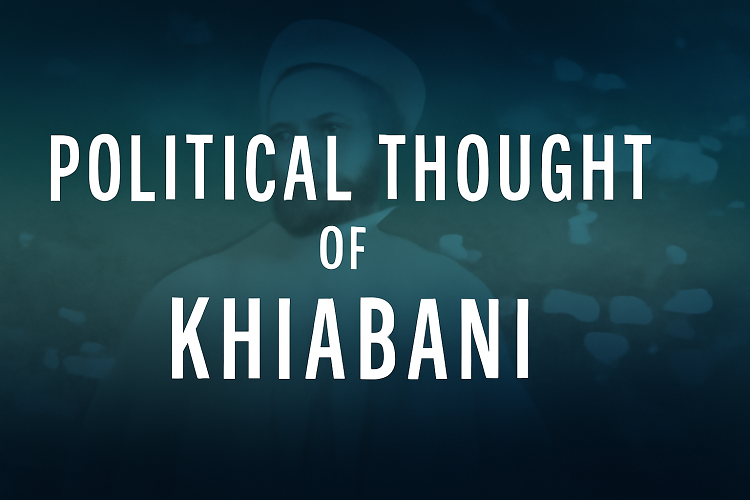
Mohammad Khiabani is one of the less-studied yet influential figures in Iran’s political history; a politician who, amid the turmoil following the Constitutional Revolution, turned Tabriz into a center for defending freedom and civil rights. His view of politics is not limited to mere protest or short-term activism; it carries a clear understanding of the relationship between the people and the government, the limits of central governmental power, and the role of civil institutions in revitalizing society. Revisiting the Political Thought of Khiabani offers an opportunity to understand how, during a period when foreign powers were negotiating over the future of Iran and the central government appeared exhausted and incapable, a local leader was able to create a national, freedom-oriented discourse and rally thousands to his cause.
The Need to Study the Political Thought of Khiabani
The importance of studying the Political Thought of Khiabani is not only historical but also connected to the current needs of Iranian politics. Issues such as decentralization, local powers, political independence, the legitimacy of the government, and the relationship between religion and politics have revived in Iran’s intellectual space. Khiabani was the first politician to articulate these matters within a coherent discourse. He established an intrinsic link between freedom, justice, and independence, and did not view politics merely as a tool for acquiring power but as a process of empowering society to defend human dignity. Therefore, analyzing his thought is not just a recount of the past, but a way to understand contemporary challenges.
Core Questions
This article addresses several fundamental questions: First, what are the main elements of the Political Thought of Khiabani , and how are they manifested in his speeches and writings? Second, what were his intellectual sources? Was he more influenced by the Constitutionalists or inspired by local and religious traditions, or perhaps the opposite? Third, how did his method of political action evolve, and what was the relationship between his theoretical ideals and practical tactics? Finally, what is the significance of his intellectual legacy today, and how can it be understood within the context of contemporary developments?
Methodology and Scope of the Study
To answer these questions, the article employs a combination of historical narration and conceptual analysis. Primary sources include Tabriz newspapers, Khiabani’s speeches, official reports, and later research on the Constitutional Revolution. The focus of the research is the years when Khiabani was most active; that is, the period when Tabriz was the battleground for the clash between local and national ideologies, foreign powers’ rivalries, and the efforts to reconstruct the Constitutional Revolution. The aim is to present Khiabani not merely as an activist focused on protest, but as a thinker with a political theory.
The article will further explore Khiabani’s biography, the historical context of Tabriz, his intellectual sources, the core concepts of his political thought, his political methods, his opposition to the central government, and, ultimately, the intellectual legacy he left behind. The structure of the article is designed to be accessible to both general readers and researchers, providing valuable insight for both.
Biographical Overview and Historical Context
Mohammad Khiabani was born in Tabriz, a city at the beginning of the 20th century that was not only a gateway for trade and cultural interaction but also one of the main centers of constitutionalist sentiment. Khiabani grew up in a turbulent environment that had turned Tabriz into a hub of resistance against tyranny. His connections with intellectual circles and reformist clerics in the city exposed him to discussions on freedom, justice, and social responsibility, which formed the foundation for his early political activities. His passion for study, oratory skills, and activism enabled him to quickly establish himself among Tabriz’s political activists.
The political climate of Iran at the time was a mixture of hope and crisis. The victory of the Constitutional Revolution had not yet lost its vigor, but the central government was weak and inefficient, and the interference of foreign powers cast a heavy shadow over national decision-making. Russia and Britain, especially after the 1907 Treaty, saw Iran as a battleground for their rivalry, and Azerbaijan, due to its geopolitical position, was under intense political, military, and economic pressure. This situation underscored the need for defending freedom and preserving national unity, making it a central concern for political activists in Tabriz, and Khiabani emerged as a prominent leader in this struggle.
His role during the second term of the Iranian National Assembly marked a pivotal point in his political career. His election as a representative of Tabriz gave him a platform to voice his views on the Constitution, the powers of the government, the dangers of foreign influence, and the need for structural reforms. In the Assembly, Khiabani spoke out boldly against humiliating treaties, administrative injustices, and the government’s incoherent policies. His fiery speeches, both in the Assembly and among the people of Tabriz, gradually formed a small political school around him—one that emphasized independence, freedom, and the renewal of the Constitutional Revolution.
With the departure of foreign forces from Azerbaijan and the weakening of the central government, Tabriz once again descended into chaos. Various groups, each with different goals, sought to fill the power vacuum. In such a context, Khiabani emerged as a social leader. Drawing upon a network of civil activists, merchants, and reformist clerics, he launched a broad effort to maintain security and rebuild public trust. These efforts laid the groundwork for the political discourse that later became known as the “National Government” movement.
This period, not only for its field activities but also for understanding Khiabani’s thought, is of fundamental importance. In reaction to the crises of Tabriz, Khiabani pondered how to preserve the Constitution in practice and restore the government to its lawful foundation. It was from this point that concepts like freedom, independence, justice, and local participation became central pillars of his political thought. The next section of the article will examine these concepts in greater detail.
The Intellectual Sources and Socio-Political Networks of Mohammad Khiabani
The Political Thought of Khiabani did not emerge in a vacuum. It was shaped by the intersection of three key currents: the religious reformist tradition of Tabriz, the constitutionalist discourse of freedom, and the lived experience he gained from direct confrontation with political crises. The fusion of these three sources distinguished him from many other local leaders of his time and created a coherent intellectual system in which freedom, justice, independence, and governmental reform were interdependent.
One of the earliest intellectual sources for Khiabani was the religious-social circles in Tabriz. After the victory of the Constitutional Revolution, these circles sought to integrate religious teachings with new concepts such as law, citizenship rights, and social responsibility. In this environment, Khiabani came into contact with clergy who were neither opposed to modernity nor saw politics as separate from ethics. This background taught him that politics, before being a tool for power, was a testing ground for sincerity and justice. This is why, in his speeches, he often spoke of “purifying politics” and considered administrative corruption to be a danger on par with tyranny.
Alongside these religious sources, Khiabani was deeply influenced by the discourse of the Constitutionalists. The political writings published during the Constitutional period, from the freedom-oriented newspapers of Tabriz to the works of intellectuals like Malek al-Motakallimeen and Talibov, served as educational resources for him. However, what set Khiabani apart was that he did not merely repeat the concepts of the Constitutional Revolution but adapted them to the experience of Tabriz. For example, he saw freedom not just as a theoretical principle but as a necessity for maintaining urban security; political independence was not an abstract slogan but a condition for the survival of local structures.
Another important source was his practical experience in politics—an experience he gained both in the National Assembly and through his engagement with the local social organization of Tabriz and his dealings with foreign powers. His presence in the Assembly allowed him to familiarize himself with the real workings of government and understand that without deep reforms, the Constitutional Revolution would not endure. In Tabriz, he saw firsthand how the weakness of the central government opened the door for foreign intervention. These experiences developed a political language for him, one in which structural criticism of the government was intertwined with the defense of national unity and territorial integrity.
Khiabani’s social network was also a vital pillar in the formation of his thought. Unlike many other local leaders who relied on tribal forces or military groups, he focused on the urban middle class and guilds. His continuous contact with merchants, teachers, reformist clerics, and civil activists gave him a precise understanding of the demands of the people of Tabriz. The newspaper Tajaddod, which served as the intellectual organ of his movement, was the link between thought and political action. Through this network, Khiabani was able to shape a discourse that was rooted in tradition yet adaptable to the demands of the time.
In summary, the Political Thought of Khiabani resulted from the fusion of three key factors: the political ethics derived from the religious tradition, the modern ideals of the Constitutional Revolution, and the tangible experience of crisis management. This synthesis not only made him one of the unique figures in Iran’s political history but also laid the foundation for subsequent movements in Tabriz and many independent thinkers in Iran.
Core Concepts in the Political Thought of Khiabani
The Political Thought of Khiabani can be framed around four main concepts: freedom, justice, independence, and local participation. These concepts may seem simple, but in his speeches and actions, they acquire layered meanings. Khiabani spoke during a time when Iranian society was caught between hope and anxiety—hope for the revival of the Constitution and anxiety over foreign interference and the decay of the central government. Relying on these concepts, he sought to offer a political response to this situation—a response that, on one hand, was grounded in the ideals of the Constitutional Revolution and, on the other hand, addressed the real needs of the people of Tabriz.
Freedom as Social Capacity Building
For Khiabani, freedom was not merely a legal principle, but a revitalizing force for society. He saw freedom as the condition for transforming the people into conscious actors and repeatedly emphasized that without freedom, political participation would be nothing but a façade. The crucial point in his view was that freedom was intertwined with social security. He often stated that if citizens did not feel secure, freedom would remain merely on paper. This is why, in Tabriz, one of his first actions was to establish urban order and prevent social instability. He believed that freedom was distinct from chaos and could only have meaning within the framework of law.
Justice and Integrity in Government
Justice in the Political Thought of Khiabani was a foundational concept, equal in importance to freedom. He saw administrative corruption as a danger capable of eroding the very foundation of the Constitutional Revolution. In his analysis, tyranny could only regain power when the government became mired in corruption and discrimination. For him, justice was not a moral slogan but a criterion for the legitimacy of government. This is why he prioritized reforming the administrative and financial systems. He repeatedly spoke about “integrity” in his speeches and emphasized the need to create a system that was both accountable and transparent. This practical outlook set him apart from many political activists of his time.
Independence and Safeguarding National Will
Independence in the Political Thought of Khiabani was a broader concept than simply opposing foreign influence. He viewed independence as the condition for empowering society and believed that under dependency or foreign interference, no reform plan could be sustained. His staunch opposition to the 1919 Treaty stemmed from this perspective. He saw the treaty not merely as a political transaction, but as a threat to national will. He repeatedly warned in Tabriz that political dependence laid the groundwork for internal disintegration. Therefore, defending independence was for him synonymous with defending the possibility of the future—a future in which the people could freely shape their destiny.
Local Participation and Power Restructuring
One of Khiabani’s most significant innovations was his view on the role of local communities in governance. Unlike movements that believed in the centralization of power as the salvation model, he believed in the potential of local capacities. This perspective formed the theoretical foundation for the “National Government of Tabriz.” Khiabani argued that if the central government was incapable of managing crises, the people should be allowed to organize the affairs of their city and province. This idea never had separatist connotations; rather, it was an effort to create a practical model of participation and responsibility. He repeatedly emphasized that local self-governance made sense within the framework of a unified Iran and could even strengthen the central government.
These four concepts together formed the structure of The political thought of Khiyabani. What distinguishes this system is the combination of political realism with moral idealism. On one hand, Khiabani responded to the harsh realities of his time, and on the other hand, he sought to return politics to its authentic meaning—namely, the just organization of public affairs. The next section of the article will show how these concepts manifested in his political tactics and practices.
Tactics and Political Action of Mohammad Khiabani
Khiabani’s political actions were not based solely on passionate speeches or theoretical positions; he viewed politics as a realm of action and sought to implement the central concepts of his thought through collective behavior and social organization. This approach made his movement in Tabriz more than a temporary protest, transforming it into a structured and solid social movement. To fully understand his thought, it is essential to examine his methods of political action, where ideals turn into programs, and programs translate into action.
Politics as Dialogue and Public Persuasion
Above all, Khiabani was a powerful orator. His speeches in mosques, public squares, and gatherings played a pivotal role in driving his political movement. He understood politics through the lens of persuasion, believing that the people needed to be made aware of the meaning of freedom, the necessity of justice, and the dangers of dependency in order to participate meaningfully in political decision-making. His language was simple but powerful, and he worked to explain complex concepts through the everyday experiences of the people of Tabriz. Many reports from that time indicate that Khiabani used public discussion sessions as a tool for raising collective awareness, not merely for political mobilization.
Using Media as a Tool of Political Life
The role of the Tajaddod newspaper in Khiabani’s movement cannot be overlooked. This newspaper was not only a mouthpiece for his movement but also provided a space for theoretical discussions, political critiques, and the demands of the people. Relying on this medium, Khiabani sought to bridge practical political activity with intellectual production. In an era when access to media was limited, having a local newspaper allowed him to challenge the dominant political narrative, expose government decisions and contracts, and create a cultural space to reinforce the concept of “rule of law.”
Social Organization and Dependence on the Urban Middle Class
The political thought of Khiabani stemmed from his precise understanding of Tabriz society. Rather than forming paramilitary groups or relying on tribal forces, he focused on the urban middle class, merchants, teachers, intellectuals, and reformist clerics. These groups were the pillars of urban order, and by gaining their trust, he was able to establish a coherent network for crisis management. This network played a crucial role in ensuring local security, coordinating protests, disseminating messages, and maintaining order. In modern terms, he created an “urban movement” based on voluntary participation.
Avoiding Violence and Prioritizing Order
At a time when many political movements viewed violence as a tool of pressure, Khiabani adopted a moderate approach. He believed that violence would destroy the legitimacy of any freedom-oriented movement and open the door for foreign intervention. For this reason, he constantly emphasized maintaining order, preventing chaos, and managing the city calmly. This approach not only defended the moral position of the movement but also increased the trust of the people of Tabriz in his ability to manage affairs.
Formation and Management of the “National Government” in Tabriz
Ultimately, the peak of Khiabani’s political action manifested in the formation of the “National Government.” This structure aimed to create order and enforce the law in a situation where the central government had become incapable of controlling the situation. Khiabani presented this structure not as a parallel government but as a temporary mechanism for maintaining security, strengthening popular participation, and preventing the collapse of urban life. In his statements, he emphasized that this movement was within the framework of Iran’s national unity and was a place for practicing responsibility and self-governance.
Khiabani’s tactics demonstrate that he saw no gap between thought and action. His effort was to turn freedom into awareness, justice into administrative reform, independence into civil resistance, and local participation into practical structures. This approach made his political movement a unique model in Iranian history—one that remains worthy of examination and inspiration.
Failures, Limitations, and Reasons for the Defeat of Mohammad Khiabani’s Movement
Khiabani’s movement, despite its moral strength and social backing, ultimately could not withstand a combination of external and internal pressures. The failure of this movement was not merely the result of military force or political conspiracies; a range of factors at the structural, social, and strategic levels combined to block its path. Understanding these factors not only completes the historical narrative but also reveals how a popular movement can be vulnerable in the face of the complex layers of national and regional politics.
Structural Rift Between Tabriz and the Central Government
The first limitation was the central government’s inability to understand the situation in Azerbaijan and engage with local leaders. Tehran was embroiled in political turmoil, internal rivalries, and external pressures, and viewed any regional movement as a threat to its authority. In this environment, the central government, instead of engaging in dialogue or accepting reformist demands, resorted to security measures. This misjudgment closed off any possibility for compromise and transformed the space for cooperation into one of confrontation.
Intervention and Pressure from Foreign Forces
The geopolitical situation in Azerbaijan at the time was heavily influenced by foreign powers. Consulates, former occupying armies, and middle-tier actors each pursued their own goals. The affiliation or proximity of some groups to these powers labeled any local movement as a “separatist threat,” even if, like Khiabani, they explicitly emphasized national unity. This foreign pressure further inflamed the political atmosphere and reduced the internal maneuvering capacity of the movement.
Financial and Organizational Limitations
Despite widespread urban support, Khiabani lacked access to stable financial resources. His movement relied on voluntary networks and public donations, which were insufficient for managing a city and resisting government repression. The lack of a well-organized financial structure and widespread executive institutions left the “National Government” in a fragile position. This organizational deficiency led to slower decision-making and the erosion of energy during critical moments.
The Absence of a Nationwide Political Coalition
Although the movement led by Mohammad Khiabani had deep roots in Tabriz and gained significant popular support, it failed to forge a coalition among political factions at the national level. Tehran, dissatisfied constitutionalists, centrists, intellectuals, and even some moderate forces could not unite around Khiyabani’s demands. This national isolation prevented the Tabriz movement from expanding into a nationwide current and kept it confined to a local struggle.
Excessively Ethical and Optimistic Strategy
One of the movement’s critical weaknesses was Khiabani’s approach to politics, which was rooted in a form of “moral purity.” He refrained from violence and avoided retaliatory suppression, even when preserving the movement’s security required firmer action. While this ethical commitment was valuable from a political principle standpoint, it hindered his ability to defend against the harsh tactics of the central government, leaving him with inadequate deterrence and defensive tools.
Military Operations and the Movement’s Surprise Defeat
Ultimately, the defeat of Khiabani’s movement came at the hands of a swift military assault from the government. The military operation was designed to leave the leaders of the movement with little chance to coordinate or resist. The attack on administrative centers and the widespread arrest of key members of the civil network shattered the movement in just a few days. Khiabani, who had principled objections to arming his supporters on a large scale, was caught off guard by this assault.
The defeat of the Khiabani movement cannot be seen solely as a result of brute force; it was the outcome of the clash between ethical idealism and the harsh realities of politics, structural limitations within the central government, external pressures, and the weakness of national networking. Nonetheless, his failure is part of the significance of his historical legacy: it shows that a popular movement for freedom, without institutional support and a national coalition, cannot survive against entrenched power structures, even with widespread popularity.
The Intellectual Legacy and Position of Mohammad Khiabani in Iranian Political Thought
After the failure of his movement and his martyrdom, Mohammad Khiabani was not erased from the historical memory of Tabriz; rather, he became one of the enduring figures of ethics-based political activism in Iran. His legacy is a blend of practical experience, reformist language, advocacy for freedom, and efforts to connect local participation with national authority. This legacy is reflected in various layers of Iran’s political history and continues to be a subject of research regarding identity, nationalism, and politics in Azerbaijan and Iran as a whole.
Revitalizing Constitutionalism in a Localized Form
Khiabani can be seen as the last link in the chain of the original constitutionalist movement—a movement that transferred the ideals of freedom and law from the realm of legal texts to the field of social action. He did not view constitutionalism as an abstract concept but as the immediate need of the Tabriz community for order, justice, and security. His effort to form the “National Government” finds its meaning within this framework. In this sense, Khiabani localized constitutionalism, showing how the rule of law could be intertwined with the local identity and urban culture of Azerbaijan.
A Model for Ethical Political Action and Civil Resistance
Khiabani, as a political figure who balanced idealism and pragmatism, has remained a symbol of ethical politics in the political memory of Iran. He demonstrated that civil resistance, dialogue, public persuasion, and avoidance of violence could be the engine of a popular movement. In times when Iranian politics oscillated between despotism and scattered violence, Khiabani offered a different vision—a vision that later became an inspiration in analyses of civil society and urban movements.
Khiabani’s Place in Azerbaijan’s Political Identity
In Azerbaijan, Khiabani is not just a political leader; he is part of the collective memory and identity. He is a symbol of urban resistance, the defense of the people’s dignity, and the preservation of Azerbaijan’s connection to Iran. Unlike some other local movements that were accused of separatism, Khiyabani consistently emphasized national unity and territorial integrity. This characteristic has solidified his position in the historical narrative of Azerbaijan as a “national-local” figure—one not in opposition to Iran, but within it.
Khiabani’s Impact on the Discourse of Freedom and Political Participation
Concepts such as “revival of the law,” “citizen participation,” “resistance to despotism,” and “national government” remain alive in the Political Thought of Khiabani. Political science scholars analyze these concepts as part of the broader tradition of constitutionalist thought. These ideas in Iran’s political history have drawn connections between local elites and national structures, showing that the demand for freedom did not only emerge from the center but also grew out of cities like Tabriz.
Khiabani’s Role in Shaping New Narratives of State and Society
Khiabani, with his emphasis on law, urban order, and local capacities, provided a new interpretation of the relationship between the state and society. He believed the state should be a structure emerging from the trust of the people and empowered through citizen participation. At the time, this view was revolutionary, and it later influenced analyses on “local governance.” Today, scholars consider his ideas as a step forward in the development of the concept of civil participation in Iran.
Khiabani: A Bridge Between the Past and the Future
The Political Thought of Khiabani occupies a meeting point of three major currents in Iran’s history: the constitutional movement, local resistance experience, and the formation of the modern state. He was neither a pure traditionalist, a radical revolutionary, nor a self-serving politician. His position lies precisely in the middle—where ethical principles meet the needs of society and the demands of modern politics. This is why Khiabani remains a subject of discussion among researchers, political scientists, and even civil activists.
Revisiting the Political Thought of Khiabani is not merely a return to the past; it holds fresh relevance in today’s discussions about the role of civil society, government participation, and the potential for gradual reforms. He left behind a model that can still inspire both theoretical and practical debates in Iranian politics.
Final Summary and Analytical Conclusion
An analysis of the Political Thought of Khiabani and actions shows that he was not just a local rebel or the leader of a temporary movement. He represented a broader effort to connect political ethics, the rule of law, and social participation with the complex realities of Iranian society after World War I. At a time when the country was grappling with internal chaos, administrative collapse, tribal rivalries, and external pressures, Khiabani offered a different model—one rooted in dialogue, public persuasion, strengthening urban institutions, and civil resistance.
His movement in Tabriz acted as a laboratory to test the possibility of “reform from below.” The experience of the “National Government” demonstrated that when a society is organized from within, it can fill the gaps left by the central government and prevent the collapse of public order. However, this experience also exposed the structural limitations of Iranian politics: the absence of mechanisms for dialogue between the center and the periphery, foreign interventions, a lack of financial resources, and the inability of movements to forge national coalitions.
In the realm of political thought, Khiyabani also left a lasting legacy. Concepts such as the revival of law, local participation, political independence, and social freedom were at the heart of his discourse. Despite the failure of his movement, these ideas have remained alive in Iranian history and continue to play a significant role in analyses related to civil society and the constitutional movement. He showed that it is possible to create a balance between ethics and practice, idealism and reality, and localism and nationalism.
Ultimately, Khiyabani’s importance lies not only in what he accomplished or failed to accomplish, but in his approach to politics. He viewed politics as an ethical and participatory duty, believing that society should play an active role in shaping its destiny. This perspective still resonates in discussions related to governance, gradual reforms, and the role of cities in Iranian politics.
Revisiting the Political Thought of Khiabani reminds us that Iranian political history is a mix of urban resistance, the quest for the rule of law, and the search for a national government. Mohammad Khiabani played a key role in this journey and remains a source of inspiration for researchers and political activists—both in understanding the past and in envisioning a future where citizen participation, rule of law, and political independence can form the foundation of governance.

