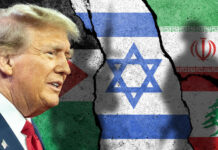
Since the end of World War II until 1991, the United States endeavored to bring the bipolar international order to a close in its favor, striving to emerge as the sole global superpower and replace the bipolar “balance of power” system with a unipolar system of “hegemonic stability.” This achievement did not come easily; therefore, its loss should not be perceived as simple or insignificant. It is foreseeable that the United States will undertake any measure necessary to preserve the unipolar system of hegemonic stability. These measures often entail fundamental transformations—transformations that may even impact the dominant discourse and national identity of the United States.
At times, the preservation of a certain ideological identity or representing a specific worldview imposes heavy costs. Let us not forget that what ultimately brought down the Soviet Union were the overwhelming expenses of maintaining the Eastern Bloc metropole in the name of communist ideology. Why should we assume such an outcome is only plausible for Marxist ideologies? The early years of the twenty-first century demonstrated that liberal democracy, too, can experience such unsustainable strain. The year 2008 is widely regarded as a turning point in this context. Barack Obama, with his campaign centered on the promise of change, sought to alleviate the heavy costs that the Bush administration’s hegemonic undertakings in the “war on terror” had imposed on the United States. Obama’s approach emphasized multilateralism and the reinforcement of regional balances, in hopes of partially offsetting the burden of upholding hegemonic stability.
However, this approach produced consequences of its own—most notably, the emergence of new power blocs and a renewed drive toward competition with U.S. hegemony, aiming to restore a balance of power in the international system. In this process, China, Russia, and the European Union emerged as key actors, among whom China has been the most successful. In recent years, China has become a central pillar for governments that operate outside the norms and expectations set by the United States. In other words, we are witnessing the gradual formation of a coalition of states that act independently of the hegemonic order, with China at its core.
In this article, I argue that the conditions for the emergence of a China-centric power bloc have matured, potentially transforming the structure of the international system from hegemonic stability to a renewed balance of power. Consequently, the United States is attempting to prevent this structural shift by introducing fundamental changes to its grand strategy and foreign policy doctrine. These changes may even encompass the core values and identities commonly associated with America—principally liberal democracy. The central question, then, is whether liberal democracy, as a universal ideology, can sustain itself. And what are the domestic implications of such doctrinal shifts in U.S. foreign policy?
Hegemonic Stability
The concept of “hegemonic stability” should be applied with caution in the field of international relations. Following the collapse of the Cold War-era balance of power, “hegemonic stability” became a common term in scholarly literature and policy discourse. The mere presence and dominance of a superpower atop the international system—capable of enforcing norms through its military and economic superiority—was often deemed sufficient justification for invoking the term. Based on this premise, many scholars argued that no military or economic resource is infinite or sustainable enough to maintain such stability over a prolonged period; thus, hegemonic stability is inherently short-lived and precarious. It is highly unlikely that anyone could accurately estimate the amount of military and economic power necessary to uphold a hegemonic order indefinitely. In a system inherently characterized by anarchy, reducing stability to a set of quantifiable elements is overly simplistic.
However, this does not imply that the concept of “hegemony” should be dismissed. A more nuanced and in-depth exploration of the concept may be highly productive. At a time when Marxists were striving to explain all of human history through the lens of economic structures and class struggle, Antonio Gramsci introduced the concept of “hegemony” into contemporary political theory—precisely to emphasize the complexity and irreducibility of the various factors underpinning the emergence and persistence of dominance. According to Gramsci, the stability of any political order cannot be sustained unless a multiplicity of organic and multidimensional ties are established between rulers and the obedient. Cultural beliefs, identity markers, and discursive signifiers are among the most significant elements contributing to the formation of such ties. In other words, “hegemony” emerges not merely through coercive apparatuses or economic supremacy, but when cultural, ideological, and discursive factors render the hegemon’s authority as legitimate and reasonable.
With the collapse of bipolarity and the concentration of unchallenged global leadership in the hands of the United States, the concept of the System of Hegemonic Stability quickly transitioned from its original context—domestic political dominance—to the domain of international relations. Scholars began to interpret hegemony in divergent ways. Some reduced it to mere military and economic superiority, while others emphasized its discursive, identity-based, and cultural dimensions. The latter group often identified “liberal democracy” as the non-material, normative core of American hegemony. Nonetheless, it would be misguided to treat these two dimensions—material and ideational—as entirely separate. Especially on a global scale, the institutionalization of discursive, identity-based, and cultural elements often requires substantial economic resources. How can values such as human rights, pluralism, and environmental protection be emphasized without the necessary mechanisms to promote, enforce, and, if necessary, sanction their violation? Clearly, institutionalizing such norms demands economic capacities that distinguish the hegemon from all others.
In this light, liberal democracy can be seen as the ideological essence of the hegemonic stability system. Naturally, the leading power in this system aspires for all nations to establish profound connections with the hegemonic order through the ideological framework of liberal democracy. However, following the end of the bipolar system, events did not unfold as proponents of the “end of history” thesis and System of Hegemonic Stability had anticipated. Instead, the international experience took a different trajectory.
-
The Anti-Liberal Democratic Trend and The System of Hegemonic Stability
This section highlights two significant developments that, contrary to the expectations of liberal democracy proponents, did not align with the hegemonic order following the collapse of the bipolar system and instead took a different trajectory.
1.1. The Rise of the Russian Oligarchy
At no point in time or space was the appeal of liberal democracy greater than when Mikhail Gorbachev announced the dissolution of the Soviet Union. At that moment, the Russian public believed that the collapse of communism and the restoration of liberal democracy would open the gates of paradise. However, over time, the dream of a free world gave way to the emergence and rule of a highly corrupt class that, under the guise of economic privatization, accumulated immense and unchecked wealth. The rapid rise of oligarchy, coupled with severe economic pressures on the Russian populace, led to widespread disillusionment. By the end of Boris Yeltsin’s presidency, it was difficult to detect any significant enthusiasm or motivation for liberal democracy among the Russian people. Reports even indicated that many longed for the communist era.
In such circumstances, the emergence of a powerful political figure capable of restraining the newly risen oligarchic class was seen as the only hope. With Vladimir Putin’s ascent to the Kremlin, this aspiration was partially fulfilled. Putin succeeded, to an extent, in curbing the oligarchy that had emerged within merely a decade. However, this did not signify the end of corrupt networks dominating Russian politics and economy. It became evident that continued oligarchic activity depended on conformity and alignment with Putin’s political apparatus. Consequently, earlier oligarchs were replaced by new figures more willing to submit to Putin’s authority.
For a people who had viewed liberal democracy as a long-lost paradise, such an outcome led to profound skepticism about the global viability of this ideology. A mere decade sufficed to turn the dream of the “end of history” and the ultimate victory of liberal democracy into a faint memory. History has repeatedly shown that when authoritarianism emerges in the guise of a savior, one must question the ethical values and legal principles of the dominant political discourse. While liberal democracy may be well-established and tested in the West, its global success is by no means guaranteed.
1.2. Islamism and the Moral Challenge to Liberal Democracy and The System of Hegemonic Stability
Liberal democracy is not merely a technical framework for forming government institutions; it is, above all, a moral proposition. Ethical values, often articulated through the discourse of human rights—including racial, religious, linguistic, and gender equality and opposition to all forms of discrimination—are essential components of liberal democracy. When discussing the global hegemony of liberal democracy, its influence and legitimacy across all domains must be considered. However, it appears that in significant parts of the world, liberal democratic ethical values have not achieved prominence. One of the most notable of these regions is the Islamic world.
With the advent of modernity in Muslim-majority societies, political outcomes varied based on the strength of religious elites and state structures. Nevertheless, in terms of moral values, liberal democracy rarely succeeded in replacing Islam, except in rare cases. In Arab monarchies, the notion of liberal democracy is virtually a farce. The overwhelming influence of Islamic law in these countries binds both rulers and citizens to religious norms. In non-Arab countries such as Turkey and Iran, the situation differs.
Turkey stands as the most secular of Muslim-majority nations and has managed to present itself as somewhat compatible with liberal democracy. However, the longstanding dominance of the Islamist Justice and Development Party (AKP) cannot be overlooked. Although President Erdoğan has consistently asserted that his religious beliefs are personal and that his political conduct aligns with secular principles, his years of exclusive rule have seen the systematic elimination of political rivals under the pretext of anti-corruption measures. The most recent instance was the case of Istanbul mayor Ekrem İmamoğlu, Erdoğan’s most prominent political opponent, who was removed from the political scene just last month. Despite Erdoğan’s professed commitment to secularism, his religious convictions have served as a moral foundation for building public trust, enabling him to garner significant popular support. This social capital has sustained his political dominance for nearly two decades, clearly at odds with liberal democratic norms.
Meanwhile, Iran presents a different case. For nearly half a century, the country has been governed by one of the fiercest adversaries of liberal democracy. Ironically, the Iranian populace exhibits the strongest aspirations for liberal democracy in the region. Yet, the religious regime, backed by approximately 15 percent of the population and supported by the Islamic Revolutionary Guard Corps (IRGC), has managed to suppress opposition for years. The regime’s access to vast national wealth has enabled it to organize and fund proxy militias throughout the region. Although these groups were somewhat weakened after the events of October 7, 2023, it is foreseeable that the Iranian regime will seek to rebuild them over time.
The most tragic case, however, is Afghanistan. Over two decades of American military and financial investment in the country ultimately yielded no meaningful results. The attempt to establish liberal democracy in Afghanistan was akin to planting rice in arid, saline soil—an endeavor that resulted only in the depletion of human resources and the squandering of billions of dollars.
These experiences demonstrate that the global dominance of liberal democracy remains a distant and perhaps unattainable goal. Insistence on such an objective not only imposes enormous costs but also lacks any guarantees of success. Accordingly, in the aftermath of the economic crisis during George W. Bush’s presidency, subsequent administrations sought to disengage from these unjustifiable expenditures. Just as the U.S. was grappling with this strategic dilemma, an alternative development model was rapidly achieving economic success and developmental progress.
-
Pragmatism: An Alternative to Liberal Democracy in the System of Hegemonic Stability
In contrast to the liberal democratic approach—especially in the post-Cold War era—a mode of behavior has emerged in international relations that is not driven by any particular ideology but is instead focused on tangible outcomes, specifically economic gain. Although maximizing national interest is universally recognized as the primary goal of foreign policy, international conduct has traditionally been constrained, at least on the surface, by normative, legal, and ideological frameworks. What distinguishes this new approach is its indifference—and at times outright opposition—to any predefined legal or normative regime. Due to its focus solely on results, irrespective of moral or ideological considerations, this approach may be termed ” absolute pragmatism.”
Today, decades after the Cold War, China stands as the main embodiment of this ” absolute pragmatism.”
2.1. China: Capitalism Without Liberal Democracy
“Practice is the sole criterion of truth” and “Seek truth from facts”—these were the slogans of Deng Xiaoping in 1978, marking the beginning of a fundamental shift in China. With a dramatic departure from the policies of Mao’s later years, China moved from ideological dogmatism to eclectic pragmatism, from centralized authoritarianism to an authoritarianism that allowed limited freedoms, from a planned economy to “market socialism,” and from autarkic isolationism to global interdependence.
The speed of China’s development following this transformation was so rapid that within a few years it became the world’s largest energy consumer. Naturally, such a position has a problem with the hegemonic stability system. China’s ” absolute pragmatism” enabled it to engage in economic relations—especially in the energy sector—with all governments, regardless of their ideological, legal, or political systems. As a major energy buyer without normative or ideological preconditions, China presented a lucrative opportunity to regimes marginalized by the liberal democratic order. Over time, China became a haven not only for governments openly hostile to liberal democracy but also attracted many of America’s traditional allies due to its non-normative, unrestrictive approach to economic cooperation.
On one hand, countries like the Islamic Republic of Iran and Russia have used oil sales to China to circumvent international sanctions. On the other hand, Arab states of the Persian Gulf—long-time economic partners of the United States—have shown increasing willingness to expand their economic ties with Beijing.
If this trend continues, we may soon witness the formation of a bloc that conducts international economic relations entirely independent of the liberal democratic discourse and the normative expectations of the System of hegemonic stability. In other words, the foundations of the System of Hegemonic Stability appear increasingly unstable.
Though a bloc centered around China and based purely on pragmatism may lack the cohesive ideological bonds seen in traditional alliances, its defining characteristic—the rejection of liberal democratic norms—makes it highly attractive to authoritarian regimes. The appeal lies not in shared values but in the freedom to act without the constraints of liberal ideology.
2.2. Trumpism: A Festival of Disruptions and Alliances
If there is one defining trait of Donald Trump’s foreign policy, it is a simultaneous pattern of ruptures and alignments. On one hand, Trump broke away from the liberal democratic commitments that have long underpinned hegemonic stability. On the other, he forged new connections rooted in the very pragmatism that had previously been China’s unique approach to international relations.
First: The Ruptures
As previously noted, hegemonic stability rests on a complex network of visible and invisible relations structured around liberal democratic values—values expressed in cultural identity, discourse, belief systems, and legal norms. Sustaining and expanding these connections requires economic investment and, at times, military support to establish international regimes, institutions, and norms.
Trump’s conduct made it clear that he had little interest in maintaining this system. Through slogans like “America First,” opposition to “free riders,” anti-interventionism, and a rejection of “nation building,” he signaled his disapproval of collaborative efforts rooted in shared liberal democratic ideals.
In practice, this translated into withdrawal from numerous international institutions and treaties on human rights and the environment, trade wars with America’s traditional allies, repeated threats to exit NATO and other military alliances (including with Japan and South Korea), and a consistent unilateralism in international dealings. He also dismantled domestic institutions that played a significant role in promoting liberal democracy globally, such as the United States Agency for International Development (USAID) and funding for the U.S. Agency for Global Media.
These moves demonstrated his unwillingness to bear the costs required to sustain the liberal democratic world order.
Second: The Alliances
Trump’s admiration for authoritarian leaders—viewed as liberal democracy’s principal adversaries—was palpable. His affection for Vladimir Putin reached such extremes that rumors of his alleged ties to the KGB even circulated on social media. His summits with North Korean leader Kim Jong-un were widely publicized, and he often cited them among the highlights of his presidency.
While he enacted harsh immigration restrictions on Iranians, he appeared eager for negotiations and photo ops with Supreme Leader Ali Khamenei. Few could have imagined a day when the U.S. government would negotiate with the Taliban, one of the most regressive Islamist movements in the world. Yet Trump struck a deal with them in Doha, effectively handing over Afghanistan.
He openly endorsed Israel’s actions in Gaza, and his fantasies included “sunbathing and drinking cocktails” on the beaches of Gaza alongside Netanyahu. His humiliating treatment of Ukraine’s president, considered a frontline defender of liberal democracy, further emphasized his orientation.
Taken together, these actions reveal that Trump, like China, has embraced a model of ” absolute pragmatism.” The fact that the leader of the liberal democratic world positioned himself in alignment with the ideology’s rivals is one of the most extraordinary phenomena in the history of international relations.
It appears the U.S., following in the footsteps of Deng Xiaoping’s strategic approach, seeks greater flexibility in dealing with various regimes—not to spread liberal democratic values, but to preserve its position in the System of Hegemonic Stability with reduced economic and military costs. Yet, such a hegemonic order would be devoid of the very values that once gave it meaning—namely, liberal democracy.
The Major Consequences of Major Decisions
It appears that the substantial costs associated with maintaining liberal democracy have prompted the United States to undertake a profound reevaluation of its foreign policy doctrine. The multilateralism and regional balancing strategies pursued under the foreign policy of Barack Obama have, as anticipated, failed to yield the expected outcomes. Consequently, we are witnessing a fundamental shift in U.S. foreign policy—from leadership based on “liberal democracy” toward an approach reminiscent of China’s, namely, “absolute pragmatism.”
Post-Cold War developments have demonstrated that political transitions in various regions of the world do not necessarily lead to the institutionalization of liberal democracy. As such, the central question for U.S. policymakers has become whether the continued expenditure of significant resources to preserve this discourse within the international order remains justifiable.
The experience of Russia revealed that, despite the initial desire of its people to embrace liberal democracy, structural, economic, and security factors can ultimately steer the process toward the formation of an oligarchic class and, eventually, the establishment of an authoritarian regime. The experience of Islamic countries, however, is even more complex. In these societies, the moral and social influence of religious beliefs presents a substantial barrier to the establishment of value-based linkages in support of liberal democracy. Furthermore, modernization efforts in these countries have shown that substantial investments in embedding liberal democratic values have failed to produce the desired outcomes.
In recent decades, Islamism—relying on religious beliefs and the mobilization of social and paramilitary forces—has posed a significant challenge to U.S. hegemony. The support of conservative Arab regimes, particularly in the Gulf region, has entailed substantial economic and military costs for the United States, even though these nations do not prioritize trade relations with the U.S. over those with China.
In light of these realities, it appears that the United States has found China’s pragmatic approach to be more effective than the defense of “liberal democracy” itself. The policies of Donald Trump exemplify this doctrinal shift: on one hand, there has been a reduction in funding for the institutions and agencies that uphold liberal democracy, while on the other hand, there has been a marked willingness to engage with adversaries of this discourse, such as Russia, North Korea and religious government in Iran.
Nevertheless, this shift in direction should not be interpreted as signaling the complete demise of liberal democracy in U.S. foreign policy. Although the pivot toward pragmatism appears to be a strategy that transcends partisan politics and reflects a broader state-level consensus, the Democratic Party remains a key proponent of sustaining this discourse in the international realm. Hence, the United States finds itself engaged in a suspended dynamic, caught between the poles of “liberal democracy” and “absolute pragmatism.”
This suspended state suggests that, to preserve the System of Hegemonic Stability, the United States has internalized the conflict within the global order into its political structure. This process—referred to as the “internalization of conflict”—has effectively transferred ideological and geopolitical rifts into American society itself. Such a degree of internalized conflict is unprecedented, even for the complex and flexible structure of American federalism.
The unity of the United States is predicated upon consensus around fundamental liberal democratic principles. Now, as fundamental rifts emerge within these very foundations, some states may view these developments as a threat to the federal compact.
Proponents of this change, including Donald Trump, have sought to bridge these divides using economic tools. Policies such as “Buy American, Hire American,” restrictions on immigration, and similar protectionist measures represent notable examples of this economic-security approach.
Ultimately, it is important to recognize that the consequences of internalizing global conflicts are broader and more complex than they may initially appear. If the United States fails to strike an appropriate balance between value-driven and pragmatism-driven approaches, it may face deeper challenges both domestically and internationally.
Analytical Appendix:
These changes appear to extend beyond partisan preferences and reflect a broader, macro-level shift in U.S. governance. A key indicator of Democratic alignment with this new doctrine is the Biden administration’s withdrawal of U.S. troops from Afghanistan. Additionally, Biden’s openness to negotiations with the Islamic Republic of Iran and his restrained support for Ukraine provide further evidence of this alignment.
References:
- Sayyad Shirazi, M., Mohammadi, F. (2020). A Comparison of the Social Islam of Fethullah Gulen’s Movement with the Political Islam of Recep Tayyip Erdogan. International Journal of Nations Studies, No. 56. [ In Persian]
- Hosseini, A., Yazdani, E., Behzadi Birk Alia, Z. (2015). Conservative Islamism and Its Reflection in Erdogan’s Policies. Quarterly Journal of Political and International Studies, No. 25. [ In Persian]
- Ashraf-Nazari, A., Molaei Mozaffari, A. (2018). Linguistic Analysis of Political Leaders’ Personalities: A Case Study of Donald Trump. Global Politics Quarterly, No. 23. [ In Persian]
- Hosseini Matin, S. M. (2019). Trump and the Need to Reconstruct the Liberal International Order. Foreign Policy Quarterly, Vol. 33. [ In Persian]
- Vatani, M., Ostovar, M. (2023). The Ukraine Crisis in Light of America’s Liberal Hegemony. Global Politics Quarterly, No. 44. [ In Persian]
- Asiayan, O. (2023). Rethinking the Concept of Hegemony in International Relations: America’s Smart Hegemony. Strategic American Studies Journal, Vol. 3, No. 9. [ In Persian].
- Sahebi, Mohammad (2005). The Development and Evolution of Oligarchy in the Russian Federation. Quarterly Journal of Central Asian and Caucasus Studies. Year 14. Volume 4. No 50. [In Persian].
- Eric Shiraev and Vladislav Zubok. (2000). Anti–American in Russia: from Stalin to Putin. New York. Palgrave.