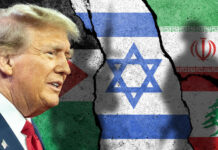
Whenever the religious regime of Iran faces internal and international pressures, it intensifies its repression and executions. Since those executed are usually prisoners who have little role in the internal and global pressures, the analysis of the people and some media is based on the idea that the Islamic Republic takes its revenge on the defenseless people of Iran. Such an analysis does not align well with the principles of political science unless we consider the Islamic Republic’s regime as a psychologically deranged entity suffering from extreme sadism. However, suppose we view this behavior of the Islamic regime from the perspective of political science. In that case, we can interpret it as a reaction to the conflicts of traditional legitimacy and authority in the modern era.
To compensate for this, the regime seeks to present itself as the exclusive legitimate force capable of using violence, demonstrating its uniqueness in the land of Iran. In other words, the religious government conveys the message through multiple executions that although traditional legitimacy faces numerous contradictions in the modern era, it is the only force that can exercise violence in Iran without interference, thereby showcasing the unquestionable authority of this regime.
Religious governments in the modern era face a mismatch between their legitimacy standards and contemporary conditions. They seek legitimacy for their rule based on traditional authority even though this type of legitimacy fundamentally does not align with the modern age. Various internal and international conflicts put such governments in a perpetual state of emergency, compelling them to resort to violence to reinforce their authority and ensure their continuity.
In this note, the fundamental conflicts of traditional legitimacy in both internal and external arenas will be demonstrated, followed by an examination of the Islamic regime’s solutions to these conflicts.
Conflicts of Traditional Legitimacy in Domestic Issues
Every government requires organized authority for its survival. This organized authority, which necessitates continuous administration and oversight, compels individuals to obey rulers who claim to have legitimate power. On the other hand, such obedience requires that organized authority possesses the necessary material means to use force in specific situations. Thus, organized authority relies on both the dominance of executive staff and the material tools of the administrative apparatus. The primary reason for officials’ obedience to political authority lies in the allure of personal interests, namely material rewards and social prestige.
The form and manner of obtaining material rewards and social prestige are directly related to the type of authority and legitimacy of the government. A religious government based on traditional legitimacy portrays its ruler as an executor of God’s commands; therefore, following the ruler’s orders is seen as following divine instructions. In contrast, in a government based on legal legitimacy, citizens are obligated to act according to laws derived from the public will. Unlike traditional legitimacy, correct behavior for citizens is simply adherence to the law.

This distinction directly impacts how government employees derive their income. In traditional legitimacy, since the ruler’s satisfaction is the sole criterion for measuring correct behavior, government officials expect financial rewards in exchange for loyalty and flattery towards the ruler.
Historically, in traditional legitimacy, government agents consider economic resources as their personal property, akin to feudal holdings, bestowed upon them for their loyalty to the ruler. Such political agents have no understanding of state assets as national resources; for them, economic resources and opportunities are seen as rewards for loyalty to their ruler. Thus, accumulating economic resources and having extensive decision-making power over economic assets elevate the social prestige of government officials.
However, in a government based on legal legitimacy, the relationship between government agents and economic assets is defined by adherence to the law. Officials not only do not regard national assets as their own but also follow legal regulations in their interactions with these assets. They receive specific wages for their services, and their social prestige is not tied to flattery or loyalty to high-ranking officials.
When we examine the state of Iran’s political system and bureaucratic apparatus after the Islamic Revolution, the importance of this distinction becomes clear.
After the Islamic Revolution, we witnessed a fundamental conflict within the government bureaucracy: on the one hand, the bureaucratic structures of the modern state, remnants of the Pahlavi era’s modernization, alongside educated individuals who operate based on legal conduct; on the other hand, a religious leader who introduces himself as the executor of God’s commands seeks to dismantle modern values, and aims to attract religious followers to implement his traditional authority.
Given the social context in the Middle East, the religious leader quickly attracted a large number of loyal followers. This group, which forms the core of the bureaucratic apparatus after the revolution in Iran, seeks to flatter and gain the satisfaction of the religious leader, adhering to behaviors based on traditional legitimacy. Naturally, these individuals, following the logical relationships consistent with the traditional legitimacy model, seek personal economic benefits without regard for laws or regulations in exchange for their loyalty to the religious leader.
Conversely, the bureaucratic apparatus of the modern state can only be effective in performing governance tasks if civil servants act according to the law.
This duality creates significant conflict, challenging the regime’s ability to reproduce legitimacy and expand its power and authority. The rampant corruption statistics within the Islamic Republic’s government illustrate this challenge, leading to the regime’s paralysis. The corruption and inefficiency of the bureaucratic apparatus represent a fundamental issue that brings about various crises. These numerous crises, from different domains, have effectively rendered the government’s authority ineffective.
Conflicts in Foreign Affairs
The existence of a religious government based on traditional legitimacy does not only impact domestic territorial issues; its actions also create numerous challenges in international relations. A government that considers itself a representative of God cannot tolerate the presence of modern states in Islamic lands.
From the perspective of a religious government, the existence of secular states driven by national interests poses obstacles to divine authority in the Middle East. Therefore, it sees it as its religious and historical duty to work toward the dissolution of such states. In this context, the establishment of proxy forces in the region can be viewed as an extension of the traditional authority of the Iranian religious leader and a weakening of the authority and legitimacy of modern states in the area.
If we accept that states are the only entities within a specific territorial domain that have the right to use legitimate force, we realize that proxy forces undermine this legitimacy. With the presence of proxy forces in other countries, regional governments are not the only entities exercising legitimate force within their territories; these proxy forces also consider their use of such rights to be legitimate.
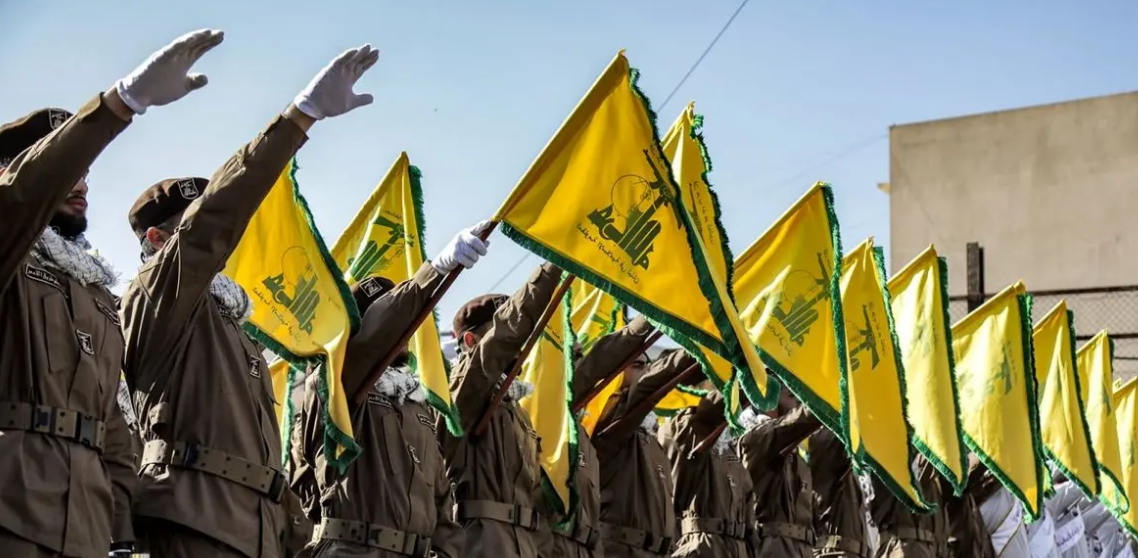
The religious government constantly perceives the presence of modern states in the region as a colonial scheme in Islamic lands and seizes every opportunity to disrupt international relations in the region. From the viewpoint of the Islamic authority, the only legitimate ruler in the area is the representative of God on Earth, and consequently, obstacles to the dominance of divine authority must be eliminated.
It is evident that such actions are intolerable to other countries, especially Western powers, and lead to various tensions for the Islamic regime.
It is observed that conflicts of traditional legitimacy face ongoing tensions in both domestic and foreign aspects. The solution to all crises lies in moving beyond traditional authority and establishing a government based on legal legitimacy. However, instead of pursuing such a solution, the religious government strives to demonstrate that there is essentially no alternative to its rule in Iran.
Through widespread killings, the Islamic regime shows that it is the only force in Iran with the right to use violence and that no one can stand in its way. The Islamic government can kill many people at will without ever being held accountable for such actions. The regime’s message is clear: although its traditional authority conflicts with the modern world, there is no substitute for it in Iran. It is the sole entity with the legitimate right to use force. Therefore, under any circumstances, others are obligated to tolerate such a government.