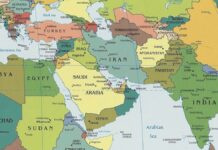
Learn from Iran’s Experience
Islamism, even after a century, remains a significant factor in the destruction of the lives of Muslims in the Middle East. Although the ideological influence of this political movement has significantly diminished, the emergence of militant groups and their strategic successes continues to be a cause for concern. The latest instance pertains to the situation in Syria after the fall of Bashar al-Assad. After years of conflict and brutal suppression, Assad’s dictatorial regime has finally been overthrown. Congratulations to the people of Syria. However, Syria’s future hinges on the critical period when the foundational ideas for the next government are being proposed.
Today after the fall of Bashar al-Assad, the Islamist group Tahrir al-Sham holds the upper hand. While so far the leader of this group has adopted relatively moderate and human rights-compatible positions, experience shows that to prevent the catastrophes caused by Islamists in other countries, it is essential to establish appropriate legal and political frameworks in the country’s structure.
I do not have personal knowledge of Jolani (Mohammad al-Sharaa) or his inner circle. What I know is limited to the information available in the media and accessible to all. However, regarding Islamism, I can point to a few observations. I believe that Islamism is based on foundations that, under any circumstances, can devastate the lives of a country’s people especially in Syria after the fall of Bashar al-Assad.
With the emergence of the modern era, a fundamental restructuring occurred in the hierarchical and organized world. Parallel to the diminishing dominance of religious understanding, the rise of various distinct approaches to human activities (economic, scientific, technical, historical, aesthetic, and political) was observed. Just as in everyday life, the different fields of science transformed how humans understood the world around them, a new understanding also emerged in politics that examined “The Political” as an independent domain, establishing its rights and governing logic.
Unfortunately, it is precisely here that Islamism, as a deviation and a fundamental obstacle, disrupts the connection of the people of the Middle East with the progressive understanding of social and political life in the modern era. Below, I will highlight several points to demonstrate how this obstruction and deviation occurs.
1- Sovereignty
In the modern era, “The Political,” influenced by intellectual and epistemological revolutions, emerged as an independent episteme and existence. This development was made possible through the concepts of “sovereignty” and “the state.” The foundational thinkers of modernism articulated the concept of sovereignty to enable the understanding and establishment of structures and public rights for social life in the modern age. The formation of the modern state, and consequently, the independence of people in determining their destiny, owes much to the efforts of those who defined concepts like “sovereignty” independently of older epistemological systems.
The most significant challenge faced by these thinkers was achieving independence for the diverse European populations from the Church and the Roman Empire. The modern state, centered on sovereignty, was perceived as a response to this demand for independence.
In contrast, Islamism undermines all these achievements by fabricating a notion of national sovereignty. When a country’s constitution declares that sovereignty belongs to God, it is no longer possible to expect independence in determining the destiny of its people. When political sovereignty is attributed to God, it naturally leads to the establishment and empowerment of an institution that encompasses all believers in that God. In the Islamic political tradition, the institution of the caliphate embodies such authority.
Thus, modern humans’ efforts for independence in a nation’s political domain can be easily destroyed by this fabrication. When the institution of the caliphate intervenes in determining public rights and laws, not only are the people of that land no longer independent, but the outflow of a nation’s substantial material resources is justified under the pretext of religious duty. Under such conditions, national interests, both domestically and internationally, lose their meaning.
2- Monopolization of the Political Sphere
Islamism seeks to distort the function of the modern state. The purpose of establishing a modern state, succinctly put, is to achieve “freedom” and “justice.” However, Islamism defines the purpose of its establishment as the implementation of divine laws. Avoid getting entangled in the misleading debate of whether freedom and justice depend on the implementation of divine laws. What matters is that such a goal monopolizes the political sphere for those who claim to be experts in interpreting and explaining divine laws.
It is evident that any monopoly in the political arena not only tramples on freedom and justice but also leads to the emergence and spread of political corruption.
3- Uniformization and Totalitarianism
Establishing the modern state, a significant change occurred in how “The Political” engages with the private and social lives of individuals. Before this, people’s relationships were limited by their way of life and economic activities, and governmental intervention occurred only when disputes between individuals could not be resolved through negotiation. Naturally, governmental rulings were considered final and were predominantly based on religious laws and interpretations of sacred texts.
This limited governmental presence in people’s lives was rooted partly in the state’s religious legitimacy and partly in the people’s “faith” in religious rulings and “fear” of the consequences of disobedience. As long as faith and fear persisted, the government could operate according to the needs of that era in the social lives of its people.
In the modern era, due to new methods of production and economic relations, not only has interaction and communication among people significantly increased, but the daily life of individuals has also undergone major changes. To earn a livelihood and maintain a suitable standard of living, modern individuals must organize their daily activities and adhere to comprehensive regulations. This necessity has led to fundamental transformations in the disciplinary functions and punitive practices of the modern state.
The disciplinary and punitive structures of the modern era have been shaped by changes in living conditions, communication, methods of production, individual and social goals, and prevailing discourses. This phenomenon is referred to as “biopolitics.” To enhance efficiency and achieve the economic surplus, modern states have integrated the regulation of disciplinary norms and appropriate punitive measures as an inseparable part of their operations. This aspect of modern states has consistently been criticized by many thinkers and socio-political activists. These critiques and protests, when engaged with policymakers and planners, can significantly contribute to mitigating and addressing its shortcomings.
One of the challenges of modern states is that, over time and with much effort, these issues are gradually addressed. However, the catastrophe begins when a country’s modern state structures are established, and the tools for discipline and punishment are put in place, but the governing authority is rooted in Islamist ideology, and its mechanisms of governance—or “biopolitics”—are based on “faith” and “fear.” In such conditions, a humanitarian disaster becomes inevitable.
This scenario is particularly likely in Syria after the fall of Bashar al-Assad. The state structures in Syria, influenced by the modernization efforts of the Bashar al-Assad regime, have been developed. Now, there is a strong possibility that these structures could fall into the hands of Islamists.
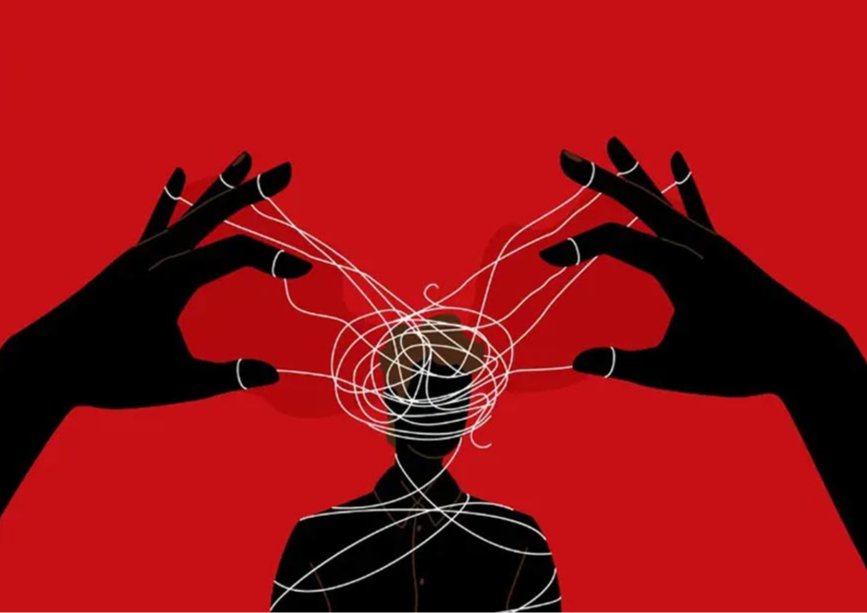
Public education systems, healthcare systems, urban planning guidelines, and legal and judicial frameworks are among the most prominent aspects of “biopolitics,” or the state’s presence in individual and social life to achieve discipline and punishment in modern governance. When these tools and resources are placed in the hands of Islamist ideology, it results in the universal application of the logic of “faith” and “fear” mentioned earlier to every aspect of private and public life in a country.
This leads to a situation where even the minutest behaviors of individuals are seen as a measure of their “faith,” prompting the government to impose barbaric and inhumane norms in various aspects of life. “Fear” permeates the smallest details of daily life, casting a shadow of oppression and social despair over the nation. Over time, not only is the vitality of individual and social life destroyed, but many people begin to prefer death over life under the rule of Islamists.
The political theory of Islamist fundamentalism is founded on absolute faith in God and His representative, the Caliph. Individuals in such a society have no other duty but absolute obedience to God’s commands and, consequently, to the Caliph’s orders. As a result, the educational, healthcare, urban planning, and judicial systems of an Islamist state aim to create individuals who conform maximally to this ideology. Under Islamist rule, people are reduced to subjects whose only role is to fulfill the duties defined within the boundaries of the ruler’s decrees.
4- Resistance to Change and Interaction
Politics in the modern era is always a realm of interaction between opposing views and practices, sometimes leading to fundamental changes. Such possibilities depend on the ontological and epistemological independence of this domain. This independence means that the essence of “the political” and the ways of acquiring knowledge about it must be autonomous, aimed at achieving “freedom” and “justice” for the people of a land.
This independence does not mean disregarding the achievements of other scientific fields but rather avoiding subservience to external methods of thought and regulation. As long as the political domain can maintain its independence, continuous reform, and change within this field to achieve “freedom” and “justice” will remain possible. Over time, through experience and confronting new challenges, individuals—drawing on critical thinking and the security that comes from the independence of the political domain—can make changes leading to better individual and social lives.
This possibility disappears under the rule of Islamist thought. Islamism is the reaction of those who view the world solely through the lens of religion to the realities of the modern era. This means not only is the ontological independence of the political sphere negated, but epistemological stagnation becomes a defining characteristic of Islamism.
Understanding the world exclusively through the lens of religion cannot address or resolve the continuous challenges of political and social life in the modern era. The Islamist response to this inability is what we know as Salafism—the belief that Muslims’ understanding of the world has deviated from the path of their predecessors (Salaf), leading to their inability to grasp the world and their current unfavorable conditions. Thus, re-examining religious understanding and returning to the teachings of the Salaf is seen as a solution. This approach has become a recurring tradition throughout the history of Muslim societies. [1]
Modern humanity has realized that overcoming challenges requires flexibility in methods and epistemological approaches. This is only achievable when understanding is based on the achievements and intellectual efforts of humankind. However, when understanding is grounded in religious approaches, this flexibility becomes impossible.
People of Syria, I speak to you from Iran. The Islamist government here has destroyed the lives of multiple generations. A similar situation is currently unfolding in Afghanistan. As a fellow human, I feel obligated to remind you—albeit briefly—of the experiences of living under an Islamist government. You, who have finally managed to free yourselves from the corrupt and oppressive rule of Bashar al-Assad, must remain vigilant during this transitional period to avoid potential dangers.
PS:
1- This tradition can be illustrated as follows:
- When Muslims during the Abbasid Caliphate encountered new epistemological methods through the translation movement, the reaction of Ahmad ibn Hanbal reflected this very approach.
- When the Mongols invaded Islamic lands, a moment that could have been an opportunity to expand the boundaries of Muslim knowledge, Ibn Taymiyyah’s response mirrored the same attitude.
- Although this approach, as advanced by Muhammad ibn Abd al-Wahhab, played a key role in securing Saudi Arabia’s independence from the Ottoman Empire, it suppressed the potential for transformation and growth in political and cultural domains until the era of Mohammed bin Salman.
- In contemporary times, following the collapse of the Ottoman Empire and the consignment of the Islamic Caliphate to history, figures like Rashid Rida, Hassan al-Banna, and Sayyid Qutb revived Salafist thought. This renewal became one of the primary obstacles to the development of critical thinking in Islamic societies.