Everything happened within a few days. According to a not-so-new procedure, Israel kills several IRGC commanders in Damascus. The religious government in Iran is keen on revenge. They repeat the same claim after the assassination of Qassem Soleimani.
It seems that this time, unlike Soleimani’s case, the threat and action against Israel is much more serious. The consequences of attacking several targets in Israel cannot be compared with the assassination of the president and the former secretary of state of the United States. By the way, this time the Israeli authorities welcomed the threats. To the extent that Netanyahu tweeted: not to threaten. Just do it.
The Religious Government in Iran launches hundreds of missiles and drones at Israel, and 99% of them are destroyed before reaching their destination. Since then, the happenings have accelerated. The helicopter carrying Ebrahim Raeisi crashes and immediately The Religious Government in Iran prepares to hold a pseudo-presidential election.
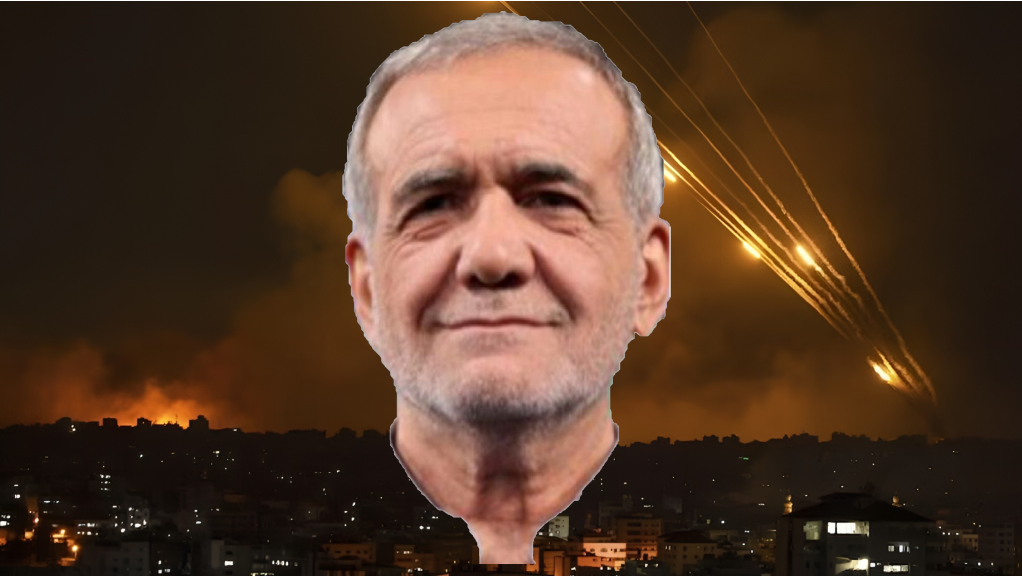
Contrary to expectations, the reformist candidate was approved by the Guardian Council, and the media talked about the fact that the religious government was willing to reform. The candidate of the reformists wins the election and on the day after the inauguration of the president of Masoud Pezeshkian, the most important guest of the Islamic Republic, Ismail Haniyeh, the Chairman of the Hamas Political Bureau, is assassinated.
During military conflicts and security threats between The Religious Government in Iran and Israel, the introduction of a reformist president by the religious government seemed a little strange. Considering that the destruction of Israel is one of the ideological goals of Islamists, so this situation is a good opportunity to achieve it. Therefore, the presence of a radical president like Ebrahim Raeisi was more predictable.
Also, considering the debates about the succession of the leadership after the death of Ali Khamenei, the president with tendencies close to the leadership was more justified. However, the appointment of a reformist president in this situation caused a lot of speculations, most of which revolved around deep differences in the governing system of the Islamic Republic.
On the other hand, the religious regime’s delay in responding to Israel regarding Haniyeh’s assassination has created the suspicion that Massoud Pezeshkian was against the military attack.
I intend to show in this article not only that there is no difference, but this behavior and performance are completely consistent with the governance model of The Religious Government in Iran. On the one hand, this model is affected by the developments and the dominant approach that has dominated international relations in the last two decades, and on the other hand, it is derived from the historical knowledge of the Islamic regime.
I try to show how this pattern is formed according to the above factors. Also, the delay in the response to Israel can be understood according to the same pattern.
1. The first trick of the religious government in Iran in response to international pressure
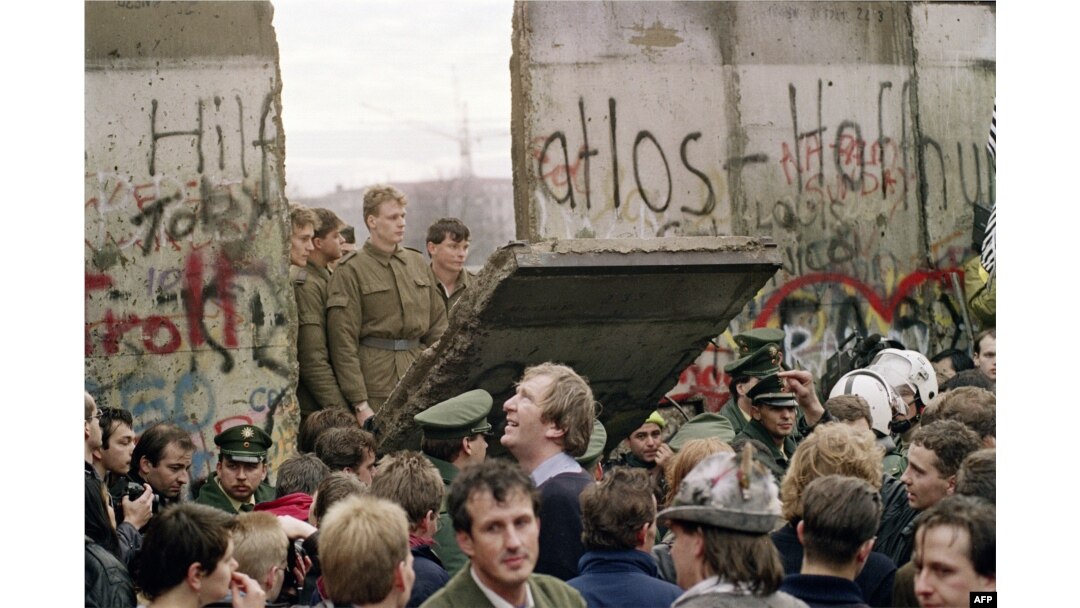
During the collapse of the bipolar system and dynastic revolutions in Eastern Europe and Central Asia, the Religious government in Iran realized that it had to take measures for survival and continuity. In the beginning, a kind of confusion can be seen in the behavior of the government. For some time, it was believed that the adoption of the “adjustment” strategy in the economic field could fulfill this task.
The policies adopted during the presidency of Akbar Hashemi Rafsanjani are well indicative of this importance. However, the result did not match the set goals. The pressure of the winners of the Cold War and the pressure of inflation and unemployment resulting from the “adjustment” strategy had caused all the players in this field to look for an alternative way.
The content of Mohammad Javad Larijani’s talks with Nick Brown, the head of Iran’s desk at the British Foreign Ministry, indicated this situation. The text of these negotiations, which was published before the 1997 elections in Iran, shows that the representative of the Islamic Republic (Mohammed Javad Larijani) is trying to convince the British side that the failure of the government of the Islamic Republic in the “adjustment” was due to Hashemi Rafsanjani’s failure to fulfill his duties.
If Ali Akbar Natiq Nouri becomes president, economic liberalization will continue faster. However, the concern of the West was not only the method of implementing economic liberalization. The end of the Cold War coincided with the rise of the “human rights” discourse. Human rights were the most important slogan of the free world in the last days of Soviet life.
The continuation of colorful revolutions and the expansion of the free world depended on the continuation of this slogan. It was obvious that relying on economic solutions would not fulfill the requirements of this slogan. As Zbigniew Brzezinski clearly says during the collapse of the Eastern Bloc: “The West should not be afraid of emphasizing the philosophical and symbolic aspects of the issue when clearly defining the concept of the end of the Cold War.” Still, the main issue is freedom of choice against forced ideological imitation. Let’s remember that during the Cold War, human rights were always in the center of attention and the West’s recognition of human rights was the greatest spiritual force of the West.
The shape and image of the reform front, which showed itself in 1997 by supporting the candidacy of Seyed Mohammad Khatami in the presidential elections, is the result of the dialogue arising from such a situation. The free world’s insistence on economic and political liberalization and deals of power bands in the Islamic Republic system led to the formation of the reform front which is a mixture of liberal economic goals, strengthening civil society and political freedoms.
Although the formation of the seed of reforms was the conclusion of the interaction of The Religious Government in Iran with the new international system, in the meantime, the freedom-loving people also seized the opportunity to seek to raise basic political issues, including democracy and pluralism. It can be said with certainty that the day after the presidential election in 1997, the political arena in Iran was a battle between the religious government and the freedom-loving people. What is called the fundamentalist and reformist confrontation is a tolerant introduction to this confrontation. The most important confrontation between these two groups was the events of 2009.
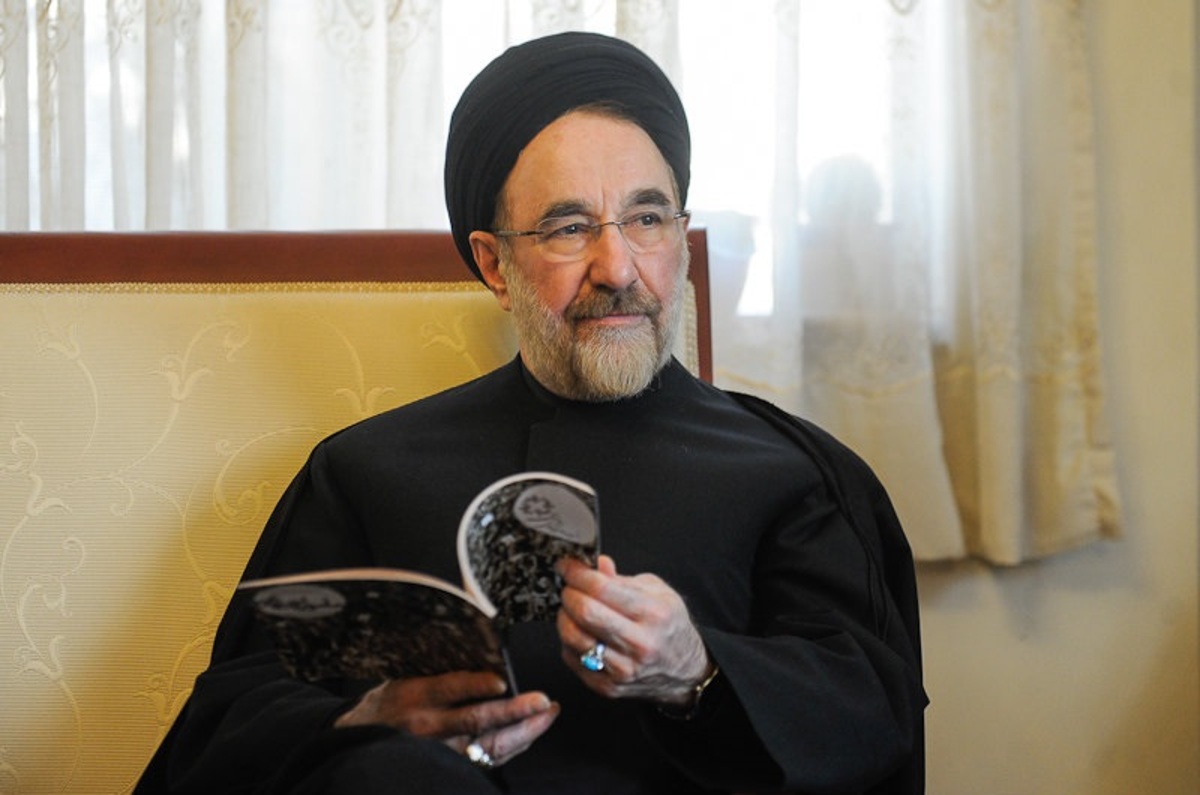
On the 9th of February 2003, Mohammad Khatami, the president of Iran at the time, announced the preparation of nuclear fuel by Iranian experts for Iran’s nuclear power plants, and this was the beginning of the change in the Islamic Republic’s approach to international relations.
By activating the process of uranium enrichment, the Islamic Republic was able to transfer its interactions with the Western world to an issue that did not necessarily require political and social changes inside. In 2005, the Islamic government announced the end of the reformation project with the presidency of Mahmoud Ahmadinejad. In the presidential election, Mohammad Baqer Qalibaf, one of the presidential candidates, clearly stated that the era of rotten discourse of human rights is over. Ahmadinejad openly ridicules the intellectual and spiritual values of the West and threatens the red lines of free worlds. In response to the CNN reporter (Christian Amanpour) regarding the possibility of war, he confidently says that no war will happen.
In 2009, the government reformists who once thought that they were the only racehorse of the Islamic Republic in the field of international relations saw themselves as losers, they stood by the people who sought to assert their rights in the elections, and the result was the full-scale suppression of the green movement, reformism and supported a continuation of the way that started with Ahmadinejad.
The important point is that all the repressions and murders were taking place in front of the free world under the leadership of Barack Obama, but no serious reaction was seen from them. It was confirmed for the Islamic government that the era of promoting human rights and pursuing the meaningful components of the free world by the West has ended.
As the uproar of the liberal world subsided, the religious government found an opportunity to re-introduce itself as an international actor with fundamentalist ideological goals. When the religious system saw that there was no longer any requirement to display human rights and political and economic freedoms, it tried to display new deterrent powers through technical achievements in nuclear enrichment.
However, although the Western world no longer paid for the values of human rights and liberalism, it did not mean that it ignored the security and aggressive movements of the fundamentalist governments. The imposition of economic sanctions against the nuclear activities of the Islamic government convinced this government again that it should play a different role in the field of international relations.
The emergence of Hassan Rouhani’s government together with Javad Zarif is the result of this re-change of approach. With this tactical move, the Islamic government succeeded in obtaining the JCPOA treaty. Something that went away after Donald Trump took office. However, JCPOA and nuclear activities were not the only cards of the religious government to play in the international arena.
In all these years, in parallel with the nuclear activities, the Islamic Republic tried to produce deterrent powers in another area. The missile and drone industry is the result of such effort. at the same time with the change of government in America and Joe Biden coming to power, the Islamic system had also come to the belief that their missile and drone power is such that it has the necessary deterrent power so that it can pursue its Islamist ideological goals again.
Therefore, with the re-engineering of the elections, the most radical government possible, i.e. the cabinet of Ebrahim Raeisi, came into office. Relying on this deterrence power, the Islamic Republic easily stopped all nuclear negotiations and tried to get more playing cards by increasing enrichment. But one incident destroyed all this belief and sweet dream for the Islamic government.
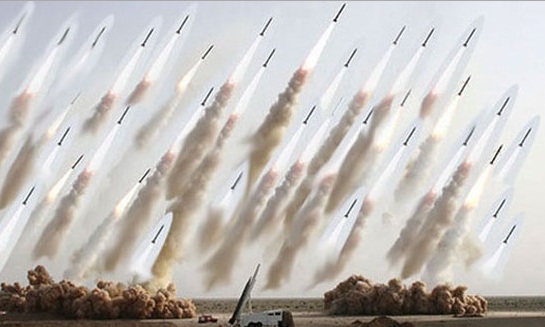
On April 13, 2024, hundreds of missiles and drones were fired at Israel after Iran decided to avenge the death of several IRGC commanders. The result was incredible. Almost all of them were destroyed before reaching their destination. The Islamic regime suddenly realizes that all its investments in these few years have been made on a project that is based on knowledge and technology that has expired.
All that self-confidence and pride based on the missiles and drone industry was blown away in one night. After this incident, the Islamic Republic remains like a mansion without a door, and anyone can enter it without fear of anything.
Ismail Haniyeh, the Chairman of the Hamas Political Bureau, who lived in Qatar, was assassinated in Tehran. His assassination in Qatar and even Turkey was operationally easier, but he was killed in Tehran. The reason is clear. Terrorism as a military attack in Qatar will be met with the reaction of the United States (the military supporter of the security of the Qatari government) and Turkey is also a member of NATO.
However, the ruling regime in Iran no longer has any deterrent power. Therefore, Tehran is the easiest place to kill Ismail Hine with the least consequences. In such a situation, it is not surprising if someone claims that Ibrahim Raeisi’s helicopter was shot down due to a military attack. There is no reason to fear the enemies of the Islamic Republic.
In this situation, the Islamic government is again trying to show its reformist face. The Islamists ruling the land of Iran, without having a deterrent force, can obtain the necessary security only by softening and negotiating with the Western powers. They hope that the appointment of Masoud Pezeshkian with the mask of reformism can compensate for the weakness resulting from the collapse of the deterrence force.
2. The historical trick
In the beginning, it was said that the behavior of the Islamic regime is rooted in historical knowledge. This historical knowledge had such an impact on the behavior of the regime that some translated it into the nature of the Shiite government. This Shiite historical knowledge is directly related to how this religion was formed. The two sides of Muslims Shia and Sunni go back to the early days after the death of the Prophet of Islam. When the companions of the Prophet gathered in a place called Saqifa in the city of Medina and decided to succeed their late leader.
An important person was absent from this meeting. he was Ali who was the cousin of the Prophet. Those present in the meeting chose Abu Bakr as the successor (the caliph) of the Prophet. However, some Muslims believed that the real successor (the caliph) was Ali ibn Abi Talib. The division of Muslims into two parts goes back to this issue. Those who considered Abu Bakr as the prophet’s caliph according to the meeting of Saqifah are Sunnis and those who believe that Ali is the true successor of the prophet are called Shia. For centuries, the Islamic caliphate has been in the hands of the Sunnis.
Shiites scattered and on a smaller scale sometimes managed to establish governments in Egypt and sometimes in the north of the Iranian plateau. Throughout the centuries of Sunni caliphate rule, Shiites have lived with an action called “Taqiyah”. Taqiyah is a doctrine of Shia jurisprudence that says that Shiites should live in non-Shia governments quietly and without challenges and only look for an opportunity to establish a Shia government. A kind of conservative behavior that hides intentions and identity, patiently looking for a suitable opportunity to implement its goals.
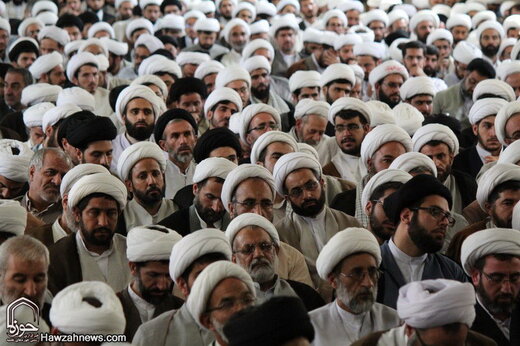
The same historical knowledge can be seen in the behavior of the Islamic Republic. Showcasing the reformist president and spreading the slogans of civil society and freedom remains the same “Taqiyah” that hides the identity and true intentions of the government in the international arena and provides this opportunity to create economic and political relations for its interests. Benefiting from international interactions helps them to implement their ideological goals at the right time. Military capabilities as a deterrent power allow the Islamic government to get out of the reformist “Taqiyah” and clearly show its identity and goals.
3. The second trick of the religious government in Iran in response to international pressure
For two decades, human rights regimes have no place in international relations. Institutions and non-governmental organizations are practically useless and ultimately their activity depends on the results of negotiations between governments. After that, the internal civil institutions of the countries are not paid much attention. This result is caused by the close positions of neo-liberalists and neo-realists, which limit international relations to the benefits of mechanical power interactions and consider governments as the main actors in international relations.
The approach derived from this agreement believes that economic pressure can persuade fundamentalist governments to respect international laws and regulations. The basic assumption is that the main determining factor in international relations is the “distribution of material capabilities”. Therefore, all abnormal behaviors can be managed by controlling this item.
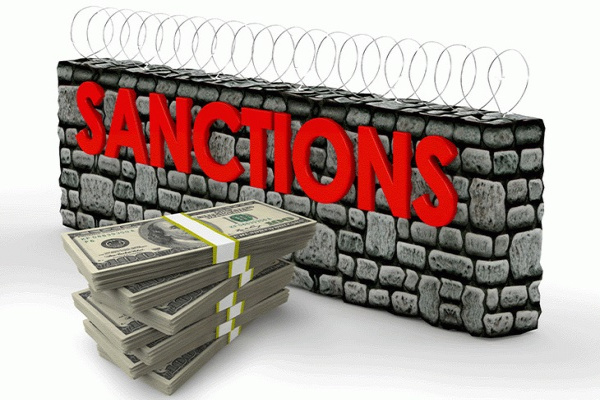
This approach practically seeks the desired normative behavior at a certain time and does not care about the ideology, the current logic of the ruling regime of the countries, the human rights situation, the history of the governments, and the like. Economic sanction is the most important solution of this approach to punish and change the behavior of governments.
When we put the history of the behavior of the Islamic Republic next to the historical knowledge of Shia and the history of developments in international relations in the last two decades, we notice a pattern of behavior that has been formed and repeated according to these conditions.
It was pointed out that Shia reached a knowledge that is called “Taqiyah” according to the course of its historical developments. In practice, this knowledge is a kind of behavior management about time. The components of “taqiyah” are “patience”, “camouflage” and “opportunism”. This doctrine advises that Shiites should be patient in unfavorable conditions and camouflage themselves with their surroundings so that there is no danger for them.
But at the right time, they will come out of camouflage and take the necessary action to achieve their goals. “Taqiyah” is not a very complicated education, but because of it, even though the Shiites have always been in the minority, they have been able to protect themselves from the harm of the Sunnis for centuries to establish a Shiite government at the right time.
Reformism is always a kind of camouflage for the Islamic government. In the era after the collapse of the Eastern Bloc and the hegemony of the human rights regime, reformism was the appearance of democratization and intention to civil society, which sought the realization of human rights in the land of Iran. While changing the foreign policy in the West under the leadership of Barack Obama and the abandonment of human rights regimes, reformism in Iran expired. The Islamic government did not see itself bound to a reformist show by acquiring the appropriate deterrent military power.
Today there is an unstable situation between the religious government and international relations. On the one hand, the missile and drone deterrent power of the Religious Government has been burnt, on the other hand, the reformist strategy of this regime has been rejected by the Iranian people. in such a situation what is the reciprocal behavior of the religious government with the West? Anyway, the following can be predicted:
1- The religious government is trying to conclude deterrent military agreements with the enemies of the West, including Russia and China.
2- The religious regime is trying to start the production of more equipped deterrence weapons as soon as possible. Nuclear weapons are also considered as one of the options.
3- The religious government is trying to deal a blow to Israel by carrying out unconventional operations, such as suicide, partisan, etc., to temporarily prevent the continuation of terrorist attacks and the removal of influential people.
4- It is obvious that to achieve deterrent power, mullahs are trying to enter into negotiations with the West with a reformist appearance to gain the right time and opportunity. Currently, the best situation for them is American pressure on Israel, to prevent the continuation of attacks such as the assassination of Ismail Haniyeh or the destruction of nuclear infrastructure.
On the other hand, it is predictable that the West is hoping that there isn’t a situation where they are forced to intervene. It is obvious that human rights regimes are not important in the meantime, he asks Israel not to annoy the mullahs, and the International Nuclear Agency is also obliged to provide the necessary preparations for long-term negotiations.