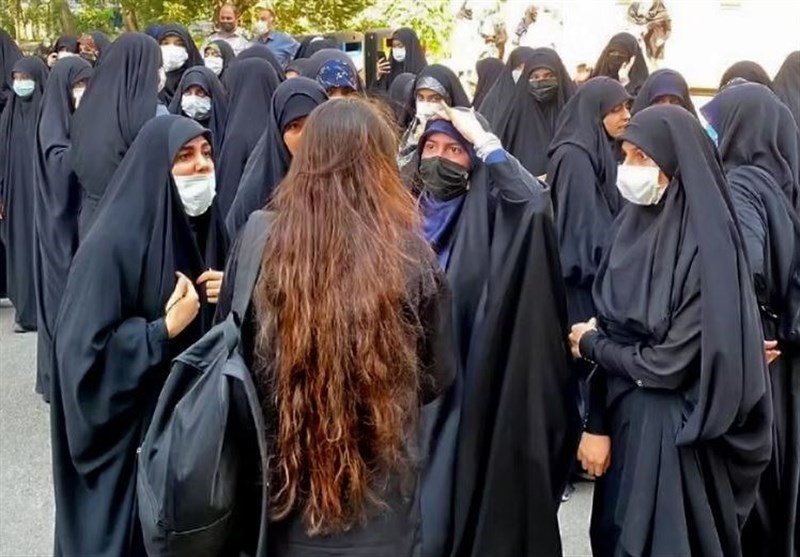
Many analysts pay attention to the conflict between a large part of Iranian women with traditionalists and the religious government over the Hijab. These analyses usually look protection of the Hijab through the perspective of human rights, including the right to choose the type of clothing.
In this note, I look at this conflict from a different perspective and illustrate the relation between the Hijab and the mechanism of power and its vital role in the continuation of the political power of traditional forces. For this purpose, I enter the traditional world of Iranians to better clarify the intellectual foundations and power structures that traditionalists rely on today.
According to a classical classification (Aristotle’s classification), the type of government depends on the number of people who make decisions and determine binding rulings in the public realm [1]. The public realm is where a person or some people come to make decisions on issues that are common to all people. On the other hand, the private realm is exclusively available to the individual. It is obligatory to protect its privacy from others, and no one has the right to enter and make decisions about it.
Usually, affairs related to the inside of the house are considered the private realm and outside the house are considered the public realm. Various factors affect the type of government. For instance, the extent of territory of governance (from the smallest as ancient Greek city-states to the largest as an imperial unit) or the access to military force.
But the most significant factors and in a way the most durable among them are the cultural factors or better said: the discourse factors. Regardless of the extent of governance and even the military force, this factor has caused the most durable governments throughout history.
The Public and Private Realm
When we carefully look at the traditional relations between the public and private realms in the history of Iran, a phenomenon appears as a pattern that can be repeated in different periods, which illustrates the dominance of a mechanism. This mechanism demonstrates a balance of power between these two realms. This mechanism was influenced by a cultural discourse and had a significant role in the type of government and governance in this land. The figure below shows this power balance.
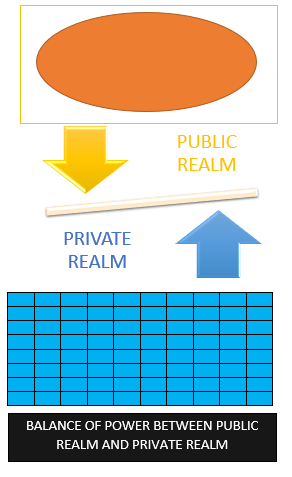
In this figure, the public realm is drawn as a large shape in orange. A shape alone shows the monopoly of power. And its greatness reflects the high political power. On the other hand, in the private realm, we see countless blue shapes, which shows that the masses of people are trying to organize their lives in this realm, and by not being present in the public realm, they have given it exclusively to the mullahs. Also, the balance of power between these two spheres is observed, caused by a dominant discourse on the lives of Iranians.
The comparison of the private and public realms in Iran illustrates that the people of this land mainly pursue life and the meaning of living in the private realm and do not want to be in the public realm.
On another note, I demonstrated that in the traditional life of Iranians, the public realm was absolutely in the hands of the Mullahs. Such monopoly is caused by many factors that have accumulated on each other throughout history and caused this situation to continue.
But one factor has played a very key role. So still in the modern era, the most focus to maintain this factor is made by the Mullahs and traditional forces.
What has caused the public realm to be monopolized by the Mullahs is more related to the desire of other people to focus on the private realm than the Mullahs’ efficiency and success in the public realm. It seems that the private realm has a special attraction and persuasive logic that forces Iranians to constrain their lives in this realm.
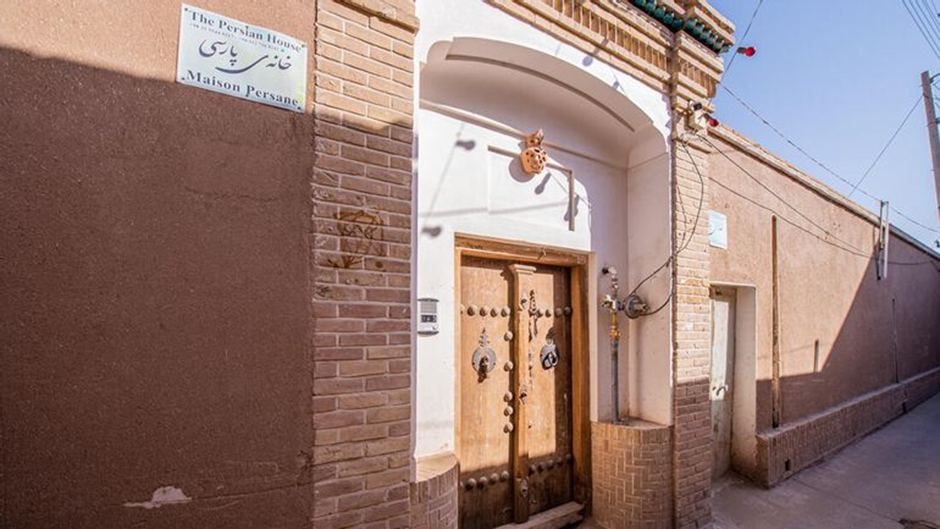
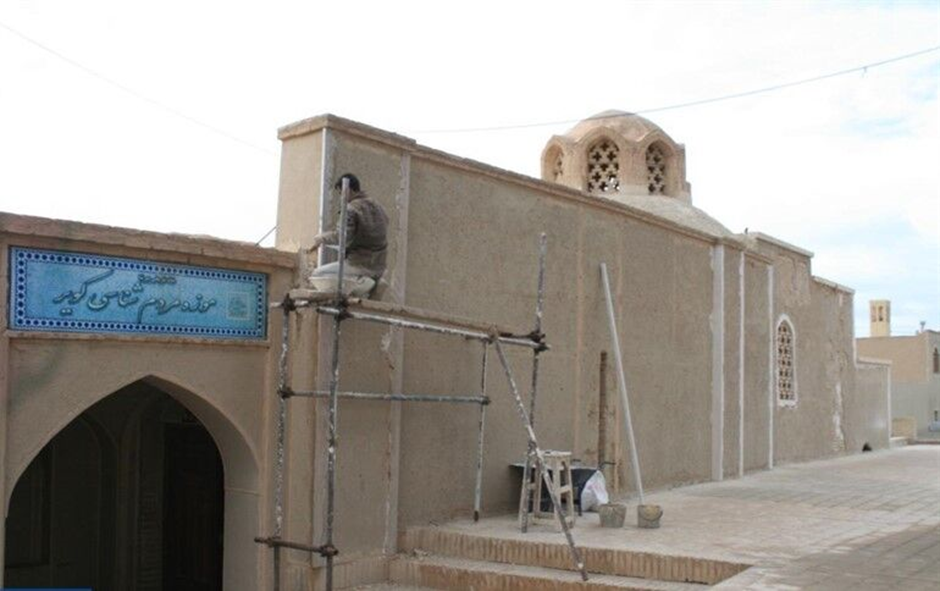
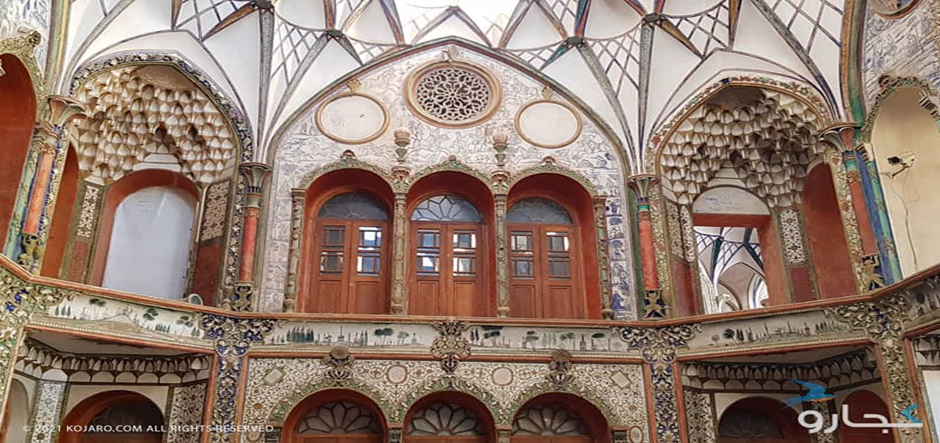
A comparison of the living environment inside and outside the house shows that Iranians seek the pleasure of the world and life in the house.
Inside and outside the house narrates two different worlds. As much as the outside of the house is ugly and lacking identity, the inside of the house is beautiful, colorful, and full of human initiative and creativity. Inside the traditional Iranian house is decorated like a jewelry box, where a treasure is kept secretly. What is this “hidden treasure”?

The Protection of the Hijab
As long as this treasure follows the law of scarcity, it can be a treasure. The more unknown and secret this treasure is, the more valuable it is. This mysterious treasure is “the woman”. The presence of a woman in this position has made her the main point of the power structure in Iranian tradition.
Such a position not only requires the education of women who deserve to be in it but also the mentality and intellectual and ideological structure of men are educated accordingly. A woman should behave according to her role of mysterious treasure, and a man should consider a woman as a mysterious being. Women can achieve this vital position in the private realm when only seen and discovered by the man of the house.
The guarantee of exclusivity in the past is confirmed by “virginity” and the guarantee of exclusivity in the present and future is confirmed by the protection of the”Hijab” [2]. As much as the hiding and disappearance of a woman increases her mystifies, the nakedness and exposure of the body destroy her and her family [3].
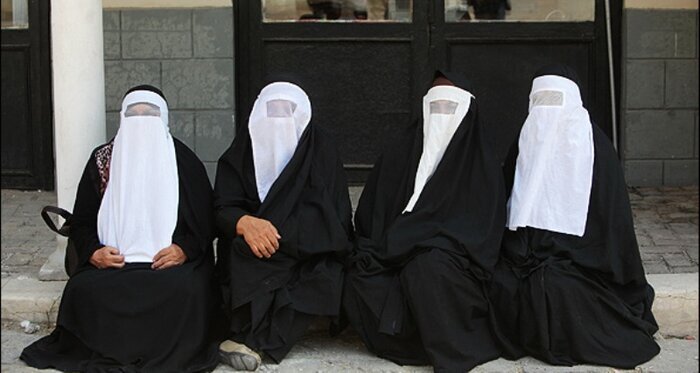
A mysterious woman by the protection of the Hijab has the same status with an Iranian man as land ownership has for a Western man.
If Western conservatism finds minimal government and negative freedom as a suitable solution to preserve private property in the era of nation-state formation, the traditionalism of Iran also considers the mandatory hijab as a suitable solution in the modernization era to preserve the mysterious women.
Obviously, in the absence of such a position for women, the traditional Iranian private realm will no longer be attractive to men. The unattractiveness of the private realm annihilates the balance of power between the two realms, private and public, and the continuation of the monopoly of the public realm by the mullahs is no longer guaranteed.
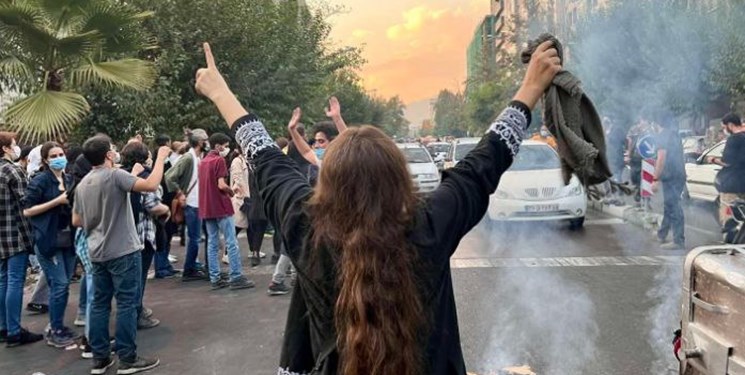
Identifying the mechanism of power in the tradition of Iranians makes to better understand the behavior and hostility of traditional forces with modernism. The revolution of 1979 was a fundamental reaction by the traditionalists to the modernization of the Pahlavi era. After the revolution, they tried to revive the traditional power mechanism because this mechanism was a guarantee for them to monopolize power in the public realm. In all this time, the biggest challenge for the traditionalists has been the Women-Life-Freedom movement. Therefore, they try to use the highest level of repression to maintain this exclusive power.
Ps:
1- Aristotle classified governments based on the number of people present in the public realm for legislation. In other words, Aristotle held that governments could be categorized based on two questions: “Who rules?” And “Who benefits from the rule?”. He believed government could be placed in the hands of a single individual, a small group, or the many. In each case, however, the government could be conducted either in the selfish interests of the rulers or for the benefit of either community.
2- One of the old traditions among Iranians is showing a bloody napkin on the first night of marriage. This napkin was a document to demonstrate that the bride had not been revealed and discovered until that night and the groom is the first person to have reached her. Therefore, she is still a mysterious being and only the groom knows about her. For more information, you can refer to this source:
Maghdoor Mashhood, Amir. (2017). Iranian Biopolitics. Publisher: Gaam-e- no. Tehran. [in Persian].
3- Cases have been recorded that for punishment of a guilty man the women of his family coerced to be naked in front of the public. Such a punishment was so heavy and devastating that in the least case, they emigrated but usually it led to their suicide. This phenomenon shows that the individuality and preservation of a person’s personality will be recognized by others as long as the woman of that family is protected from the eyes of others. By making women naked, the members of that family (especially the husband of that woman) are destroyed in such a way that he sees fit to give up his life. For more information, you can refer to this source:
Martin. Vanessa (2005). The Qajar Pact. Bargaining Protest and the State in Nineteenth-Century Iran. Publisher: I.B. Tauris. London.