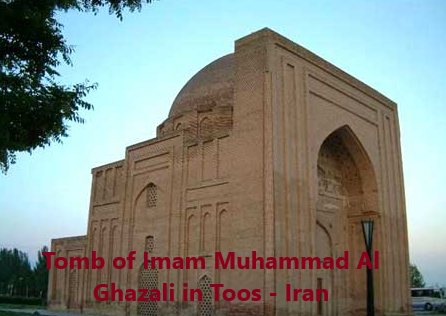
The Political Thought of Imam Muhammad al-Ghazali (1058-1111 CE) was one of the most influential Islamic Ideas of the medieval period. His works played a significant role not only in theology and jurisprudence but also in shaping political thought. His political philosophy presents a synthesis of realism and idealism, seeking to balance religious legitimacy with the necessities of political power.
Historical and Political Context of al-Ghazali’s Era
Al-Ghazali lived during the Abbasid Caliphate when real power was in the hands of the Seljuk sultans, while the caliphate had become largely symbolic. Religious disputes between the Ash’arites and the Mu’tazilites, as well as the challenges posed by Greek-Islamic philosophy, shaped the intellectual landscape of his time. These circumstances had a profound impact on his political thought.
The Political Thought of Imam Muhammad al-Ghazali
Al-Ghazali was a systematic thinker who prioritized organization and classification. In the first quarter of his book Ihya Ulum al-Din, he discusses the classification of sciences and highlights the position of politics within this framework. Initially, it may seem unusual for a book dedicated to reviving religious sciences to address politics, but al-Ghazali’s intent was to emphasize the spiritual core of religion. Unlike scholars such as Ibn Taymiyyah, who sought to purify religion by removing later additions, al-Ghazali focused on reducing the rigidity of religious formalities in favor of its spiritual essence.
Foundations of al-Ghazali’s Political Philosophy
In his works, particularly Nasihat al-Muluk and Ihya Ulum al-Din, al-Ghazali discusses the role of religion in politics. He asserts that governance without the guidance of Sharia leads to deviation. While acknowledging the necessity of political authority, he emphasizes that rulers must operate under the supervision of scholars and uphold Islamic ethical principles.
The Role of the Caliph and Sultan in Islamic Governance
Unlike many of his contemporaries, al-Ghazali adopted a pragmatic view of the roles of the caliph and the sultan. He linked governmental legitimacy to adherence to Sharia and maintaining public order. Recognizing that the Abbasid caliphate had lost its power to the Seljuks, he accepted this reality and emphasized the necessity of cooperation between religious scholars and political rulers. Instead of advocating for an ideal caliphate, he justified the legitimacy of sultans as protectors of religion and social stability.
The Relationship Between Religion and State
Al-Ghazali rejected the notion of separating religion from politics. He believed that religion and the state are like two wings of a bird—without governance, religion weakens, and without religion, political authority loses its legitimacy. This perspective reinforced the role of religious scholars in politics while enabling rulers to derive legitimacy from supporting religious institutions.
Critique of Tyranny and Corruption
Despite recognizing the role of the sultan in maintaining order, al-Ghazali was a strong critic of tyranny and corruption. He insisted that rulers should avoid oppression and misuse of power, and that scholars must not remain silent in the face of injustice. In Nasihat al-Muluk, he provides guidance for rulers, emphasizing justice, protection of people’s rights, and the avoidance of cruelty.
Comparative Analysis of al-Ghazali’s Political Thought
Compared to other Islamic thinkers such as al-Farabi and Ibn Khaldun, al-Ghazali’s political views exhibit notable differences. While al-Farabi envisioned a utopian city governed by philosophers, al-Ghazali emphasized the role of religion and ethics in governance. Ibn Khaldun viewed politics as driven by social cohesion and power dynamics, whereas al-Ghazali analyzed politics through the framework of Islamic law.
Classification of Politics in the Political Thought of Imam Muhammad al-Ghazali
Al-Ghazali classifies politics into four categories:
- Prophetic Politics – The highest form of governance, aimed at reforming both the inner and outer aspects of human life.
- Political Leadership of Rulers and Jurists – Focused on governing people externally through authority and jurisprudence.
- Religious Scholarly Politics – The role of scholars in guiding the elite and influencing spiritual dimensions.
- Preacher’s Politics – The dissemination of religious teachings among the general public.
This classification illustrates that in the absence of prophetic leadership, political responsibility is divided into these three remaining forms, each contributing to societal reform.
The Legacy of al-Ghazali’s Political Thought in Contemporary Politics
Al-Ghazali’s political ideas remain relevant in discussions on Islamic governance, the role of religion in politics, and government legitimacy. His emphasis on the interdependence of religion and state and the necessity of scholarly oversight of rulers continues to influence contemporary Islamic thought. However, some critics argue that his views were overly conservative, reinforcing the status quo rather than advocating for political transformation.
Conclusion
The political thought of Imam Muhammad al-Ghazali represents a form of realism wrapped in religious legitimacy. By accepting the role of sultans, he sought to provide a framework for legitimizing governance while urging rulers to adhere to justice and ethical principles. His ideas remain significant not only in medieval political philosophy but also in modern discussions on Islamic politics.