


Introduction
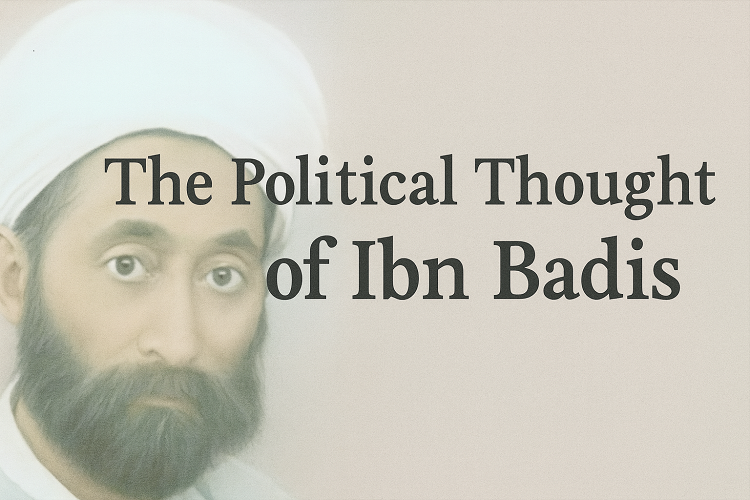
The political thought of Ibn Badis is one of the central themes in examining the intellectual and social transformation of Algeria during the period of French colonialism. This thought emerged in a context in which Algerian society was confronted with deep cultural, educational, and political challenges, and many traditional institutions had lost their former strength. Under such circumstances, Ibn Badis sought—through education, religious reform, and the reinterpretation of the Islamic heritage—to provide a basis for the reconstruction of collective identity and the enhancement of public awareness.
However, the importance of addressing the political thought of Ibn Badis is not limited merely to his historical role; it is also significant because his intellectual and practical legacy later influenced the formation of reformist, nationalist, and even certain Islamist tendencies in North Africa. In particular, his approach to linking cultural reform with political transformation offered a model that attracted the attention of many religious intellectuals and social leaders. Therefore, a precise examination of this thought helps us better understand the relationship between religion, identity, and politics in colonial and post-colonial societies.
In the following article, the historical and social contexts that shaped Ibn Badis’s views will first be examined. Then, his intellectual and religious foundations in the field of politics will be explained in order to show how his understanding of the Qur’an, the Sunnah, and moral education became a framework for social action. After that, his relationship with reformist and nationalist movements, as well as the role of the Association of Algerian Muslim Ulama, will be analyzed to clarify how his ideas were transformed into social engagement. Finally, considering that the presence of religion in politics has always been a subject of debate and critique, a section of the article will be devoted to a critical evaluation of the political thought of Ibn Badis. This evaluation seeks to examine the limitations, consequences, and vulnerabilities of this approach in confronting the modern state and the needs of pluralistic societies.
-
The Life and Historical Context of Ibn Badis
To better understand the political thought of Ibn Badis, attention to the historical and social circumstances of his era is essential, for the environment in which he was raised played a decisive role in shaping his reformist approach and his interpretation of the relationship between religion and politics. ʿAbd al-Hamid Ibn Badis was born in 1889 in Constantine into a well-known family of scientific and social standing. He grew up in an environment where, on the one hand, Islamic educational traditions still possessed considerable influence, and on the other hand, the effects of French colonialism on social and cultural structures were apparent. This simultaneity of two contradictory conditions—the presence of a native scholarly heritage and the increasing pressures of colonialism—created a context that later contributed to the development of his sense of social responsibility and his reformist outlook.
In the late nineteenth and early twentieth centuries, Algeria’s political structure was largely under the direct and strict domination of France. Colonial policies not only controlled economic resources and the political system but also gradually weakened many traditional educational institutions and, through widespread restrictions, limited the possibility of independent elites emerging. Alongside these pressures, social changes resulting from urbanization, internal migration, and the erosion of tribal structures exposed society to a crisis of identity. These conditions increased among parts of the elite the sense of a need for cultural revival and reconstruction.
In such an environment, Ibn Badis began his basic studies and later traveled to Tunisia to continue his education. His time at Zaytuna University—one of the main centers of religious and Arabic studies in North Africa—opened new horizons before him. His acquaintance with modern teaching methods, his interaction with reformist teachers, and his attention to the critique of superstition had a significant impact on shaping the early layers of his thought. Moreover, the relatively open intellectual climate of Tunisia at that time, where new debates about religious reform and social transformation were taking place, helped move his focus beyond traditional learning toward a broader understanding of religion’s role in society.
After returning to Algeria, Ibn Badis was confronted with a reality quite different from his educational experience in Tunisia. He saw a society that—under the cultural pressures of colonialism—had lost part of its identity and whose educational institutions had declined. This observation motivated him to begin his activities in teaching, preaching, and founding new schools. From this stage onward, the connection between religious reform, public education, and a kind of purposeful social activism became more prominent in his works, gradually laying the foundation for the formation of the political thought of Ibn Badis.
Overall, the historical period of Ibn Badis can be characterized by three major features: first, the political and cultural domination of French colonialism; second, social changes and the gradual weakening of traditional institutions; and third, the efforts of reformist elites to rebuild Islamic-Arab identity. These three axes not only influenced his life but also created the context in which his ideas emerged, developed, and later manifested in social and political movements. Therefore, any discussion of the political thought of Ibn Badis without attention to this historical background would be incomplete, for many of his reformist approaches were responses to these very transformations and pressures.
-
Intellectual and Religious Foundations in the Political Thought of Ibn Badis
To understand the political thought of Ibn Badis precisely, it is necessary first to examine his intellectual and religious foundations; for his political framework derives directly from his interpretations of the Qur’an, the Sunnah, and the concepts of religious reform. These foundations constitute the point at which his religious education, social concerns, and cultural perspectives meet, ultimately resulting in a blueprint for reconstructing society.
At the outset, Ibn Badis considered the Qur’an the central axis of reform. He believed that many of the social and cultural problems of his time stemmed from people’s distancing themselves from the fundamental teachings of the Qur’an. Therefore, he saw a return to a direct and uncomplicated understanding of the Qur’an as a means for generating transformation in society. Alongside this, his attention to the Sunnah was based on reviving ethical conduct, preserving social cohesion, and strengthening individual responsibility. However, his interpretation of the Sunnah focused more on its ethical and social dimensions rather than on producing complex political structures.
Another important element in the intellectual foundations of Ibn Badis was his emphasis on the role of reason in interpreting religion and confronting social issues. Although he derived his primary framework from religious texts, he believed that reason could serve as a tool for a better understanding of these texts and could help produce a more realistic comprehension of society’s needs. This perspective distinguished him from some rigid traditionalist currents and enabled him to pursue reform not merely as a return to the past but through an approach adapted to the social conditions of his time.
At the same time, Ibn Badis paid special attention to criticizing superstition and certain unfounded traditions that had become widespread in society. He considered such tendencies a factor of intellectual weakness and an obstacle to societal progress, and he sought—through the promotion of sound and rational education—to create an environment in which religion could play a clear role in strengthening social order. In his view, religious reform would only be effective if it was based on public awareness, proper education, and the rejection of deviant forms of religiosity.
In sum, the intellectual and religious foundations of Ibn Badis were a combination of returning to the primary texts of Islam, using reason as a tool for understanding, and reforming the educational and moral institutions of society. This combination ultimately led to the formation of a coherent plan for social transformation that later manifested as the political thought of Ibn Badis. Although this plan did not present a specific political structure, it articulated principles and orientations essential for understanding his social action and his role in the cultural and political awakening of Algeria.
-
Ibn Badis’s View on the State and Political Power
To analyze the political thought of Ibn Badis, it is essential to examine his view of the state, political power, and the relationship between Sharia and governance. Although he did not present a codified political theory in the classical sense, a set of principles and approaches can be identified in his writings and activities that gradually provide a framework for understanding the place of politics within his reformist project. These principles emerged within the context of colonial challenges and the need for social reconstruction; thus, rather than aiming to produce a formal political doctrine, they sought to offer practical guidance for Algerian society.
At the outset, Ibn Badis regarded the state as an institution whose legitimacy must be based on justice, responsibility, and adherence to moral principles. He derived his conception of the state directly from religious teachings and, rather than addressing complex political structures, emphasized the moral qualities of rulers and the integrity of public life. Therefore, in his view, governance is acceptable only when it aligns with the values of Sharia and creates the conditions for cultural and social development. This perspective focuses less on explaining the institutional form of the state and more on its educational and moral functions.
On the other hand, Ibn Badis’s confrontation with French colonialism explains a major part of the formation of his political outlook. He viewed colonialism as a structure targeting not only political independence but also the cultural and religious identity of society. Accordingly, one of the central elements of his political thought was strengthening social awareness for civil resistance and the revival of religious identity. Although he did not believe in armed struggle, he sought—through education, the press, and cultural organization—to empower society to resist political and cultural domination. As a result, his approach to political power was dual: on the one hand, emphasizing the moral and religious reform of governance; and on the other, working to strengthen society against external domination.
Furthermore, Ibn Badis interpreted the relationship between Sharia and politics in such a way that Sharia served as a guiding and limiting force for political power. In his view, Sharia consists of ethical and social principles that can prevent tyranny and corruption. While he did not speak of an Islamic state in the modern institutionalized sense, he believed that religious principles should function as criteria for evaluating the conduct of rulers. This approach aimed less at establishing a political system based on religion than at providing ethical orientation for rulers and citizens.
In conclusion, Ibn Badis’s view of the state and political power can be summarized in three main pillars: first, the legitimacy of the state depends on justice and morality; second, cultural and social resistance to colonial domination is essential; and third, Sharia should serve as a framework guiding values in governance. Although this view does not fully correspond to the model of the modern state, its principles play a crucial role in shaping his political orientation and contribute to a deeper understanding of the political thought of Ibn Badis.
-
Ibn Badis’s Relationship with Reformist and Nationalist Movements
Examining Ibn Badis’s relationship with reformist and nationalist movements is a key aspect of analyzing his political thought, for this relationship demonstrates how his reform project moved beyond education and religion and contributed to the formation of collective identity and social movements. Given that Algeria in his time was under French colonial domination, much of his intellectual and social activity naturally took shape at the intersection of religion, culture, and nationalism.
To begin with, Ibn Badis was connected to religious reformist currents that were developing in North Africa and the wider Islamic world. Although influenced by the Salafi-Usuli reform movement, his understanding of reform did not mean a rigid return to the past; instead, it focused on raising awareness, education, and removing unsubstantiated elements from religion. For this reason, his connection to these movements was more intellectual and ethical than explicitly political. He drew on reformist teachings to lift society out of cultural stagnation and to create a new intellectual atmosphere.
On the other hand, what distinguishes Ibn Badis’s relationship with nationalist movements is his role in reconstructing Algerian identity. At a time when colonial policies had weakened indigenous identity, Ibn Badis sought to reinforce a sense of belonging to Algeria by emphasizing the Arabic language, Islamic culture, and local history. He accomplished this without appealing to violence or presenting a direct political program; instead, he strengthened national sentiment through education, public speaking, and cultural activity. Thus, although he did not define himself as a politician, his work naturally influenced the development of Algerian nationalism.
Moreover, his interactions with other intellectual and political leaders of the time are noteworthy. Ibn Badis collaborated with figures who had different approaches to politics and the anti-colonial struggle. These interactions brought religious reform and nationalism closer together in certain areas. This convergence, however, did not imply identical goals: nationalist movements emphasized recovering political independence, whereas Ibn Badis considered cultural and moral reform a prerequisite for any political transformation. Despite these differences, both currents contributed to strengthening collective identity and resistance to foreign domination.
In the end, the connection between the political thought of Ibn Badis, religious reformism, and Algerian nationalism took shape through three main channels: first, promoting awareness and education as the foundation for social action; second, defending cultural and linguistic identity; and third, striving for social cohesion in the face of external pressures. These connections demonstrate that, although his political role was indirect, his influence on the formation of nationalism and reform movements was enduring.
-
The Social and Political Role of the Association of Algerian Muslim Ulama
Any analysis of the political thought of Ibn Badis is incomplete without examining the role of the Association of Algerian Muslim Ulama, for this institution served as the main vehicle for transforming his ideas into broad social action. The Association was established in 1931 at the initiative of Ibn Badis, together with a group of scholars and cultural activists. Its initial objective was religious reform and the revival of Islamic education, but over time its role expanded beyond that of an educational institution and it became one of the most significant cultural and social organizations in colonial Algeria.
At first, the Association of Ulama focused on rebuilding educational institutions. This emphasis stemmed from the weakness of traditional schools and the spread of colonial schools, which gradually undermined local language and culture. Therefore, the Association sought to establish new schools in which religious instruction, the Arabic language, and the skills necessary for social participation could be taught. Ibn Badis believed that societal transformation began through awareness and education, and the Association provided the means for implementing this idea. These activities not only increased general literacy but also contributed to preserving indigenous identity in the face of colonial cultural pressures.
In addition to education, the Association played an important role in political awareness. It did so through publishing newspapers, holding lectures, and creating networks of teachers and preachers. They worked to convey messages related to Islamic-Algerian identity, the necessity of moral reform, and the need for cultural resistance. Although the Association did not engage directly in party politics, its intellectual atmosphere influenced the formation of later political movements, and many independence activists drew inspiration from this environment.
Over time, the Association of Ulama gained a special place in civil resistance. Although it did not support armed struggle, it employed a strategy of strengthening society from within. This strategy included preserving social cohesion, promoting shared beliefs and values, and creating civic networks capable of resisting policies of cultural assimilation. In this way, the Association provided a social foundation that later supported the national struggle for Algerian independence.
In conclusion, the social and political role of the Association of Algerian Muslim Ulama can be summarized in three areas: first, rebuilding education and strengthening identity; second, promoting public awareness and providing an intellectual foundation for reform; and third, creating a base for cultural resistance against colonial domination. These three dimensions show that the Association was not merely an educational institution but one of the major actors in Algeria’s social transformation. This multifaceted function enabled the political thought of Ibn Badis to move beyond theory and play an effective role in the social arena.
-
Methods of Political Action in the Political Thought of Ibn Badis
An examination of the methods of political action in the political thought of Ibn Badis shows that he pursued politics not in the form of party activity or direct struggle, but within the framework of cultural and social reform. Given the harsh conditions of colonialism and the limitations that existed, this approach was an effort to create lasting change from the bottom up. As a result, his methods were focused less on competition for power and more on building a conscious, cohesive, and capable society.
The first and most important method of political action in Ibn Badis’s view was education. He believed that political transformation is impossible without intellectual and moral transformation of society. For this reason, a significant portion of his activities was devoted to establishing new schools, organizing educational programs, and training a new generation of teachers and students. These educational efforts were not merely religious in nature; they also included language, history, and moral principles so that the individual could play an effective role within society. For Ibn Badis, proper education was a prerequisite for social participation and a soft tool of resistance against the cultural dominance of colonialism.
His second method was the use of the press and public preaching. By establishing and collaborating in publications such as al-Shihab, Ibn Badis created a means to express his intellectual and social ideas. For him, the press was a vehicle through which he could articulate his critiques of society, pursue religious reform, and influence a broader audience. In addition to print media, his sermons in mosques and public gatherings played an important role in expanding collective awareness. These sermons, centered on social ethics, preservation of identity, and the necessity of unity, created a network of communication between him and the people.
Furthermore, Ibn Badis used cultural reform as a prelude to political transformation. He believed that a society suffering from intellectual and moral weakness could neither resist foreign domination nor, even under conditions of independence, create sound governance. Therefore, reforming public culture—from combating superstition to promoting ethical behavior—was for him part of a broader project whose ultimate goal was empowering society and preparing it for political participation. This form of cultural reform pursued politics at an indirect level and, rather than focusing on the structure of power, relied on changing collective mindsets.
Another method of action in the thought of Ibn Badis was distinguishing between political violence and civil resistance. He believed that armed struggle under the conditions of Algeria at that time would not alone be effective and might even inflict greater harm on society. For this reason, he emphasized cultural resistance, social organization, and national cohesion. This distinction did not mean denying the necessity of resistance; rather, it stressed that the initial stages of struggle must be pursued through nonviolent methods and on the basis of public awareness. This perspective later influenced some nationalist movements.
Overall, the methods of political action in the thought of Ibn Badis can be summarized in three main axes: first, education as a tool for raising awareness; second, broad communication through the press and speeches; and third, cultural reform as groundwork for political participation. These methods illustrate a gradual and indirect approach to politics that aligned with colonial conditions and the goal of reviving cultural identity. This is why understanding the political thought of Ibn Badis is difficult without considering his practical tools of action.
-
The Influence of the Political Thought of Ibn Badis on Islamic Awakening
The political thought of Ibn Badis influenced not only Algeria but also the trajectory of Islamic awakening in North Africa and certain other regions of the Islamic world. This influence manifested primarily through education, intellectual dissemination, and the development of social and cultural networks. By focusing on reconstructing religious and cultural identity, he created conditions in which religious reform and social awareness became intertwined, giving rise to a form of “awakening.”
One of the most important areas of influence was the strengthening of Islamic-Algerian identity. Ibn Badis’s thought, with its emphasis on preserving the Arabic language, rereading religious texts, and reforming religious teachings, enabled society to preserve its identity in the face of colonial pressure. This strengthening of identity had significant effects not only at the cultural level but also at the political level, since awareness of collective identity is a precondition for the emergence of nationalist movements and civil resistance.
Moreover, by encouraging education and social activities, he was able to train new forces who later became active in social and political movements. Schools, educational classes, and publications connected to his influence cultivated a new generation of intellectuals and leaders who were both well-versed in religious principles and capable of dealing with social and political issues. This generation benefited from the intellectual legacy of Ibn Badis in both social reform and anti-colonial struggle.
His thought also provided a foundation for Islamic reformist movements in subsequent decades. Ibn Badis’s perspective on the connection between religion and social reform offered a model that attracted attention in other parts of North Africa, including Tunisia and Morocco. This influence was especially evident in the formation of organizations and associations whose goal was to reconstruct the religious and cultural identity of society.
Nevertheless, it must be noted that the Islamic awakening influenced by the political thought of Ibn Badis was not limited to the formal political sphere and operated more at cultural, educational, and social levels. That is, he sought to create the groundwork for political change but did not place himself directly in the competition for political power. This approach limited his direct influence on the state and political structure, but it succeeded in consolidating a culture of resistance and social reform among the people.
In conclusion, the influence of the political thought of Ibn Badis on Islamic awakening took shape through three main axes: first, preserving and strengthening religious and cultural identity; second, cultivating a new generation of intellectuals and social leaders; and third, presenting a model linking cultural reform to social change. These influences show that although his ideas were limited in direct effect on formal politics, they played an important role in the cultural and social transformations of Algeria and other parts of North Africa.
-
Critique of the Political Thought of Ibn Badis
Despite the importance of the political thought of Ibn Badis in the history of Algeria and Islamic awakening, a critical examination shows that the connection between religion and politics in his view has its own limitations and consequences. From a modern critical perspective, the strong emphasis on Sharia and religious reform can create both opportunities and challenges for pluralistic society and the modern state.
First, the fusion of religion and politics in the thought of Ibn Badis, although helpful in preserving cultural identity during colonialism, may create limitations in the context of the modern state. His view of Sharia as the primary framework for guiding society may be ineffective in dealing with complex political decision-making, minority participation, and the governance of a diverse population. In other words, the model that was effective during the period of cultural resistance may become problematic when facing the complexities of contemporary governance.
Second, the theoretical limitations of his view in the political sphere are evident. Ibn Badis concentrated more on moral and educational reform of society and paid less attention to institutional analysis of the state, distribution of power, and the modern legal system. This absence of institutional elaboration, although understandable in his historical period, is seen as a weakness in a critical evaluation of his thought. Indeed, his focus on ethics and education did not substitute for political theory and limited the possibility of developing a practical program for governing society.
Third, challenges associated with a Sharia-centered approach in the public sphere are noticeable. In contexts where society requires diverse policies and must address complex economic, social, and legal issues, restricting the framework to religious teachings may reduce flexibility and complicate interaction with non-religious currents. This issue is especially important in multicultural and multi-religious societies.
Fourth, although cultural and educational reform was a powerful tool, it also had unintended consequences. The emphasis on reconstructing Islamic identity could lead to marginalization of groups not aligned with Ibn Badis’s religious approach. From a critical perspective, this reveals the risk of restricting public space and creating a form of cultural monophony that is not compatible with the needs of a diverse society.
Ultimately, the critique of the political thought of Ibn Badis can be summarized in three perspectives: first, practical limitations in governing modern states and complex societies; second, the emphasis on moral and religious reform instead of offering an institutional explanation of power; and third, the risks associated with overemphasizing Sharia in a pluralistic public space. This critical analysis shows that although the thought of Ibn Badis was effective and functional in its historical context, it requires revision and adaptation when confronting the political and social needs of the modern world.
Conclusion
A study of the political thought of Ibn Badis shows that he sought to empower Algerian society against the pressures of colonialism through reconstructing education, religious reform, and strengthening collective identity. His approach combined a moral outlook on governance with the use of education and the press to create public awareness, along with efforts to form social and cultural networks capable of advancing civil resistance and social reform. Thus, his thought created a connection between religion, education, and politics, although it did not directly address institutional analysis of the modern state.
The impact of Ibn Badis’s ideas on Islamic awakening and the formation of Algerian nationalism manifested primarily through strengthening religious-cultural identity and cultivating a new generation of intellectuals and social activists. This demonstrates that cultural reform and education can provide an effective foundation for social and political transformation, even in conditions of political repression and colonial constraints.
However, the critiques directed at his thought remind us of its limitations. The fusion of religion and politics, emphasis on Sharia, and lack of institutional and legal theorization may create limitations in dealing with the challenges of modern societies and reduce policy flexibility. Furthermore, excessive focus on religious cultural reform may lead to marginalizing non-aligned groups and restricting the public sphere.
Overall, the political thought of Ibn Badis represents an example of reformist efforts to connect religion, education, and social awareness in colonial conditions. A critical study reveals both the historical and social value of this experience and the necessity of revising and adapting such approaches to the needs of modern, pluralistic societies. In this sense, Ibn Badis can serve as a model for understanding the interaction of religion and politics in history and in contemporary analyses—provided that the limitations and potential consequences of this interaction are also acknowledged.

