Ibn al-Muqaffa, originally named Ruzbeh Pur-e Daduyah, was one of the most prominent thinkers and translators of the second century AH, whose works and ideas profoundly impacted political thought in the Islamic world. He lived during a period when the Abbasid Caliphate had just seized power, and the intellectual and political landscape was transitioning from the Umayyad to the Abbasid rule. Drawing from the intellectual legacy and bureaucratic traditions of ancient Persia, Ibn al-Muqaffa sought to redefine the principles of just governance and introduce concepts such as justice, consultation, and reform within the emerging political structure of the Abbasids. He was among the first thinkers to propose the idea of “wise governance” in Islamic political thought and stood against tyranny and the monopolization of power. This article examines Ibn al-Muqaffa’s political thought and analyzes his influence on governance structures during the Abbasid era.
Life and Intellectual Background of Ibn al-Muqaffa
Ibn al-Muqaffa was born in the first half of the second century AH into a Persian Zoroastrian family. Following the Arab conquest of Persia, he converted to Islam and entered the service of the Abbasid administration. He was well-versed in the Persian bureaucratic system and was deeply familiar with political texts from ancient Persia, particularly the Letter of Tansar and the Testament of Ardashir. He also translated Indian and Greek works into Arabic, significantly contributing to the intellectual development of the Islamic world. His translation of Kalila wa Dimna, a political-didactic text, became one of the most influential political education sources in the Islamic world.
The Ideal System of Governance
In his works, Ibn al-Muqaffa defined governance based on rationality, justice, and bureaucratic efficiency. He emphasized that political legitimacy stemmed not from military power but from the ruler’s ability to ensure justice and security. He believed that government should be administered through consultation and the involvement of intellectuals and scholars.
-
The Fusion of Ancient Persian Political Thought and Islamic Governance
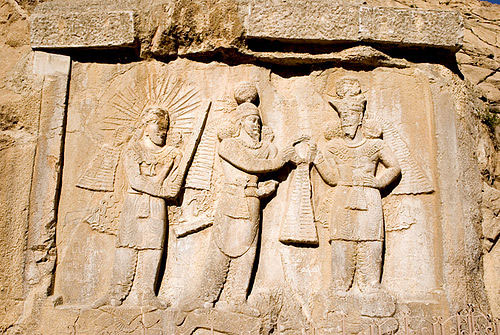
Like many Iranian thinkers of his era, Ibn al-Muqaffa sought to reconcile Persian political traditions with Islamic principles. In the Sassanian system, the concept of farr-e izadi (divine glory) was the foundation of royal legitimacy. However, Ibn al-Muqaffa modified this idea, instead emphasizing wisdom, justice, and consultation as the primary criteria for governance.
-
The Role of Ministers and Bureaucracy in Governance
A key element of Ibn al-Muqaffa’s political thought was the critical role of ministers in state administration. He argued that ministers should act as intermediaries between the ruler and the people, ensuring balance and preventing tyranny. This perspective had a direct influence on the development of the vizierate (ministerial office) in the Abbasid Caliphate and contributed to the later tradition of siyasatnama (books of political counsel).
-
Critique of Tyranny and the Necessity of Consultation in Governance
Ibn al-Muqaffa was among the first thinkers to regard despotism and autocracy as existential threats to governments. In his works Risalat al-Sahabah and Al-Adab al-Kabir, he criticized the Umayyad rulers’ methods of governance and proposed that the caliph should be committed to consulting with intellectuals and elites. This idea was later reflected in the political treatises of thinkers like Farabi and Nizam al-Mulk.
Ibn al-Muqaffa’s Political Thought in Response to the Challenges of His Time
Ibn al-Muqaffa lived during the early consolidation of Abbasid power. Initially, the Abbasids had gained support by advocating for justice and the revival of Islamic values. However, they soon shifted toward centralized power and political repression. Ibn al-Muqaffa, who championed reform and moderation, criticized the Abbasids’ oppressive policies and proposed alternative strategies for just governance. This critical approach eventually led to his brutal execution by order of Caliph al-Mansur.
The Influence of Ibn al-Muqaffa on Later Political Thought
Although Ibn al-Muqaffa fell victim to his reformist ideas, his works and thoughts had a lasting impact on later generations. His ideas on bureaucracy and governance influenced thinkers such as Farabi, Miskawayh, and Nizam al-Mulk.
- Farabi and the Emphasis on Wisdom in Politics: Farabi, in Al-Madina al-Fadila (The Virtuous City), expanded many of Ibn al-Muqaffa’s principles on rational governance and consultation.
- Nizam al-Mulk and Administrative Systemization: In the Siyasatnama of the Seljuk period, Ibn al-Muqaffa’s views on the necessity of wise ministers and bureaucratic reform are evident.
- Ibn al-Muqaffa’s Legacy in Contemporary Political Reform Thought: Many modern intellectuals analyzing political reforms in Islamic societies have drawn on Ibn al-Muqaffa’s ideas as a model for balancing tradition and modernity.
Conclusion
Ibn al-Muqaffa’s political thought, based on rationality, justice, and reformism, represents one of the earliest attempts to systematize political philosophy in the Islamic era. By synthesizing Persian heritage and Islamic concepts, he proposed a new model of just governance. Although he was ultimately executed for his reformist views, his intellectual legacy remains influential in Islamic and Iranian political thought. His works provide valuable historical insights into how past experiences can be leveraged to improve contemporary governance.