


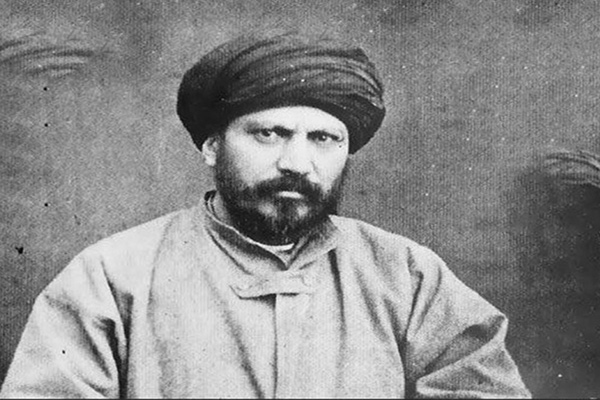
The thoughts of Sayyid Jamal Al-din Asadabadi show that in his first encounters with modern science and culture, he adopted a defensive approach due to a lack of understanding. However, over time, he showed more agreement and empathy when he understood more about modernism.
His late writings consider him one of the promoters of science and modernism. What is important is that his turning to the modern world does not mean a break from the epistemology of tradition and religion. Rather, the more the values of new sciences show themselves, the more he tries to adapt sciences to religious knowledge and understanding.
This point is considered a characteristic of religious intellectuals. That is, those who, instead of believing in the break between traditional knowledge and new sciences, try to connect these two and even match them. An effort that has brought a lot of pressure to Muslims in the contemporary era. The course of Sayyid Jamal’s thoughts is summarized below:
first stage: Opposition to modern science:
Sayyid Jamal, in response to the Muslims of Hyderabad, India, explains the meaning of Nature and Naturalism: The method of Naturalism is the same as the method of Materialism that appeared in Greece in the fourth and third centuries before Christ, and the main purpose of Naturalists is to eliminate religions and establish harmony and commonality among all people.
According to Sayyid Jamal Al-Din Asadabadi, the common feature of all materialist religions is the denial of divinity and the existence of a supreme creator. In his opinion, religion includes the characteristics that nations and tribes inherit from their fathers and ancestors, and it leads to the adjustment of morals and avoids the evil of corruption that disturbs the social order.
Sayyid Jamal Al-Din Asadabadi believes people have three traits due to belief in 3 points in religions. These traits lead to the stability of nations and social life. He expresses three beliefs in a way that is against the standards of modernism. These three beliefs:
1- Man is an earthly angel and the most excellent of creatures. (against Darwinism).
2- Belief that his nation is the best and all other than his nation are on falsehood and misguidance. (Against the equality of human beings).
3- Believing that human beings came to this world to obtain the perfections to transfer to the world hereafter. (against the material purpose and this world to life).
Sayyid Jamal Al-Din Asadabadi by enumerating these beliefs, shows that the basis of maintaining the structure of a normative human society is belief in religion, so what causes the collapse of this normative society will be turning away from religion.
Although such a rigid position causes the rejection of the new epistemic system and modern knowledge, one stuff cannot be ignored. Having said that, why is the social situation of Muslims much worse compared to the materialistic West? Shouldn’t the condition of Muslims be better than atheists because they believe in religion? Sayyid Jamal’s answer is not very convincing. He considers the belief in fate and the determination among the Muslim nations as the cause of their stagnation and captivity in the hands of autocratic rulers and foreign colonizers.
Second stage: Acceptance of modern science
As it was said, Sayyid Jamal’s thoughts have changed and have not always been in a fixed position. In his later writings, we see the praise of modern sciences.
He emphasizes that all these developments that have emerged in Europe are the result of science, and more importantly, he points to the existence and importance of civil society and believes that European nations have reached the point of taking care of themselves without expecting or waiting for the government. This has caused glory, wealth, and prosperity.
It can be seen, that this part of Sayyid Jamal’s speech is a contradiction to the first part. Resolving this contradiction makes the main identity and characteristic of all Islamist groups. This answer can be seen in Sayyid Jamal’s answer to Ernest Renan.
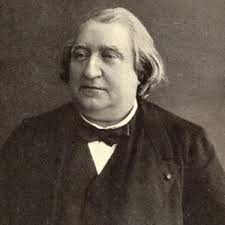
Ernest Renan
In his speech entitled “Islam and Science”, Ernest Renan claimed that Islam is fundamentally opposed to science and philosophy and that Arabs are inherently incapable of learning science and philosophy. These words caused Sayyid Jamal to react. In response to Renan, he appeals to the course of the historical development of nations, which has various stages, so nations’ characteristics should be judged according to their historical stages, and the behavior and character of humans are not inherent to a nation.
Therefore, opposition to science and philosophy is not exclusive to Islam, all religions were in this situation at some stage. However, with the passage of time and historical stages, the tribes and nations have been able to overcome this obstacle. The opposition of religions to science and philosophy is not related to the religion’s Specifications but to the early and childhood stages of the historical development of the nations.
Prophets had always tried to call people to follow the command of reason, but since they were not successful, they inevitably attributed their wise thoughts to the great and unique God to force people to follow them. But people’s desire for superstitions and illusions like a barrier covers the rational core of religion and makes it seem that religions are opposed to science and philosophy.
Therefore, what has caused Muslims to fall into such a pathetic situation is not the religion of Islam, but the superstitions, illusions, and deviations that have taken over the religion. The only solution is to return to the pure and original Islam that the Prophet and his companions believed in. Referring to the ancestors who knew and practiced pure Islam and should remove everything that has settled like dust on that pure essence during these years.
So Sayyid Jamal’s strategy is as follows: the fundamentals of Islam have no conflict with modern Western science. Therefore, both knowledge systems can be used simultaneously in different fields. What has created a disturbance in the meantime and makes it difficult for the two to coexist is the illusions and superstitions that have polluted the religion of Islam, and by finding and removing them, one should benefit from the pure foundations of the religion to achieve salvation in addition to the use of modern sciences.
Returning to the way of life of the Prophet and his companions and pure Islam is common to all Islamist groups. What makes a difference is the position of these groups against modernism. Takfiri Islamists and to some extent, Wahhabis do not have a favorable view of modernism and have made countering it the goal of their actions.
Some are trying to confront modernism directly and even with terrorist acts, and some have left modernism and the manifestations of the new world to the Sultan and the customary government by separating the institution of monarchy from religion, and have kept religious and Islamic rituals away from it.
However, the Islamists following Sayyid Jamal Al-Din Asadabadi -who is later known as religious intellectuals- welcome modern knowledge and do not see it in conflict with religion. Therefore, much effort is made to match religious standards with modern elements. This trend causes religious commentators to find a key role in political relations, government, and legislative institutions.
As mentioned at the beginning of the article, Sayyid Jamal’s thought and the doctrine of adapting modern science to religious standards is a phenomenon that has imposed a heavy burden and many problems for Muslims, especially in Iran.
This problem is due to the justification of the presence of religious commentators in the field of politics and legislation, which has automatically led to the monopoly of power and the suppression of pluralism in the field of politics. In the next articles and in getting to know the next thinkers, this phenomenon will be better revealed.
Resources used:
Enayat, Hamid (1997). An overview of Arab political thought (from Napoleon’s attack on Egypt to World War II). Amir Kabir Publications. [In Persian].
Nawazani, Bahram (2009). Opinions and thoughts of Sayyid Jamal Al-din Asadabadi. Cultural and Social Studies Research Institute. First Edition. [In Persian]


Does your site have a contact page? I’m having trouble locating it but, I’d like to send you an e-mail. I’ve got some suggestions for your blog you might be interested in hearing. Either way, great site and I look forward to seeing it improve over time.
contact us