The political thought of Khwaja Nizam al-Mulk is considered one of the most significant intellectual frameworks in the history of Iran and the Islamic world. As a skilled vizier in the Seljuk court, he not only played a pivotal role in stabilizing the empire but also laid the foundations for an efficient bureaucratic system.
His renowned work, Siyasatnama (The Book of Government), remains an essential text for understanding governance, political legitimacy, and statecraft in medieval Islam. The impact of Khwaja Nizam al-Mulk’s political thought extended beyond the Seljuk era and influenced numerous Islamic governments in later periods. A thorough examination of his principles provides valuable insights into classical governance in Iran and the Muslim world.
Khwaja Nizam al-Mulk: A Visionary Beyond Politics
Abu Ali Hasan al-Tusi, better known as Khwaja Nizam al-Mulk, was among the most influential statesmen and political thinkers of the Seljuk dynasty. Serving as vizier under Alp Arslan and Malik Shah for nearly three decades, he implemented policies that strengthened the empire’s stability and expanded its influence.
Unlike many politicians of his time, Khwaja Nizam al-Mulk did not merely administer state affairs; rather, he documented his political philosophy in Siyasatnama, providing a practical guide for effective governance. This book, regarded as one of the most significant works of political thought in the Islamic world, continues to be a vital source for scholars studying medieval statecraft and bureaucratic organization.
Core Principles of Khwaja Nizam al-Mulk’s Political Thought
-
Bureaucracy and Administrative Order: The Pillars of a Stable Government
One of the key aspects of Khwaja Nizam al-Mulk’s political thought was his emphasis on a well-structured and efficient bureaucracy. He firmly believed that the survival of a government depended on a strong administrative system capable of maintaining order and responding effectively to challenges.
To achieve this, he introduced several reforms, including establishing oversight mechanisms, defining clear responsibilities for officials, and combating corruption. In Siyasatnama, he repeatedly stressed that if the bureaucracy becomes corrupt, the foundations of governance would weaken, ultimately leading to widespread public dissatisfaction. Therefore, he not only developed a structured administrative system but also implemented strategies to ensure accountability and transparency among state officials.
-
The Relationship Between Politics and Religion: A Strategy for Legitimacy
Another crucial element of Khwaja Nizam al-Mulk’s political thought was his strong belief in the integration of religion and politics. He maintained that a government lacking religious legitimacy would struggle to maintain authority and could face internal instability. Consequently, he sought to strengthen ties between the state and religious scholars, recognizing their role in securing public trust and reinforcing the legitimacy of the Seljuk rule.
One of his most notable contributions in this regard was the establishment of the Nizamiyya schools. These institutions, built in cities such as Baghdad, Nishapur, and Isfahan, aimed to educate scholars and bureaucrats while promoting Sunni doctrines against sectarian opposition, particularly the Ismailis and other Shiite factions. This initiative not only solidified the ideological foundation of the Seljuk Empire but also ensured that the state remained resilient against intellectual and religious challenges.
-
Justice and Legitimacy: The Cornerstones of Governance
Throughout Siyasatnama, Khwaja Nizam al-Mulk repeatedly emphasized that justice was the foundation of any successful government. He argued that a just ruler must not only ensure the well-being and security of the people but also actively prevent corruption and oppression among government officials.
He frequently advised monarchs to remain attentive to the grievances of their subjects and to take immediate action against injustices committed by their administrators. According to his philosophy, a government that neglects justice and allows tyranny to flourish is destined to face public rebellion and eventual collapse.
-
Internal Security and Crisis Management
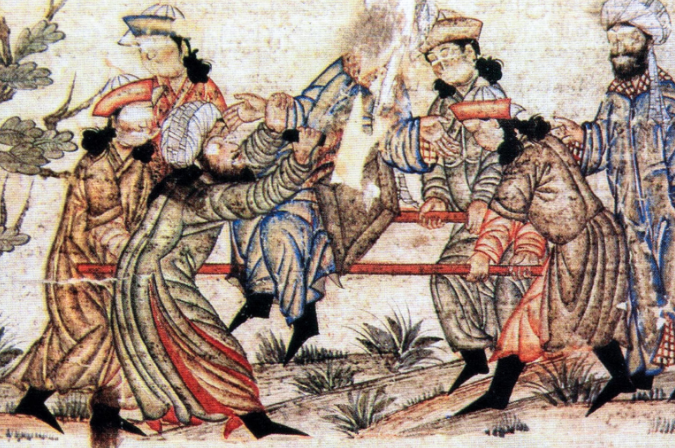
Khwaja Nizam al-Mulk’s tenure as vizier coincided with a period of internal and external threats to the Seljuk Empire. On one hand, the Ismailis, led by Hassan Sabbah, launched assassination campaigns targeting key officials. On the other hand, internal dissatisfaction and economic hardships had the potential to ignite unrest.
To counter these threats, he established a vast intelligence network to detect and neutralize conspiracies before they could destabilize the state. Additionally, he implemented policies such as reducing taxes for the lower classes and ensuring economic stability to prevent discontent from escalating into large-scale uprisings.
Conclusion
The political thought of Khwaja Nizam al-Mulk represents a comprehensive model of governance based on a well-structured bureaucracy, religious legitimacy, social justice, and security. His contributions not only played a vital role in consolidating Seljuk rule but also left a lasting impact on the political philosophy of later Islamic states.
Even today, an in-depth analysis of Khwaja Nizam al-Mulk’s ideas can offer valuable lessons for policymakers and political analysts. His emphasis on efficient bureaucracy, the integration of religion and governance, the enforcement of justice, and proactive crisis management remains relevant in modern governance. Therefore, revisiting Siyasatnama and applying its insights can help enhance our understanding of political administration and statecraft in the contemporary world.