The political thought of Farabi is one of the most significant intellectual currents in the history of Islamic political philosophy. Known as the “Second Teacher,” he profoundly influenced Islamic and Western philosophy. In his works, Farabi examines governmental systems, the relationship between politics, virtue, and happiness, and the philosopher’s role in governing society. This article aims to analytically explore the political thought of Farabi and clarify its position in political thought history and political thought journals.
Farabi and Political Philosophy
Farabi, who lived in the 9th and 10th centuries, was influenced by Plato and Aristotle and proposed a model of governance in which the philosopher-king holds power. In his book “The Opinions of the People of the Virtuous City,” he describes his ideal society, where justice, wisdom, and virtue prevail.
The Virtuous City and the Ignorant City
Farabi classifies human societies into several types:
- The Virtuous City: A society where people live under the leadership of a philosopher-king and seek ultimate happiness.
- The Ignorant City: A society where people pursue material and transient pleasures instead of true happiness.
- The Wicked City: A society where rulers recognize virtue but do not follow it.
- The Depraved City: A society where values are corrupted and virtue is replaced by vice.
- The Errant City: A society where the leader mistakenly believes himself to be the ultimate knower and leads people astray.
Politics and Religion in The Political Thought of Farabi
Farabi does not separate politics from religion but rather sees it as a means to achieve happiness. He believes that both religion and philosophy serve the same purpose: human happiness, but they employ different methods. Philosophy reaches the truth through reasoning and rational thought, whereas religion conveys it through revelation.
Farabi’s Philosophical System and the Hierarchy of Intellects
One of the most important aspects of Farabi’s philosophy is his theory of intellect, which is influenced by Neoplatonism and Aristotelian thought. Farabi asserts that existence follows a hierarchical order of intellects, with the “First Intellect” at the top. This First Intellect originates directly from the Necessary Being (God) and gives rise to subsequent intellects.
The Tenfold Hierarchy of Intellects in The Political Thought of Farabi
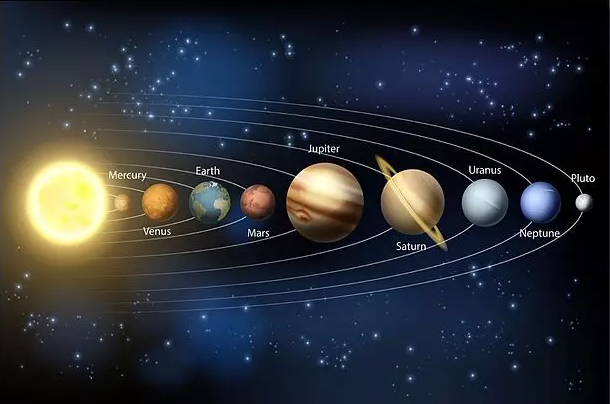
- The First Intellect: The first creation of God and the source of all other intellects. This intellect emanates directly from the Necessary Being and is the cause of the Second Intellect and the first celestial sphere.
- The Second Intellect: Emanates from the First Intellect and creates the First Heaven (the sphere of fixed stars).
- The Third Intellect: Emerges from the Second Intellect and generates the sphere of Saturn.
- The Fourth Intellect: Issues from the Third Intellect and forms the sphere of Jupiter.
- The Fifth Intellect: Originates from the Fourth Intellect and produces the sphere of Mars.
- The Sixth Intellect: Derives from the Fifth Intellect and creates the sphere of the Sun.
- The Seventh Intellect: Comes from the Sixth Intellect and generates the sphere of Venus.
- The Eighth Intellect: Stems from the Seventh Intellect and forms the sphere of Mercury.
- The Ninth Intellect: Proceeds from the Eighth Intellect and creates the sphere of the Moon.
- The Active Intellect: The final level of intellect, which has a direct relationship with the material world and humanity. It acts as the intermediary between human beings and the higher realms and serves as the source of revelation and inspiration.
The intellect that governs earthly (natural) affairs has been referred to by different terms, including “Active Intellect” or “Sacred Intellect.” Furthermore, influenced by Aristotle’s psychology, Farabi believes in a progression of intellect from the lower to the higher, ultimately connecting with the Active Intellect. The stages of the intellect, from its lowest form to the one ready to unite with the Active Intellect, include:
- Potential Intellect (Material Intellect): Capable of receiving sensory images.
- Actual Intellect: Capable of distinguishing intelligible concepts.
- Acquired Intellect: The highest stage, which connects with the Active Intellect.
A crucial point in Farabi’s philosophy is that when the Acquired Intellect unites with the Active Intellect, the highest stage of intellectual development is reached, leading to the ultimate understanding of happiness and its realization in human society. At this stage, the philosopher and prophet emerge in Farabi’s system. However, their connection with the Active Intellect differs:
- The philosopher connects through pure rational faculty (reason).
- The prophet, according to Farabi, connects through imaginative faculty (quwwa mutakhayyila). Thus, while the philosopher deals with reasoning and logical demonstration, the prophet conveys truth to people through analogies and metaphors.
The Impact of The Political Thought of Farabi on Global Philosophy
Farabi’s reading of Greek philosophy and his integration of Islamic thought had a profound impact on global philosophy. As one of the first philosophers to analyze the relationship between reason and revelation, he played a crucial role in the development of both Islamic and Western philosophy. His works directly influenced great philosophers such as Avicenna, Averroes, and even medieval Christian thinkers like Thomas Aquinas.
In Western philosophy, Farabi’s ideas reached Europe through Latin translations and significantly contributed to the development of Scholasticism. He laid the foundation for a tradition that later influenced Enlightenment philosophy and modern political theory. Scholars such as Leo Strauss argue that Farabi’s political thought even shaped the foundations of liberalism and republicanism.
Conclusion
Farabi, as one of the greatest Islamic thinkers, successfully integrated Greek philosophy with Islamic teachings, creating a philosophical-political system that remains relevant today. His ideas on governance, happiness, intellect, and revelation have influenced not only Islamic philosophy but also the history of Western political thought. His theories on the Virtuous City and the role of the philosopher-king continue to inspire scholars in the fields of politics, philosophy, and theology. Studying and analyzing Farabi’s ideas provides a deeper understanding of the interplay between religion, philosophy, and politics throughout history.