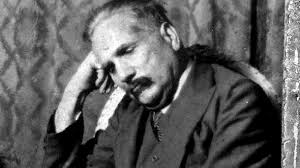
Since man accepted his responsibility instead of God and drew the norms and meaning of life by himself, there have been various reactions from religious people. Muhammad Iqbal Lahori is one of those who has shown such a reaction.
In this situation, disappointment and emptiness come to a person who has given meaning to his life through religion throughout history. This situation will lead to a reaction anyway. Various types of reactions have been seen in the last two centuries.
The most dangerous and destructive reaction is those who want to compensate for nihilism, and meaninglessness by establishing a religious government. The process of compensating for nihilism and finding meaning through the government is mainly through drawing ideas and theoretical foundations presented by religious thinkers. Such a motive is not very different from what was seen in the experience of fascism.
Unfortunately, such a process has been very welcomed in the lands where modernism has entered as a stranger. The people who still depended on religious and traditional knowledge to make sense of the world and life for themselves became apprehensive about the introduction of new relationships and the conflict between the new and the old.
The activities of religious preachers always aggravate this anxiety. But on the other hand, the gifts of modernism were not something that could be easily passed over. In such an uncertain situation, welcoming religious intellectual ideas is not so strange. Religious intellectuals are the heralds of theoretical systems combining new and old knowledge.
Muhammad Iqbal Lahori is one of the main thinkers of this school of thought who tried to mix the new and the old in the field of epistemology. As a result of Iqbal’s intellectual efforts, there are two main points. First; His thoughts are aimed at solving the problem of nihilism, so it is expected that he will be welcomed by those dependent on old knowledge who cannot ignore the gifts of modernism. Second; His solution is to enter the field of politics. As mentioned, such theoretical systems can lead to dangerous results.
The Attempt of Muhammad Iqbal Lahori to the Combination of the Old and the New
Iqbal takes the initiative method to combine religious knowledge with new sciences. He considers the epistemological method in both systems to be based on experience. However, he emphasizes that experience has different aspects and does not necessarily require concrete experience for all issues.
He believes that another way of experience has led to the formation of Islamic knowledge, which has been neglected in the present era. This missed experience is based on faith. He believes that the Qur’an is a guidebook for the specific religious experience that the world seems to have become alienated from. He believes that today’s people, due to the widespread habit, consider abstract things as contrary to the truth and refrain from getting close to them.
In the first stages of its cultural development, Islam has always emphasized concrete things and has benefited from them. His emphasis is to show that Islamic knowledge does not conflict with modern empiricism. He clarifies that, unlike in the early days, Islamic narrators, by distancing themselves from that concrete approach, cannot make people familiar with the importance of the Qur’an and the unique experience of religious faith by relying on their conventional methods.
He believes that unlike the initial empiricism in the formation of Islamic knowledge, in the later periods religious knowledge influenced by philosophy fell into the abyss of Greek rationalism and logic, and this was the starting point of religion’s distance from empiricism. He states that Socrates had limited his attention only to the human world. For him, the proper study of man was only man himself, not the world of plants, insects, and stars.
Right in front of this idea is the spirit of the Qur’an, which sees a place for divine revelation in the weakness of the bee and constantly asks the readers of this book to pay attention to the constant change of the winds, to the sequence of night and day, to the clouds and the starry sky, and the planets floating in the infinite space. Pay attention and observe them! Plato, the student of Socrates, looked at sensory evidence as unreliable, because, in his opinion, only belief can be obtained from these, and they are not the cause of reaching true knowledge.
This is exactly the opposite of the Qur’an, which considers “hearing” and “seeing” as the most valuable gifts from God and recognizes the eyes and ears as the answers to what people have done in this world (Iqbal, 2009: 3). Iqbal believed that philosophy is unable to relate to modern empiricism. It is a religious experience that can give the necessary meaning to life.
Muhammad Iqbal Lahori believes that metaphysics is a meaningful aspect of life that modern science is unable to recognize. On the other hand, “Religion can hardly afford to ignore the search for a reconciliation of the oppositions of experience and a justification of the environment in which humanity finds itself” (Iqbal, 1346: 4). Iqbal considers this effort to be the rationalism of religion.
But in his opinion, this rationalism has nothing to do with philosophy, but it enables its illumination and introspection. He says: There is no reason to assume that thought and intuition are essentially opposed to each other. they spring up from the same root and complement each other. The one grasps Reality piecemeal, the other grasps it in its wholeness.
The one fixes its gaze on the eternal, the other on the temporal aspect of Reality. The one is present enjoyment of the whole of Reality; the other aims at traversing the whole by slowly specifying and closing up the various regions of the whole for exclusive observation. both seek visions of the same Reality which reveals itself to them by their function in life.
The conclusion that Muhammad Iqbal Lahori draws from the similarity between science and intuitive rationalism is very significant. He emphasizes that religious faith is a unique experience that is achieved by the intuition of the believer. the explanation of this religious intuition is possible only with new science in this era. Because today’s man is convinced only through experience.
Therefore, he tries to move towards this goal by focusing on experience. Iqbal tries to show consistency and kinship between concepts of modern sciences and Quranic verses. Iqbal’s effort in this direction led to the formation of a complex system of terms and relationships between them. Criticizing this complex and nested system does not gain us anything, but the result that Iqbal obtains from this effort is significant.
He believes that for the continuity of concrete experience and religious intuitive experience to be perfected, thought must go above itself, and seek its perfection in a state of the soul that religion has described as Salat or prayer. In other words, by finding the similarity between empirical sciences and Quranic verses, the opportunity is provided to establish a relationship and connection between empirical facts and metaphysical truth.
Achieving such a connection depends on passing through thought and striving for sensual perfection through prayer. It is at this point that Muhammad Iqbal Lahori finds the continuation of his thoughts in the field of politics.
The realm of politics is the platform for the manifestation of the connection between “truth” and “Reality”.
In another place, Iqbal calls “truth” and “Reality” as “eternal principles” and “changings” respectively. Therefore, the connection between truth and Reality can be considered as the relationship between the eternal thing and the changing thing. He believes that every society must have a proper understanding of eternal and changing things and that every society should have eternal principles to regulate its collective life, for the eternal gives us a foothold in the world of perpetual change.
But eternal principles when they are understood to exclude all possibilities of change which, according to the Qur’an, is one of the greatest ‘signs’ of God, tend to immobilize what is essentially mobile. the failure of Europe in political and social sciences illustrates the former principle, and the immobility of Islam during the last five hundred years illustrates the latter. what then is the principle of movement in the structure of Islam? this is known as Ijtihad.
Iqbal considers the principle of movement in Islam to be “ijtihad” and believes that Ijtihad provides a bridge between “eternal principles” and “changing matters”. Iqbal believes that Ijtihad is capable of this connection if it is present in the political realm. To justify this, he considers the “modern state” to be functionally similar to “Thauhid”(monotheism)”.
He believes that the essence of “Thauhid” is “equality”, “joint responsibility” and “freedom”. From the point of view of Islam, the government is an effort so that these ideal principles become temporal-spatial forces and are realized in a certain human organization.
Equality, joint responsibility, and freedom (equality, fraternity, and liberty) are considered the three basic pillars of a “nation” that establishes a state by its own will. The same formula is used by Iqbal in establishing the Islamic state. So that the connection between truth and Reality also disappears. Establishing a connection between truth and Reality in the political realm is the establishment of a government that can regulate worldly activities (changing matters) aimed at spiritual truth (eternal principles). In other words, all worldly activities (current realities) will be directed to spiritual affairs (truth).
By drawing the relationship between “eternal principles” and “changing” through the presence of Mujtahid in the political realm and acknowledging that the main function of the state is the give spiritual meaning to material affairs, Iqbal practically prepares the ground for the formation of very dangerous governments.
A government that grants a few “Mujtahids” the authority to give meaning to daily affairs will turn people into powerless masses who must carry out all their life affairs by the government’s orders. Disobeying such rules is a departure from the supreme truth and carries a heavy punishment. On the other hand, to preserve the true meaning-giving system of the ruler, committing any crime will be justified and legal.
Used resource:
Iqbal, Muhammad(2009). The Reconstruction of Religious Thought in Islam. Dodo Press and its licensors.