


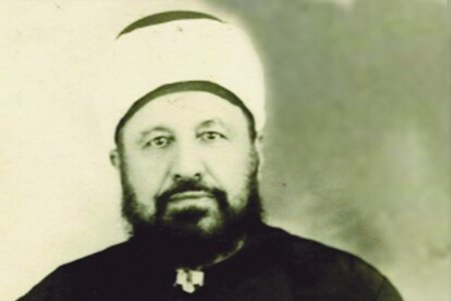
Hassan al-Banna (1949-1906), the founder of the Muslim Brotherhood in Egypt, stands as one of the most influential Islamic political thinkers of the 20th century. His influence stems from his ability to integrate Islamic principles with contemporary political and social challenges, providing a framework that resonated with Muslims seeking to reclaim their identity and sovereignty in the post-colonial era. The Political Thought of Hassan al-Banna emerged in response to the crises facing the Islamic world following the fall of the Ottoman Caliphate and Western colonial domination. Al-Banna sought to revive Islamic identity and proposed a comprehensive model for Islamic governance and society to guide the Muslim Ummah (community) towards reconstruction and elevation. His views on Islamic governance, the role of the people, the caliphate, a return to the teachings of the Salaf (pious predecessors), Islamic law, and the unity of the Muslim Ummah continue to resonate with contemporary Islamic movements.
Intellectual Influences: Rashid Rida and Others
Hassan al-Banna’s thoughts were significantly influenced by the teachings of earlier Salafi reformers and thinkers such as Jamal al-Din al-Afghani, Muhammad Abduh, and, notably, Rashid Rida. Rashid Rida, a prominent disciple of Muhammad Abduh, emphasized a return to Islam’s original teachings and the caliphate’s revival as solutions to the problems facing the Islamic world. His emphasis on the caliphate profoundly influenced Hassan al-Banna, who saw it as a necessary institution for unifying Muslims and restoring their political and spiritual sovereignty. Al-Banna adapted Rida’s ideas into the practical framework of the Muslim Brotherhood, focusing on grassroots mobilization, community organization, and a gradualist approach to achieving Islamic governance. This strategy reflected Rida’s call for intellectual and moral preparation within the Muslim Ummah before re-establishing the caliphate. These ideas deeply impacted al-Banna’s outlook.
In his writings, Rashid Rida emphasized the need to rebuild the caliphate and unite Muslims, criticizing Western colonialism and blind imitation of Western culture. Al-Banna expanded upon these ideas, incorporating them into the practical programs of the Muslim Brotherhood. For instance, his organizational methods and reformist approach in establishing the Brotherhood were inspired by Rida’s vision of a comprehensive socio-political movement aimed at revitalizing Islam in all aspects of life.
Additionally, the Salafi teachings that advocated a return to the Qur’an and Sunnah while rejecting religious innovations (bid’ah) played a pivotal role in shaping al-Banna’s thought. Like earlier Salafi reformers, he criticized deviations that had crept into Islamic practices over time and advocated returning to Islam’s authentic sources as the only means of reviving the Muslim Ummah.
Islamic Governance: A Divine and Popular System
According to Hassan al-Banna, Islamic governance is a divine system based on the principles of the Qur’an and Sunnah. Unlike secular governance, which separates religion from public life and derives its authority from human consensus, al-Banna’s model integrates religion as the foundation of all aspects of governance. He argued that the legitimacy of rulers and laws must be rooted in divine principles, ensuring that governance serves not merely human interests but aligns with moral and spiritual objectives set by Islam. He believed that an Islamic state must serve the implementation of Sharia (Islamic law) and the realization of social justice. Al-Banna did not separate politics from religion and stressed that rulers only have legitimacy if they act by Islamic principles.
For example, in his famous letter to “the rulers and leaders of Islamic countries,” he stated that the Islamic state is responsible for “strengthening the foundations of faith, spreading moral values, and establishing justice among the people.” He also emphasized the importance of economic justice and equitable distribution of resources, arguing that social inequalities result from straying from Islamic principles.
Ahl al-Hall wa al-Aqd: The Role of Elite Advisors in Governance
Hassan al-Banna assigned a unique role to the Ahl al-Hall wa al-Aqd (people of authority and resolution) as the elite advisors and decision-makers within the Islamic community. Historically, this concept has been linked to the early Islamic era, where tribal elders, scholars, and community leaders would collectively decide on critical matters, such as selecting a caliph or resolving disputes. In contemporary contexts, al-Banna’s vision could be seen as inspiring modern Islamic councils or advisory bodies in various Muslim-majority countries, where scholars and intellectuals aim to influence governance while adhering to Islamic principles. This group, comprising scholars, religious leaders, and wise individuals, was entrusted with consulting, decision-making, and overseeing governance. Al-Banna believed that this body should be composed of individuals deeply knowledgeable in Islamic principles and committed to the public interest of the Muslim Ummah.
In his vision, the Ahl al-Hall wa al-Aqd would play a pivotal role in selecting leaders, monitoring the government’s actions, and resolving disputes within the community. He presented this institution as an integral part of Islamic governance capable of preventing tyranny and corruption while ensuring justice and transparency in managing societal affairs.
Pillars of the Islamic in the Political Thought of Hassan al-Banna: Freedom, Justice, and Jihad
Hassan al-Banna identified three essential pillars of the Islamic State: freedom, justice, and jihad. These pillars formed the foundation of his vision for a comprehensive Islamic system.
- Freedom :
Al-Banna viewed freedom as one of Islam’s fundamental principles, essential for all aspects of societal life. He defined freedom as freedom of belief, expression, and choice, emphasizing that there should be no compulsion in religion or enforcement of Islamic laws without genuine acceptance. He argued that true freedom could only be achieved within the framework of Sharia, as it guarantees individual and collective rights. - Justice :
Justice was central to al-Banna’s vision of governance. He considered justice essential not only in legal matters but also in economic, social, and political domains. Al-Banna called for an Islamic state to equitably distribute resources and provide equal opportunities for all citizens. He also emphasized combating corruption and oppression, asserting that implementing justice is one of the rulers’ primary responsibilities. - Jihad :
In The Political Thought of Hassan al-Banna, jihad encompassed a broad range of efforts, including personal, social, and political endeavors, for the sake of God. He presented jihad as a fundamental pillar of the Islamic state and regarded it as a continuous struggle to achieve Islamic objectives. Al-Banna emphasized that jihad, whether spiritual or physical, must be conducted with pure intentions and within the bounds of Sharia.
The Role of the People: Awareness, Participation, and Responsibility
Hassan al-Banna regarded the role of the people as central to the establishment of an Islamic state. He believed that achieving Islamic governance was impossible without active public participation. In his view, the people needed to be educated and empowered to take responsibility for building an Islamic society. To this end, he developed extensive educational and training programs within the Muslim Brotherhood, aimed at raising public awareness and cultivating a new generation of Muslims capable of leading societal reform.
As al-Banna stated, “Every Muslim must act as a soldier in the cause of God and to guide their community towards reform.” This perspective was a cornerstone of the Brotherhood’s social and political activities, with a particular focus on individual and societal improvement.
The Caliphate: Restoring the Unity of the Muslim Ummah
One of the central tenets of Hassan al-Banna’s political thought was the restoration of the caliphate as a symbol of Muslim unity and solidarity. He viewed the caliphate not merely as a political structure but as the embodiment of Islamic identity and values. Al-Banna emphasized that reviving the caliphate required intellectual, cultural, and political preparation within the Muslim Ummah.
Although the Ottoman Caliphate fell in 1924, al-Banna argued that its revival was a gradual process requiring the strengthening of Islamic values and promoting a spirit of solidarity among Muslims. He believed that unity and cooperation among Muslim nations were critical for restoring the caliphate and overcoming the divisions imposed by colonial powers.
Returning to the Islam of the Salaf: Reform and Purification
Hassan al-Banna advocated a return to the Islam of the Salaf, the teachings of the Prophet Muhammad (PBUH) and the Rightly Guided Caliphs, as the solution for reviving the Muslim Ummah. He criticized innovations and deviations that had entered Islamic practices over time and maintained that only by adhering to the original sources of Islam, the Qur’an and Sunnah, could the Islamic civilization be rebuilt.
Specifically, he considered cultural and intellectual reforms essential for countering the negative influences of Western colonialism and the uncritical imitation of Western values. In his writings, al-Banna frequently warned that “blindly emulating the West only leads to the loss of Islamic identity.”
Law and Sharia: A Framework for Governance
One of the central themes in The Political Thought of Hassan al-Banna’s was the primacy of Sharia as the foundation for legislation in an Islamic state. He viewed Sharia as not only a legal system but a comprehensive guide for all aspects of human life. In his books and speeches, al-Banna argued that Islamic laws must be based on justice, mercy, and service to humanity.
He strongly criticized secular laws introduced during colonial rule, viewing them as a deviation from Islamic principles and a cause of moral and social decline. Al-Banna believed that returning to Sharia could offer solutions to societal, moral, and economic problems.
Critique of Political Parties: Unity Over Division
Hassan al-Banna was a staunch opponent of political fragmentation and divisiveness in the Islamic world. He believed that party politics and political rivalries weakened the Muslim Ummah. Instead of focusing on partisan divisions, al-Banna stressed the need for a unified Islamic movement dedicated to the revival of the Muslim Ummah.
In his speeches, he stated, “The Muslim Ummah will achieve victory only when Muslims set aside their differences and unite under a single banner to achieve divine objectives.”
The Concept of Ummah and Nation: Emphasizing Collective Islamic Identity
The Political Thought of Hassan al-Banna distinguished between the concept of the Islamic Ummah and geographical nations. He believed that Islamic identity should transcend national and geographical boundaries. He asserted that the Islamic Ummah is a single body that must act based on shared religious principles.
He emphasized that while geographical borders might hinder Muslim unity, faith and Islamic identity could serve as the unifying link among all Muslim nations. Al-Banna called on Islamic nations to set aside ethnic, linguistic, and racial differences and strive for the unity of the Ummah.
Conclusion
The Political Thought of Hassan al-Banna integrates Islamic principles with practical solutions to address the challenges of his time. By emphasizing concepts such as Islamic governance, Ahl al-Hall wa al-Aqd, the caliphate, Sharia, freedom, justice, and jihad, he sought to provide a comprehensive model for the revival of Islamic civilization. These ideas continue to inspire many Islamic movements today and play a significant role in shaping contemporary Islamic political thought


Salut, ech wollt Äre Präis wëssen.
and was erased, and on cleaned
Hello! I hope you’re having a great day. Good luck 🙂
Should you tell, that you are not right.