


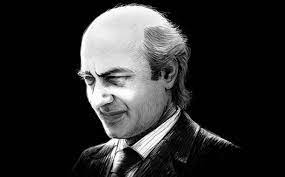
Islamism as an ideology and political movement is the product of intellectual processes and events that have occurred in Islamic lands for more than a century. This process has been limited to efforts in the field of epistemology from the stage of the initial idea that began by Sayyid Jamal Al-din Asadabadi. Abduh was one of the pioneers of this field, and by Iqbal Lahori, this process has reached the stage of intellectual and cognitive maturity. Iqbal’s efforts included knowledge principles that introduced the formation of the Islamic state as a solution to the conflict between the old, traditional, religious world and the modern world. But knowledge alone could not guarantee the formation of such a government. For this purpose, a social and political movement was needed. The formation of a social movement requires the transformation of the above knowledge into a revolutionary ideology. This task is done by Ali Shariati.
In this article, I illustrate how Ali Shariati constructs the ideology of intellectual Islamism. We will also see what consequences this ideological construction method has brought. The consequences not only affected the lives of several generations of Iranian people but also had significant effects on the international system.
To get to know Ali Shariati’s intellectual effort, one must first understand his problem.
Ali Shariati lived in a time where two contradictory voices were heard: on the one side, the easterners complained about their inability to control poverty, disease, illiteracy, stupidity, etc., which had destroyed the foundations of their lives. On the other side, according to the conditions of the period after the Second World War, modern rationality has come under the sharpest criticisms, and criticism of Western modernism has started. Ali Shariati doesn’t know what to do between these two riots. The legacy of the East is poverty and misery and, the legacy of the West, as he says, is war, mental illness, and nihilism. He is looking for a resolution and a rescue man who will show him what he must do to treat this confusion.
Ali Shariati has found the rescue man and the resolution of salvation. This is the same Islamic state as explained by Iqbal. Ali Shariati knows that ideology is needed to achieve an Islamic state. An ideology that, while answering the questions ahead, will also construct a thinking person who knows the world today and the new civilization and culture of the world and is not alien to the native culture of the land of Iran. To explain such an ideology, Ali Shariati uses Jean-Paul Sartre’s existentialism.
Through Sartre’s idea based on the priority of existence over essence, he tries to show that human identity is a construct. The interesting point is that on one hand, Shariati emphasizes the difference between man and other creatures and considers the essence of man to be the product of his efforts, and on the other hand, he relies on the components of identity, which is considered a part of inevitable heritage. (This contradiction will be mentioned later.)
first, Shariati’s binding principles are introduced and his application of these principles is shown.
Shariati considers these principles as follows: Eastern, Muslim, and Third World.
Eastern:
Ali Shariati seeks to create a distance and otherization from the West and the modern world on an individual level by explaining being Eastern. By enumerating “spirit”, “religious orientation” and “a way of worldview”, he tries to show the Eastern man different from the Western one from an anthropological point of view.
He emphasizes that being Eastern is not only a geographical attribute but also contains spiritual and cognitive themes that are the basis of alienation from the West and Western man. This difference is mainly around goals and aspirations. The Western man pursues concrete, material, and worldly goals and aspirations, while the Eastern man always seeks abstract, spiritual, and otherworldly goals.
Muslim:
Shariati’s emphasis on being Eastern to highlight the abstract and spiritual aspect of life does not mean that the concrete aspect of life is neglected. Shariati shows this aspect of life at the social level is completely influenced by the religion of Islam. Shariati emphasizes that Islam is not an abstract system but has a concrete role in all aspects of Muslim life. Islam is like a determining content of individual and social behavior, way of life, and relationship between man and the world.
The role that Shariati gives to Islam is a reaction to the role that the modern world has assigned to religion. On the one hand, Shariati tries to rule out the possibility of secularism (the separation of religion from politics) in Islamic lands, and on the other hand, he wants to respond to Marxism’s interpretation of religion as a superstructure. This effort of Shariati will explain the wide and deep role of Islam in the social life of the people of this country.
Third World:
Shariati was affected by Frantz Fanon’s writings to describe the third world and sought to draw new borders that differentiate itself from the two blocs of the East and West of that era. The exclusive domain claims to be superior to the weak points of each of the blocs at that time and calls itself the “Third Way”.
He claims that although the Third World was made up of poor and backward countries and did not have the power, wealth, weapons, and industry of its two neighbors on the left and right, it had two great treasures. First was the heritage of great old human culture, and the second was the experience of the failing ideas in a bipolar world.
Articulation of the ideology of Islamism
According to the way of explaining the ideological main principles, we realize that the formation of the ideology of intellectual Islamism according to Shariati has two stages. These two stages are closely related together. These two stages include “otherization” and “articulation”. Shariati, with the design of the three main principles, is practically seeking otherization from the West and modernism.
He tries to present concepts and propositions by otherization them. This process is repeated at three individual, social, and international levels. Then by articulation of the obtained concepts and propositions in three levels, Draw ideological discourse.
Shariati seeks to draw the individual differences between Eastern and Western people from an anthropological perspective by the principle of the “Eastern”. This effort explains concepts such as “spirituality”, “abstract thinking”, and “otherworldly”.
Also, by using the Muslim principle, it seeks to draw the difference in the logic governing the social relations between Muslims and Westerners. This action leads to this statement: Islam is a determining logic on social relations.
Finally, through the third world principle, he is looking for otherization with the bipolar system, and by explaining the concept of the “third way”, he articulates it along with other concepts.
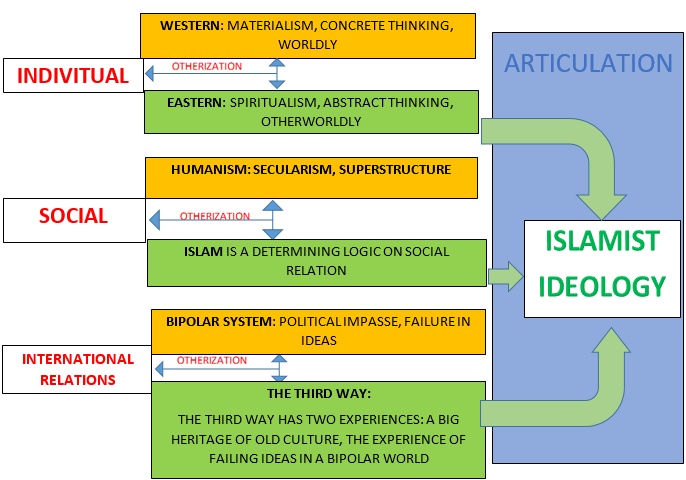
The process of construction of Islamist ideology
The articulation of concepts and propositions at different levels of individual, social, and international life in the explanation of the ideological discourse shows that all aspects of life in Islamism are completely related to each other, solid, and inseparable. We will see later that this feature is one of the most important requirements that must be considered when facing Islamist groups.
A new definition of religion
Shariati knows very well that he has used elements that are not alien to Muslims. It is hard for such people to introduce new meanings to old elements such as Islam to create an ideology suitable for the modern age. For this purpose, Shariati tries to overcome this problem by defining religion as an ideology and its difference from religion as a social tradition.
He considers religion as a social tradition like “a collection of inherited beliefs and inculcated feelings, as well as imitation of fashions, relationships, customary social rites, ” But Shariati believes religion has another face and capability that should be revealed.
Showing this face of religion depends on the will that was mentioned earlier. A will that manifests a new nature of religion with Sartre’s existentialism. He calls this aspect ideological religion and believes that unlike religion as a tradition which is a legacy from the past, religion as an ideology is based on a person’s own choice.
Religion as an ideology is an opinion that is consciously chosen based on existing and objective needs and anomalies to realize the ideals of an individual, group, or class.
This is precisely the point where the biggest challenge of Islamism as a political ideology in the modern era appears. Shariati considers religion as an ideology as the result of the will of people who consciously choose it and organize their concrete lives through it.
While Islam is a religion whose authority has nothing to do with human will. Rather, it comes from God’s will and word. This challenge has been well demonstrated after the victory of the Iranian Islamic Revolution. As it was said, this conflict arises from Shariati’s different definition of existentialism.
Shariati considers existentialism to be a redefinition of Islam. It means a person who is present and tries to give a new nature to the historical religion of Islam. The difference between this view of existentialism and what is customary comes back to the presence of religion along with humans. While Sartre’s existentialism only refers to the existence of man regardless of any idea or belief, Shariati sees this existence with religion. It seems that human existence cannot be distinguished from religion.
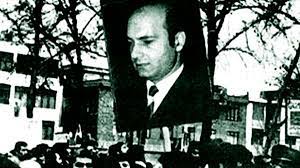
Shariati was engine of Islamic revolution
Ali Shariati’s efforts were not without results. Many people believe that the Islamic Revolution of Iran in 1979 was the result of the ideology constructed by Ali Shariati. Many commentators have called him the “engine of the revolution”. However, the experience of the Islamic Republic of Iran’s government for years shows that the ideology of Islamism has had devastating results for the people of Iran. These results are directly related to the way this ideology is constructed. A few points are mentioned;
Both stages of constituting the ideology of Islamism have consequences.
First; the otherization of modernism in the above process has practically made the opposition to the new world a part of the identity of Islamism.
In such a way modernization in Iran after the Islamic revolution has always been considered a kind of struggle against Islamic identity and has been stopped in any way.
Second; the Articulation of the concepts and propositions of different individual, social, and international levels has caused any policy-making and decision-making at any level to be generalized to other levels.
The smallest decisions regarding individual life in Iran are linked by the Islamic government to the biggest issues of the international system.
A girl who does not wear a hijab is considered a colonial agent, and those who want normal relations in the international system are considered apostates and out of religion by the Islamic government.
Third: Although in the ideology of Ali Shariati, “human will” has been the cause of social upheaval aimed at the revolution, after the establishment of the Islamic government, the “human will” no longer has any place in the field of politics.
With the rise of the Islamic government, what is the basis of law and policy-making is the religious rules and the holy word.
A rule that makes the field of politics the monopoly of religious commentators and jurists.
In the next article, an attempt will be made to explain the consequences of the formation of the Islamist government and how the mechanism of human will was nullified in it during the past 45 years. A mechanism that is rooted in the thoughts of Islamic intellectuals from the beginning until today.


I visited many websites except the audio quality for audio songs
present at this web page is genuinely marvelous.
I needed to thank you for this very good read!!
I absolutely loved every bit of it. I have you bookmarked to look at new things you post…